



The best GPS tracker for most people is a plug-in Bouncie for the family car or a battery tracker for everything else: the Optimus 3.0 for a car a thief might target, the LandAirSea 54 for a trailer or a boat. Either way, you’ll pay more for the plan than the tracker. I priced every plan the makers list. For every tracker where I could split device from plan, the plan made up 72 to 96 percent of the two-year total.
- Our picks at a glance
- How we picked
- What does a GPS tracker really cost?
- What does “no subscription” actually mean?
- The best GPS trackers in 2026
- Bouncie: best GPS tracker for a family car
- LandAirSea 54: best portable GPS tracker
- Optimus 3.0: best GPS tracker for a car that might be stolen
- Tracki: best small tracker for bags and backpacks
- Garmin Bounce 2: best GPS watch for a child without a phone
- AngelSense: best for a child with autism or an adult who wanders
- Invoxia Pro Max: best for a bike or a car you rarely drive
- Monimoto 9: best GPS tracker for a motorcycle
- Apple AirTag: the no-plan contrast
- How do you track a child or a parent with dementia?
- Is it legal to put a GPS tracker on a car?
- How do you find a GPS tracker on your car?
- Will your tracker still work in three years?
- Which GPS tracker should you buy?
- Do you need a GPS tracker at all?
- Who sees your location data?
- Frequently Asked Questions
- Can I use an AirTag as a GPS tracker for my car?
- Is there a GPS tracker with no monthly fee?
- How much does a GPS tracker subscription cost per month?
- Can someone track my car without me knowing?
- Will my phone warn me about a hidden GPS tracker?
- Is it legal to put a GPS tracker on my teenager’s car?
- What is the best GPS tracker for a child?
- Do GPS trackers work without cell service?
- Which is better for a car, an AirTag or a GPS tracker?
- How long does a GPS tracker battery last?
- My Take
Most lists stop at the checkout price. A tracker that costs $11 or $28 at checkout can run $250 to more than $500 by the end of year two. And some “no subscription” trackers on Amazon aren’t GPS trackers at all. I picked trackers for a car, a child, a parent who wanders, a motorcycle and a bag, and did the plan math for each one.
Our picks at a glance
Seven trackers and one kids’ GPS watch made the cut, plus one Bluetooth tag as a contrast. The table shows how each one reports its location, what it costs to buy and what it costs over two years. I took every price from the makers’ own pages on October 23, 2026.
How we picked
I started with the guides Google ranks for “best GPS tracker” on October 23, 2026, fourteen pages in all. I logged every product they recommend. Tracki, LandAirSea 54 and Spytec’s GL300 family showed up on six pages each, AirTag on five and Bouncie on four. A pick had to appear on at least three of those pages. Or it had to cover a job the consensus skips, like a child without a phone.
Then I read the paperwork. For each pick I opened the maker’s price page, the plan terms, the privacy policy and, where I could find one, the FCC filing. It’s the same document-first method we use for AI gadgets and CPAP machines.
I didn’t drive these trackers around a parking garage. Car and Driver and Autoweek share one hands-on test, with photos credited to Gannon Burgett. Road & Track ran its own with Sheilah Villari. When I lean on how a tracker behaved on the road, I say whose test it was.
More Read

What does a GPS tracker really cost?
Most cellular GPS trackers cost $11 to $199 to buy and $9 to $35 a month to run. Two years usually lands between about $250 and $840. AngelSense, a specialist wearable, costs more. The device is the small part. On each tracker’s cheapest route over 24 months, the plan made up 72 percent of Bouncie’s total, 89 percent of LandAirSea’s and 93 percent of Optimus 3.0’s.
Even the best GPS tracker costs more to keep than to buy. Bouncie sells its plug-in for $89.99 and charges $9.65 a month, with no activation fee. Twenty-four months comes to $321.59, and $231.60 of that is the plan. LandAirSea’s 54 is $29.95, and its plan starts at $19.95 a month for a location every three minutes. Paid month to month, two years is $508.75. Prepaid for two years, it drops to $268.75. The tracker is the same. The bill is about half.
At LandAirSea, the update interval sets the bill: $19.95 a month for three-minute updates and $49.95 for three-second ones, the same tracker on a faster plan. Optimus includes updates as fast as every 10 seconds in its $19.95 plan. Spytec gives its tracker away with a plan, then charges $34.95 a month or $275.40 a year. Free hardware just moves the cost into the plan. Read the plan first.
Over two years, the plan is most of what you pay. The tracker is the cheap part.
Prepaying saves money if you know you’ll keep the tracker. It costs you if you don’t. LandAirSea’s two-year prepay is $238.80 against $478.80 month to month, about half. Optimus takes 20 percent off for a year paid upfront. But a prepaid year is money you can’t easily get back. A motorcycle in a winter garage, or a teen who leaves for college, turns it into dead weight.
Watch the renewal too. Most of these plans renew on their own, the same pattern I found in our TotalAV review. A federal rule meant to make online cancelling as easy as signing up never took effect. The Eighth Circuit vacated the FTC’s “click-to-cancel” rule on July 8, 2025. An older federal law, ROSCA, still applies, along with state law. It requires “simple mechanisms for a consumer to stop recurring charges.” Bouncie’s page says your subscription “can be cancelled at any time,” and Optimus says “Cancel Anytime – No Contract – No Hidden Fees.” Look for that line before you buy.
Cellular trail cameras work the same way, and we priced their plans over three years in our best trail camera guide.
Two brands, one circuit board
Spytec and Optimus sell what their maker’s own FCC filing calls the same circuit board. I opened the filing for FCC ID YQD-GL330MG, granted June 4, 2026, to Queclink Wireless Solutions, a Shanghai tracker maker. In a signed declaration inside it, Queclink writes that three models “share the same PCBA,” the printed circuit board. One is labeled “Spytec gps HPN-A00.” Another is labeled “Optimus 3.0” and “Designed By Queclink.” The third is Queclink’s own GL330MG.
The declaration names the only differences: the Spytec model uses “another type of casing design,” and the Optimus model “was design with a bigger lithium battery.” The labels agree: 2,600 mAh on the Spytec unit, 6,000 mAh on the Optimus. Spytec’s own help center lists a 2,600 mAh battery for its Atlas tracker. That’s how I matched the HPN-A00 to the Atlas.
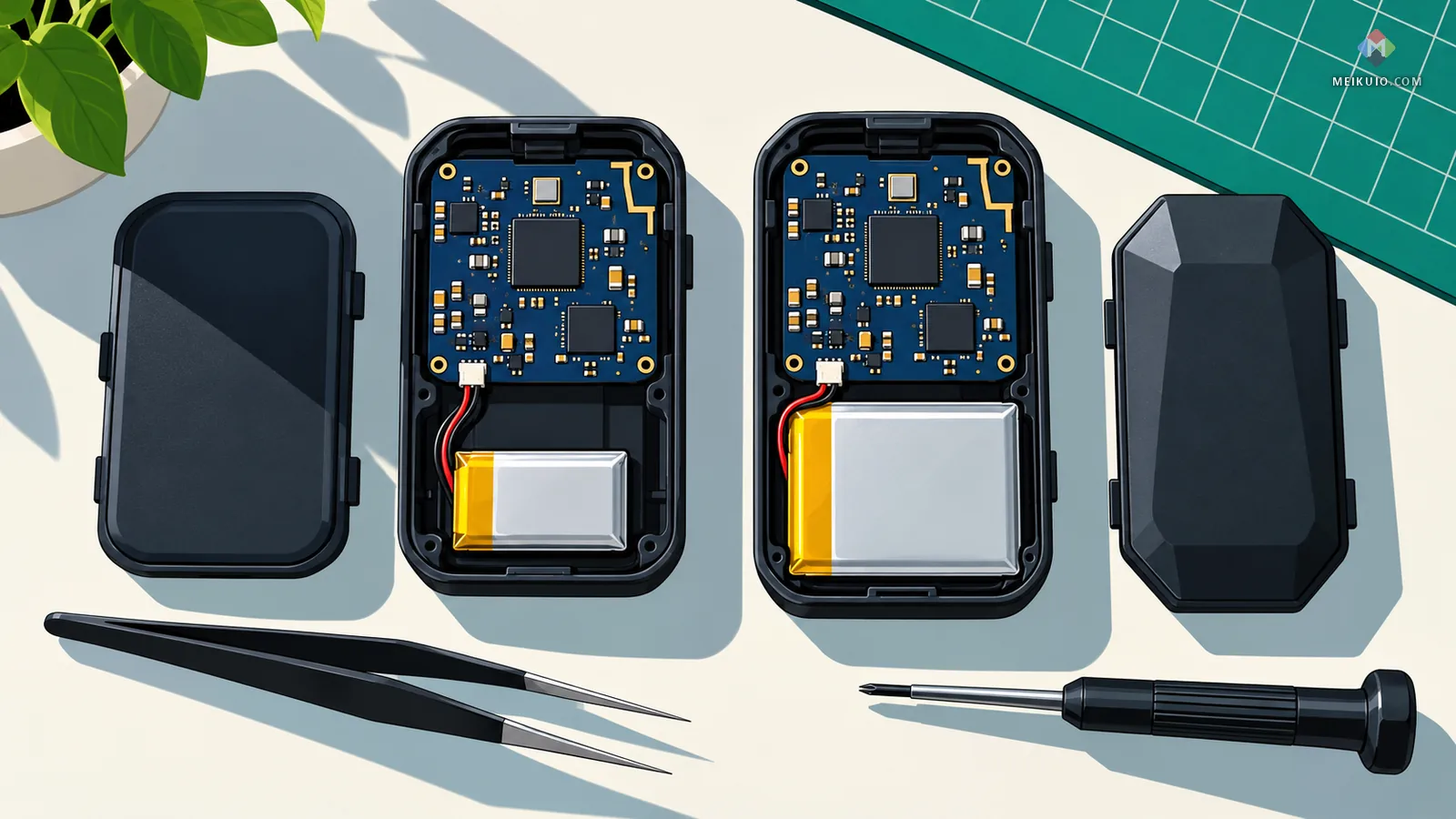
Same board, different bill. On annual plans, two years of Spytec costs $550.80. Two years of Optimus 3.0, device included, costs $410.99, and you get the bigger battery. Month to month the gap widens to $838.80 against $506.75. You can check any tracker the same way with its FCC ID. Our best Wi-Fi router guide shows how to look one up. It’s the same federal record that decides which beginner drones can be sold in the US.
What does “no subscription” actually mean?
Search for the best GPS tracker for a car without a subscription, and a “no subscription” tracker is almost always one of five things. It’s a Bluetooth tag that borrows strangers’ phones, a plan prepaid inside the price, a device that needs your own SIM card, a logger that only records a route, or a car’s built-in service. Only the prepaid plan shows a live location with nothing more to pay, until its term ends. Your own SIM and a car’s built-in service can show one too, but you pay a carrier or a subscription.
The Bluetooth tag is what many “no monthly fee” listings turn out to be. An AirTag, a Tile or a Find Hub tag has no GPS receiver and no cellular radio. Google’s own help page defines a tracker as “a small bluetooth device.” The tag reports only when a phone on the same network passes close by. On an empty back road, it can go quiet for hours.

A prepaid plan is fine when the listing says it’s prepaid. Tracki sells its Mini with two years of service for $253.99. Invoxia’s Pro Max comes with a year of service that starts when you buy it. After that, Invoxia charges $66.95 a year or $8.95 a month. The plan is still there. You paid for it upfront.
The own-SIM tracker is where “no monthly fee” gets slippery. Marketplace trackers like SinoTrack’s ST-901 and ST-905 charge nothing for the app. You buy the SIM card and the data plan yourself. SinoTrack’s own specs list those two models as 2G. MiCODUS sells its MV730 as a “2G Relay GPS Tracker.” T-Mobile’s support page still reads: “As of August 3, 2026, T-Mobile’s 2G GSM network will be retired.” I couldn’t confirm the switch-off happened. AT&T’s own notice said its 2G would be unavailable after December 31, 2016.
On Amazon, the label does a lot of work. I pulled the first 20 organic results for “gps tracker no monthly fee” on October 23. Seventeen titles said “no monthly fee” or “no subscription.” Of those 17, at least eight said they work through Apple’s Find My or Google’s Find Hub, or called themselves a Bluetooth tag. The same titles still billed them as a “GPS Tracker for Vehicles.”
Before you buy a no-fee tracker
Read the listing for three words: “Find My,” “SIM card” and “2G.” Find My means it’s a Bluetooth tag. “SIM card” without “data plan included” means you’ll pay a carrier instead of the seller. “2G” means it may have no US network to join at all.
Can you use an AirTag as a GPS tracker?
You can use an AirTag as a finder for a parked car or a lost bag, but not as a hidden GPS tracker for a stolen car. Apple designed it to give itself away. An AirTag that’s away from its owner “emits a sound when it’s moved,” Apple says, and nearby iPhones show the alert “AirTag Found Moving With You.”
That protection works on Android too: Google says phones running Android 6 and up get unknown tracker alerts for Find Hub tags and AirTags. Car and Driver flagged the same problem: “Drivers who aren’t in the owner’s network may also be alerted to the AirTag’s presence, undermining its stealthiness.”
For keys, luggage and a car you parked badly, the AirTag is hard to beat at $29 with no plan. For theft recovery, it’s the wrong tool.
The best GPS trackers in 2026
These are the best GPS trackers for each job, seven cellular trackers, one kids’ GPS watch and one tag. For each one I list the plan cost and the one thing I’d check before paying.
Bouncie: best GPS tracker for a family car

Bouncie is the tracker I’d hand to a parent with a new driver. It plugs into the car’s OBD-II port, the diagnostic socket under the steering wheel. There’s no battery to charge and nothing to wire. Bouncie lists the radio as “4G LTE CAT M1,” a low-power kind of 4G built for small devices.
The pricing is the cleanest I found. The device is a one-time $89.99, and the plan is $9.65 a month. The pricing page promises “No Contracts,” “No Hidden Fees” and “No Activation Fees.” Your subscription “is created when Bouncie is installed and can be cancelled at any time.” Two years comes to $321.59. That’s the lowest plan share of any tracker I could total. Bouncie charges more for the hardware and less for the service.
It’s also the clearest privacy promise of the policies I read. Bouncie’s policy says it “does not sell, license or share information that individually identifies our customers.” Car and Driver named it Best Overall. Its testers liked the alert options and the engine and battery readouts in the app. The one con on its list: “Does not report while ignition is off.”
The catch is the port itself. It sits where any thief looks first. Bouncie fits a teen driver or an older parent’s car better than a theft-prone pickup. Your teen will know it’s there. That’s fine.
LandAirSea 54: best portable GPS tracker

The LandAirSea 54 is a small magnetic box you can move from a car to a trailer to a boat. It runs on its own battery, so it doesn’t care what you stick it to. Road & Track’s tester, Sheilah Villari, dropped one in a Hyundai Santa Fe and wrote that it “blended in with the floor mats.”
I like that the price ladder is out in the open. LandAirSea’s plan page reads “No Activation Fee • No Contract” and lists every update speed. It’s $19.95 a month for a location every three minutes, $24.95 for every minute and up to $49.95 for every three seconds. The device is $29.95. Prepay two years at the three-minute rate and the plan costs $238.80. With the device, two years comes to $268.75.
Pick your update speed by the job. Most people don’t need three seconds. Three-minute updates are fine for a trailer that shouldn’t move at all. The $49.95 tier is for chasing a car in real time. At that rate, two years of plan fees come to $1,198.80.
Optimus 3.0: best GPS tracker for a car that might be stolen
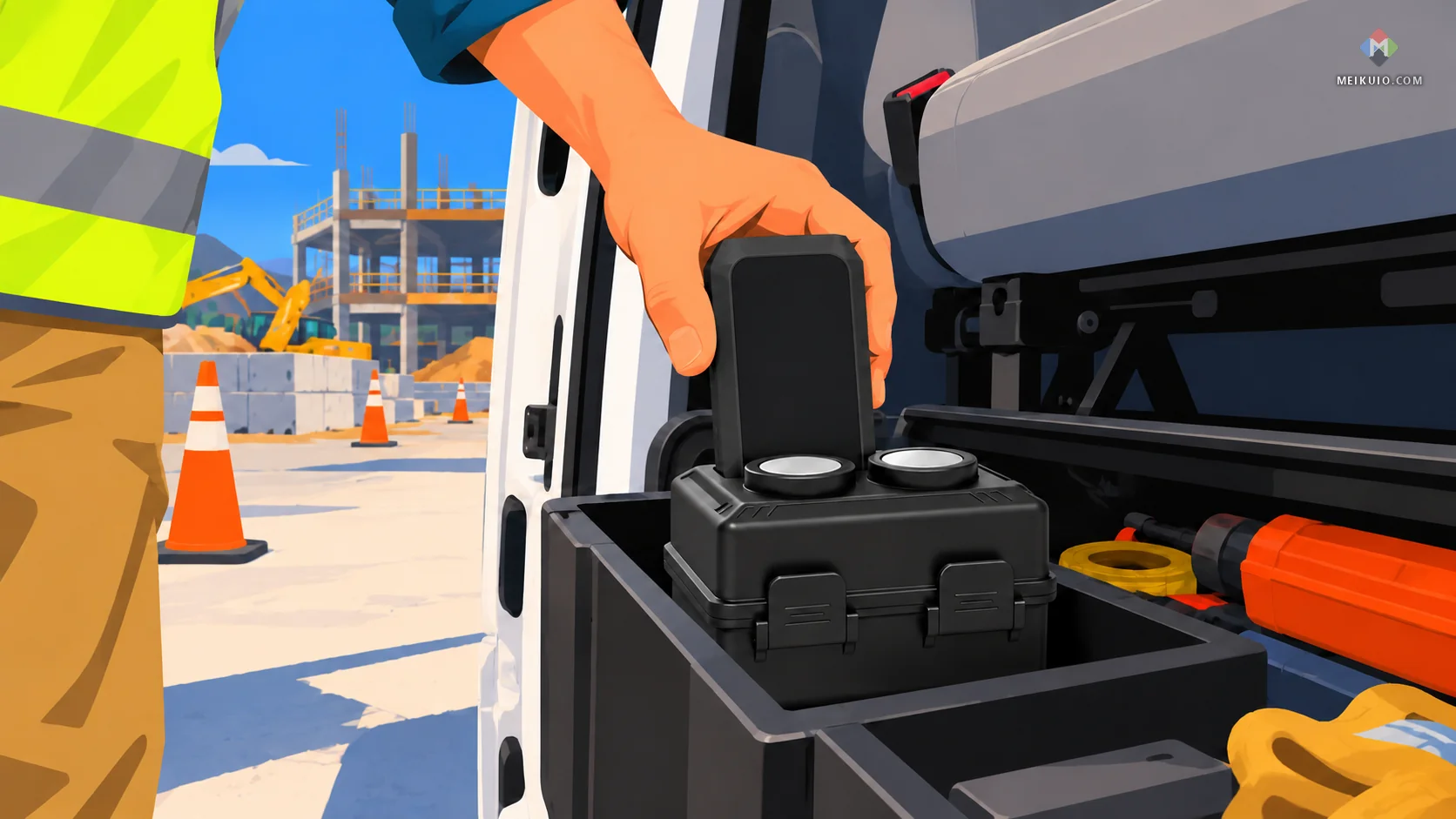
I’d buy the Optimus 3.0 for a car that might be stolen. It runs on its own battery and can sit away from the diagnostic port. Queclink’s FCC filing says it shares a circuit board with Spytec’s HPN-A00, and the Optimus version carries the bigger 6,000 mAh battery. Optimus rates it at “Up to 1 month Battery Life in standby mode.” It reports every minute while moving by default, and Optimus says you can raise that to every 10 seconds at no extra charge.
The device with its magnetic case is $27.95. The plan is “$19.95 per month – Cancel Anytime – No Contract – No Hidden Fees,” with the “SIM Card and Data Plan Included.” Pay ahead and it gets cheaper: 5 percent off a quarter, 10 percent off six months, 20 percent off a year. Paid yearly, two years comes to $410.99. Spytec’s annual plan comes to $550.80 over two years for the same board with a smaller battery.
The catch is the battery math. A month in standby isn’t a month of live tracking, and faster reporting drains it sooner. Plan on charging it more often than the box suggests.
Tracki: best small tracker for bags and backpacks

Tracki is the cheapest real GPS tracker here to buy. It’s also tied for the most guide mentions, six of the fourteen pages. Its basic tracker, listed as the Tracki Universal, was $11.30 on October 23, down from $14.90. Tracki rates the battery at “up to 30 days in battery save mode.”
The $11.30 is bait for the plan. Tracki is upfront about the better deal, though. The Mini with two years of service included is $253.99. Subtract the device and $242.69 of that bundle is service, about 96 percent. Car and Driver named it Best for Families and liked the email and text alerts, but listed “Unreliable push notifications” as its con.
Read the privacy policy before you agree to anything in the app. Tracki’s policy says that if you consent, it “may also share this aggregated data with or sell this data to third parties.” The clause covers aggregated navigation data. Say no when the app asks.
Garmin Bounce 2: best GPS watch for a child without a phone

For a child too young for a phone, I’d buy the Garmin Bounce 2. It’s a watch with its own LTE connection. Your kid can call and text you, and you see where the watch is in the Garmin Jr. app. You don’t switch carriers, because Garmin sells the plan itself.
The watch is $299.99. The plan is $9.99 a month, or $99.99 a year if you sign an annual contract. On the yearly plan, two years come to $499.97. Paid monthly, they come to $539.75. That split is unusual for this list. The plan is only 40 percent of the total, because the watch costs more than most trackers. Garmin rates the battery at up to two days, and its LTE works in the US, Canada and much of Europe.
More parents search for the Gabb Watch 3e. SafeWise’s family test calls it the “Best first smartwatch.” It’s $229.99, plus a $30 activation fee and a plan of $12.99 to $17.99 a month. Gabb says contract plans carry an early termination fee. Two years start at $571.75. Gabb rates the battery at 14 to 18 hours, and its SOS button calls the child’s SOS contact, “not emergency services.”
Why not Jiobit, the clip-on? Life360, which owns it, says “the current Jiobit line remains out of stock” and gives no restock date. It still services existing subscriptions. If you already have one, Life360’s privacy policy says it licenses “precise geolocation data” to “select business partners for their own advertising and monetization purposes.” Opt out in the app settings on day one.
AngelSense: best for a child with autism or an adult who wanders
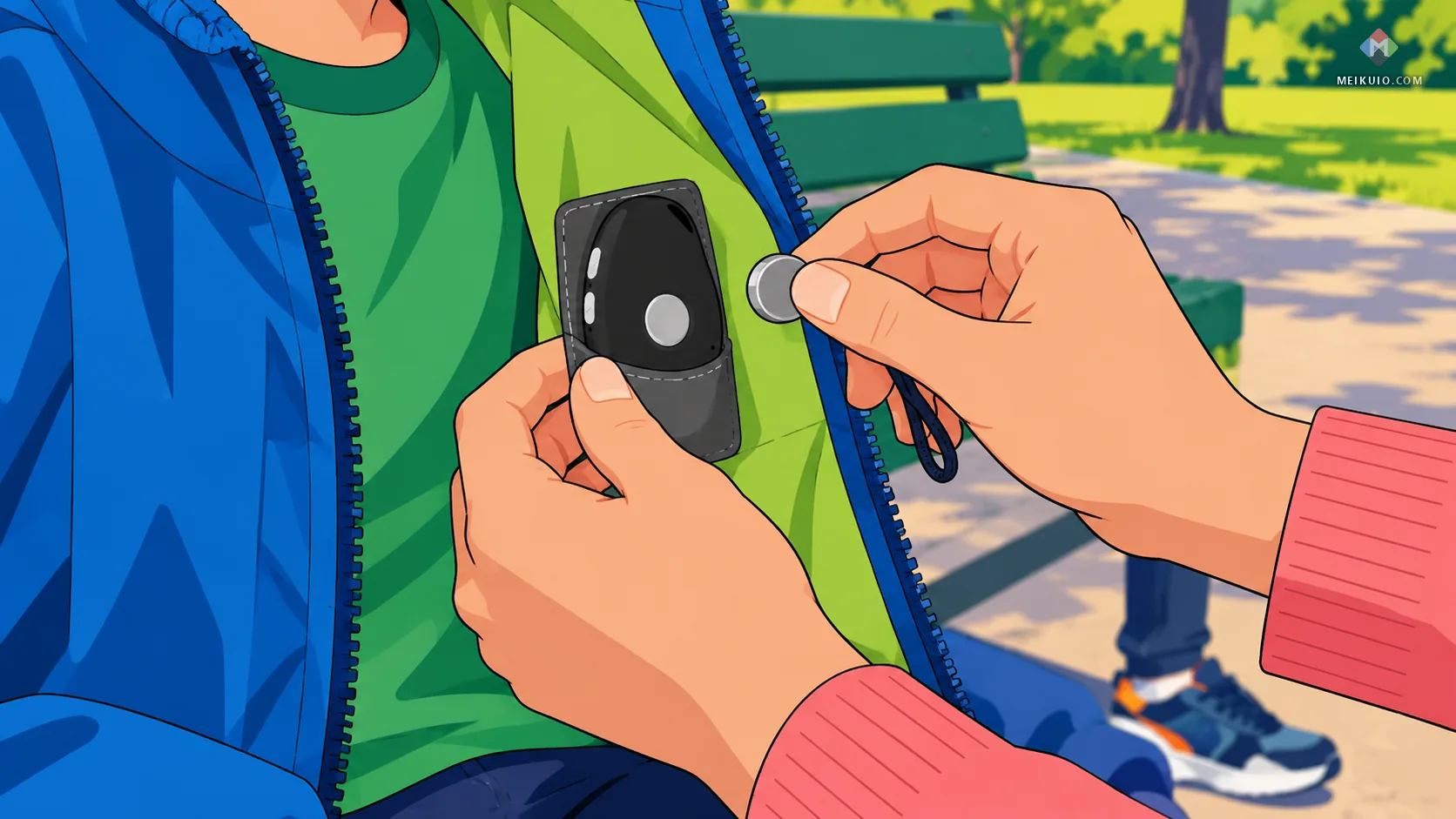
AngelSense is built for the hardest case: a child or adult who wanders and pulls off anything they can reach. It ships with a sleeve and fasteners that open with a magnetic key. That makes it harder to pull off than a clip. Parents quoted on its page write about non-verbal children and bus rides gone wrong.
It’s also the most expensive pick here by a wide margin. The plans on AngelSense’s pricing page are $64.99 a month with no contract, $49.99 a month with a one-year contract, or $44.99 a month paid yearly upfront. Even on the cheapest plan, two years is $1,079.76 in service alone. On October 23 the wearable itself was free with a plan in a back-to-school offer, down from $229. The month-to-month plan is the only one you can walk away from, and it adds $480 over two years against the prepaid rate.
Before you pay that, call your sheriff’s office. Many run Project Lifesaver, a radio bracelet program for people who wander, and in some counties it costs nothing. More on that below.
Invoxia Pro Max: best for a bike or a car you rarely drive

I’d put Invoxia’s Pro Max on a bike or a car that sits for weeks. It replaces the GPS Tracker Pro, which Invoxia’s own page listed as out of stock on October 23. The Pro Max runs on LTE-M and costs $199 with the first year of service included.
From year two you renew in the app: $66.95 a year, about $5.58 a month on Invoxia’s own math, or $8.95 a month with no commitment. On the yearly plan, two years come to $265.95. Invoxia prints those renewal prices on the product page, so you know the year-two bill before you buy.
Invoxia rates the battery at up to six months, depending on use. It says live tracking can send up to one position per second, and the tracker works in more than 35 countries.
Monimoto 9: best GPS tracker for a motorcycle

Monimoto is the motorcycle pick because it leaves the bike’s wiring alone. It runs on its own battery, and Monimoto says its devices “can last up to 12-24 months.” It also watches for a key fob. If the bike moves without you, it raises the alarm. Car and Driver’s tester named the Monimoto 9 best for bikes.
Monimoto lists the Monimoto 7 at $129 and the Monimoto 9 at $179, with “2 Months of FREE service included” and an eSIM subscription you manage in the app. Car and Driver’s con is the one I’d flag too: the “High price of initial ownership.” You pay more upfront. In return, you won’t be charging it every week.
Apple AirTag: the no-plan contrast

Apple’s second-generation AirTag, announced January 26, 2026, costs $29, or $99 for four, and never asks for a plan. It’s the right pick for keys, luggage and a car you can’t find in a stadium lot. It has no GPS or cellular radio. Apple built it to warn the person carrying it, so I list it as a contrast to the theft picks.
How do you track a child or a parent with dementia?
For a child without a phone, a kids’ GPS watch like the Garmin Bounce 2 does the job. Jiobit’s clip-on is out of stock. For a parent with dementia who wanders, start with your sheriff’s Project Lifesaver program. Add a locked-on tracker like AngelSense if you need a live map.
The clip-on versus watch choice comes down to the child. A watch can call home, which a clip-on can’t. A watch is also easier to take off and leave on a bathroom sink. Kids’ watches have a record of security holes. In October 2017 the Norwegian Consumer Council tested four and reported that “Strangers can easily seize control of the watches and use them to track and eavesdrop on children.”
For an adult who wanders, Project Lifesaver works differently from everything above. In its own words, the program “is run at a municipality level by public safety agencies.” The person wears a small radio transmitter. If they go missing, a trained team searches with directional antennas. Santa Barbara County’s sheriff says its program is “currently offered at no cost, including the transmitter, batteries, and wristbands, while funding remains available.” Other agencies charge, so ask yours.

A tracker and a medical alert service do different jobs. A tracker shows you where someone is. A monitored alert service adds a button that reaches a call center and, on some plans, fall detection. If your parent needs both, price them separately.
Is it legal to put a GPS tracker on a car?
Tracking a car you own or lease is generally legal. Putting a tracker on another adult’s car, or on that adult, without consent is a crime in many states. A car you co-own with a spouse sits between those two rules, so ask a lawyer in your state before you track it. We tried to read the official statute text for all 50 states and DC, and could for 36. At least 28 states and DC have a law that names tracking devices or location tracking.
California’s law spells it out. Penal Code 637.7 bars anyone from using an electronic tracking device “to determine the location or movement of a person.” It doesn’t apply “when the registered owner, lessor, or lessee of a vehicle has consented,” and a violation “is a misdemeanor.” Florida goes further: its tracking statute, 934.425, makes a violation “a felony of the third degree.”
Nineteen states have a law aimed at tracking devices. Ten jurisdictions, including DC, name tracking inside a stalking or harassment law. Seven have only general laws, with no tracking-specific wording we could find. For 15 states we couldn’t get a current official text, so we can’t say what their law says. That’s why I won’t repeat the common line that tracking is “illegal in most states.” The laws we read set conditions, such as missing consent or an intent to harass, and the conditions differ by state. What the count does support is at least 28 states plus DC with tracking-specific wording, and probably more.
Federal law reaches the worst cases. The federal stalking statute covers anyone who, intending to harass or intimidate, uses “any interactive computer service or electronic communication service” to “place under surveillance” another person in a way that causes fear or substantial emotional distress. None of this is legal advice. If you’re unsure, ask a lawyer in your state before you put a tracker on anything you don’t own.
How do you find a GPS tracker on your car?
Your phone can find a Bluetooth tag but not a cellular GPS tracker. Apple and Google built their unknown tracker alerts for Bluetooth tags. Neither company’s help page says the alerts can detect a tracker that reports over a cellular network.
Start with the phone check. On an iPhone, tracking notifications need iOS 14.5 or later, and alerts for other makers’ Bluetooth trackers need iOS 17.5. On Android 6 and up, Google’s help page says you can run a manual scan from Settings, under Safety & Emergency, then Unknown tracker alerts, then Scan now. If something turns up, Google notes that turning off Bluetooth or switching on airplane mode won’t stop the tracker from sharing its location.
For a cellular tracker, your phone won’t help. It can’t see one. NYU’s write-up on Mobile Defender, a startup building detectors for hidden trackers, says: “Unlike Bluetooth-based trackers such as Apple AirTags, which now trigger alerts on most smartphones, cellular GPS trackers operate silently and invisibly.” A plug-in tracker sits in the diagnostic port under the steering wheel. A battery tracker needs a metal surface or a spot inside the car. A mechanic can check both.

If you find one you didn’t put there, think before you pull it. Stay calm. Removing it tells whoever placed it that you know. Photograph it where it sits, and call the police or the National Domestic Violence Hotline if you think someone is following you.
Will your tracker still work in three years?
Your tracker works only as long as its network and its company do. Both have quit on owners before. When US carriers shut down 3G in 2022, trackers and car services built only for 3G went dark. According to the FCC, AT&T began its phase-out in February 2022. T-Mobile retired its 3G UMTS network on July 1, 2022, and Verizon finished by December 31, 2022.
On this list, Jiobit’s first generation already went dark: those devices “are no longer operational” as of July 31, 2022. Companies close too. Verizon now lists its Hum car trackers as no longer supported. AT&T’s support page says HARMAN stopped supporting its Spark car device and service as of April 1, 2024. SiriusXM says Automatic shut down all operations on May 28, 2020. You own the box, but the service decides whether it works. We found the same gap between owning and using with digital games, and it’s what happens to any product when the company behind it shuts down.
LTE-M, also written Cat-M1, is a low-power kind of 4G built for small devices like trackers. Bouncie and Invoxia name it on their own pages. LandAirSea, Tracki and AngelSense list 4G LTE, and Tracki says its lineup doesn’t rely on 2G. I found no US carrier announcement of an LTE-M shutdown. The trackers at risk now are the 2G marketplace boxes. Buy one that names LTE on the spec sheet, and treat a tracker that runs on 2G alone as a dealbreaker.
Two more checks on the spec sheet. For accuracy, Tracki says its chipset is accurate to about 5 meters, roughly 16 feet, under open sky, and calls that a best-case number. For travel, LandAirSea says the 54 works in over 155 countries, Tracki says it roams in more than 190 and Invoxia lists more than 35. AngelSense covers the US, Canada and the UK. Optimus lists “Coverage across the USA.” Check yours before a trip to Canada or Mexico.
Which GPS tracker should you buy?
Pick the best GPS tracker for the job first. Then pick a plan length that matches how long you’ll need it.
- For a teen driver or an older parent’s car, get Bouncie. It fits a car where everyone knows it’s there, and it has no activation fee or contract.
- For a trailer, a boat or a work van that shouldn’t move, get the LandAirSea 54 on the three-minute plan and prepay if you’re sure.
- For a car that might be stolen, get a battery tracker like the Optimus 3.0 and keep it out of the diagnostic port.
- For a backpack, a suitcase or a camera bag, get a Tracki if you need live updates, or an AirTag if “last seen” is enough.
- For a young child, get a kids’ GPS watch like the Garmin Bounce 2, and turn off any data sharing in the app.
- For someone who wanders, call your sheriff about Project Lifesaver first, then look at AngelSense.
- For a bike or a motorcycle, get the Invoxia Pro Max or the Monimoto 9.
Also considered
Spytec’s GL300 and Atlas showed up on six of the fourteen guides, tied with Tracki and LandAirSea. I left Spytec out because Queclink’s filing puts the Atlas’s circuit board in the Optimus 3.0, and Optimus charges less to run it. If you already use Spytec’s app, the Atlas is a fine tracker at a higher plan price.
BrickHouse Security’s Spark Nano 7, no relation to HARMAN’s Spark, is cheap to buy at $14.95, or $17.95 with a magnetic case. Its personal plans cost $24.99 a month, or $14.99 a month if you pay $179.88 for a year. On the yearly plan, two years come to $374.71: less than Optimus 3.0, more than LandAirSea or Tracki. Its LiveWire Volt, a hardwired tracker, was Car and Driver’s pick for a permanent install. Both are reasonable. The Volt needs an installer, and the Nano 7 lands mid-list on price.
Do you need a GPS tracker at all?
You can skip a GPS tracker if the person already carries a phone or the car has a connected app. Family location sharing on iPhone and Android is free and live, as long as the phone is charged and the person agrees to share. For a teenager with a phone, that’s usually enough.
Many newer cars can already locate themselves through the maker’s app. It’s often free for a trial and then a subscription, the same way car makers now sell location services and features like Tesla’s FSD. Check what your car includes before you pay twice for the same map. We found the same double-pay trap with identity theft protection.
Your insurer’s driving app won’t find a stolen car. State Farm says its Drive Safe & Save beacon “isn’t equipped with GPS.” Its app shows “a map of your route and driving events” after each trip, not where your car is right now.
Technical owners can also run their own tracking server with free software like Traccar and a generic tracker on their own SIM. It works, but you take on the setup and the security yourself.
Who sees your location data?
Your tracker company can see every place you’ve been, and its privacy policy decides what happens next. I read the policies of the picks. Some sell. Some promise not to.
Bouncie says it “does not sell, license or share information that individually identifies our customers.” Tracki’s policy allows it to “share this aggregated data with or sell this data to third parties” if you consent. Life360, which owns Jiobit and Tile, says it licenses “precise geolocation data” to “select business partners for their own advertising and monetization purposes.” Its policy also carries a Texas notice: “We may sell your sensitive personal data.”
Regulators have noticed. On January 14, 2026, the FTC finalized an order settling allegations that General Motors and OnStar “collected, used, and sold consumers’ precise geolocation data and driving behavior data.” Before you pick a tracker, read its privacy page for one word: “sell.”
Field notes
- Plan versus device: over 24 months the plan was 72% of Bouncie’s total, 89% of LandAirSea 54’s and 93% of Optimus 3.0’s on their cheapest routes; makers’ prices, October 23, 2026.
- One board, two brands: Queclink’s FCC filing YQD-GL330MG (granted June 4, 2026) says the Spytec HPN-A00 and the Optimus 3.0 GL330B “share the same PCBA”; two years of Spytec on annual plans costs $550.80, Optimus 3.0 $410.99.
- No-fee shelf: 17 of the first 20 organic Amazon results for “gps tracker no monthly fee” said “no monthly fee” or “no subscription” in the title; at least 8 of those titles named Find My, Find Hub or Bluetooth; October 23, 2026.
- Phone alerts: Apple and Google describe unknown tracker alerts for Bluetooth tags; iOS 17.5 for other makers’ tags, Android 6 and up.
- Networks: T-Mobile set August 3, 2026 for retiring 2G GSM; first-generation Jiobit devices on AT&T and T-Mobile 3G stopped on July 31, 2022.
- State laws: at least 28 states and DC name tracking devices or location tracking in a statute; 15 states could not be determined from official text.
- Sources: FCC equipment authorization YQD-GL330MG; T-Mobile Network Evolution; FCC 3G phase-out guide; Apple Support 119874; Google Android Help 13658562; Eighth Circuit, Custom Communications v. FTC (July 8, 2025); California Penal Code 637.7; makers’ price and privacy pages.
Frequently Asked Questions
Can I use an AirTag as a GPS tracker for my car?
Only to find a parked car, not to recover a stolen one. An AirTag has no GPS or cellular radio. It reports only when a nearby phone passes, and it warns the person carrying it with a sound and an alert.
Is there a GPS tracker with no monthly fee?
Not one that reports a live location for free. “No monthly fee” usually means a Bluetooth tag, a plan prepaid in the price, or a device that needs your own SIM card and carrier plan. You pay someone either way.
How much does a GPS tracker subscription cost per month?
Most plans here cost $9 to $35 a month. Bouncie is $9.65, LandAirSea and Optimus start at $19.95, and Spytec is $34.95; AngelSense runs $44.99 to $64.99. Faster updates cost more: LandAirSea charges up to $49.95 for three-second updates.
Can someone track my car without me knowing?
Yes. A cellular GPS tracker doesn’t trigger the alerts your phone shows for Bluetooth tags. Putting one on another adult’s car without consent is a crime in many states. If you find one, photograph it and call the police.
Will my phone warn me about a hidden GPS tracker?
Only if it’s a Bluetooth tag. iPhones warn about an unknown AirTag from iOS 14.5 and about other makers’ tags from iOS 17.5. Android 6 and later warns about unknown Bluetooth trackers too. Neither Apple nor Google says the alerts detect a cellular GPS tracker.
Is it legal to put a GPS tracker on my teenager’s car?
Generally yes, if you own or lease the car. California’s law, for example, exempts tracking when a vehicle’s registered owner, lessor or lessee consents. If your teen is an adult, get their consent too. Rules differ by state. And tell your teen. A hidden tracker damages trust fast.
What is the best GPS tracker for a child?
For a child without a phone, a kids’ GPS watch like the Garmin Bounce 2 is the simplest choice. It tracks and can call home. For a child with autism who wanders, AngelSense costs more but is harder to remove. Ask your sheriff about Project Lifesaver too.
Do GPS trackers work without cell service?
A cellular tracker still knows where it is, but it sends that location only when it finds a signal. A Bluetooth tag needs a passing phone instead.
Which is better for a car, an AirTag or a GPS tracker?
A battery-powered cellular GPS tracker, if theft is the worry. It reports on its own and stays silent. An AirTag is cheaper and has no plan. But it depends on passing phones and alerts the thief that it’s there.
How long does a GPS tracker battery last?
From under a day to two years, depending on the model and update speed. AngelSense rates up to 24 hours, Optimus a month in standby, Invoxia’s Pro Max up to six months and Monimoto up to 12 to 24 months. Plug-ins like Bouncie draw power from the car instead.
My Take
I’d give a Bouncie to any parent with a new driver. It has the lowest plan share of any tracker where I could split device from plan, a no-activation, cancel-anytime plan and the clearest privacy promise I read. Between the Optimus 3.0 and Spytec, I’d buy the Optimus. Queclink’s own filing says it’s the same board, and two years cost $139.81 less on annual plans.
I’d read any “no monthly fee” listing for “Find My,” “SIM card” and “2G” before buying. And I’d prepay two years only if I was sure I’d still need the tracker in month 24. If that’s a motorcycle you store in winter or a teen who’s leaving home soon, month to month is the cheaper mistake.