

The best emergency radio is two radios. The Midland WR120 ($54.99) wakes you for a warning in your own county. The Midland ER310PRO ($109.99) keeps you informed through days without power. The three big testing guides on Google’s first page crown a Midland crank radio, and none of those winners made the National Weather Service’s receiver list.
- Which emergency radio should you buy?
- What makes a radio an emergency radio?
- What the NOAA logo on the box does and doesn’t promise
- Public Alert means SAME; the NOAA logo doesn’t
- What the top guides recommend, checked against the list
- How we picked these radios
- The best emergency radios in 2026
- Midland WR120: best for waking you up
- Midland WR400: best for heavy sleepers and the hard of hearing
- Midland ER310PRO: best for a long power outage
- Midland ER210: best compact crank radio
- Kaito KA500: best on AA batteries, with shortwave
- RunningSnail MD-090P: best budget crank radio
- C. Crane CCRadio Solar BT: best for everyday listening
- One radio or two?
- What if someone in the house can’t hear the alarm?
- How to set up a weather radio for your county
- How long will an emergency radio run in a power outage?
- Does your phone replace a weather radio?
- Where NOAA Weather Radio doesn’t reach
- Frequently Asked Questions
- What type of radio is best for emergencies?
- Which weather radio does NOAA recommend?
- What is the best radio if cell towers go down?
- What is SAME on a weather radio?
- How do I set my weather radio to my county?
- Do hand crank radios really work?
- What frequency is NOAA Weather Radio on?
- Can an emergency radio charge my phone?
- Are NOAA weather radios worth it if my phone gets alerts?
- What radio should I have for the worst-case emergency?
- My Take
Which emergency radio should you buy?
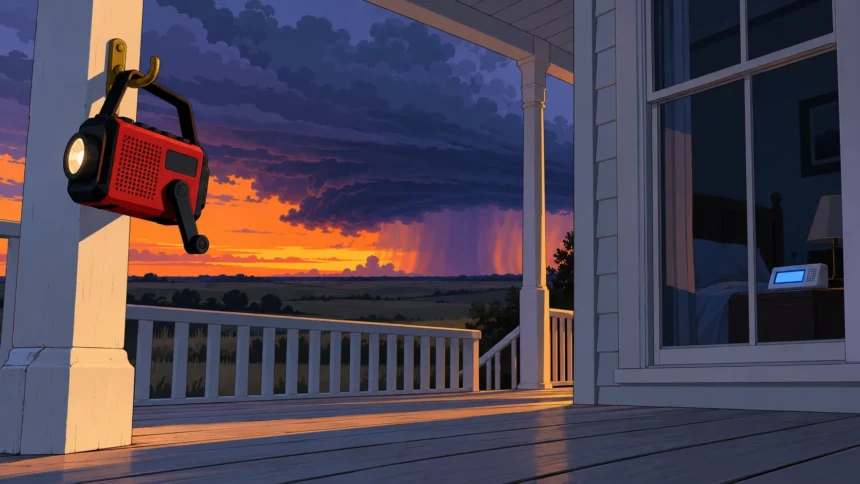
The best emergency radio for you depends on which of two jobs you need done. Ready.gov’s kit list, the government’s own shopping list for a disaster, names two kinds of radio in one line: “Battery-powered or hand crank radio and a NOAA Weather Radio with tone alert.” Most buying guides treat that as one product. It’s two jobs. The first is waking you at 3 a.m. when the National Weather Service issues a tornado or flash flood warning for the place you sleep. The second is keeping you informed, lit and charged through days without the grid. Pick the job first, then the radio:
- If you want to be woken for a warning in your county, get the Midland WR120. It’s a tabletop weather alert radio with SAME county coding: once you program your county’s code, it sounds only for alerts there. It’s Public Alert certified and $54.99 on Midland’s site.
- If someone in the house is hard of hearing, get the Midland WR400 ($109.99), which adds voice and light alerts, and plug in a pillow shaker or a strobe. Both accessories also work with the WR120, which is the cheaper fix for a heavy sleeper.
- If you want news, a flashlight and a phone charge through a long outage, get the Midland ER310PRO ($109.99). For a smaller hand crank emergency radio, the Midland ER210 ($64.99).
- If you’d rather run on AA batteries and want shortwave, get the Kaito KA500. On a tight budget, the RunningSnail MD-090P ($36.90). For a radio you’ll listen to every day, the C. Crane CCRadio Solar BT ($109.99).
Run the numbers on two radios. A WR120 and a Kaito KA500 together cost $109.98 at the makers’ prices, one cent less than a single ER310PRO. The pair covers both jobs. The single radio does the second job well and the first one only partly. I run the full math below, in the section on one radio or two.
One thing this list isn’t: a guide to two-way radios. Every radio I recommend here only receives. If you want to talk back, on a ham band, on the family walkie-talkies or on a boat’s marine radio, that’s a different purchase with its own rules and, sometimes, its own license. The best emergency radio for most homes doesn’t transmit at all. It listens, and it wakes you.
A crank radio keeps you informed. A SAME weather radio wakes you for your own county.
The Alert column shows what each maker’s own documents say its radio does. The NWS list column says whether the model appears on the National Weather Service’s list of receivers approved for its All Hazards logo. I read that list on October 18, 2026. Prices are the makers’ own, checked the same day. Those two columns matter more than the crank. Every radio here will play the weather broadcast if you turn it on. Only two will wake you for your county without waking you for the next one over.
What makes a radio an emergency radio?
An emergency radio is a portable radio that keeps working without wall power and can receive NOAA Weather Radio, the National Weather Service’s own broadcast network. Most run on some mix of a hand crank, a small solar panel, a rechargeable battery and AA cells. Most add a flashlight and a USB port to charge a phone. None of that, by itself, will wake you up, and that’s the first thing to settle before you shop for the best emergency radio.
More Read

NOAA Weather Radio is a network of NWS transmitters on seven VHF frequencies, from 162.400 to 162.550 MHz, broadcasting forecasts and warnings around the clock. Your FM dial won’t find it. In the agency’s words, “The broadcasts cannot be heard on a simple AM/FM radio receiver.” A radio needs a weather band to hear them at all.
Hearing them is the easy part. What matters at night is the alarm. Before most warnings, the NWS sends a 1050 Hz tone, and in its words, “The alarm will activate all the receivers equipped to receive it, even if the audio is turned off.” A radio built to listen for that tone can sit silent on a nightstand for months and then sound by itself. A radio without it is just a radio.
What SAME does
SAME stands for Specific Area Message Encoding. Every NWS alert carries codes for the counties it covers, and a SAME radio compares them with the six-digit codes you programmed into it. The NWS says SAME receivers “will respond only to alerts issued for the area (or areas) you have selected,” which cuts the false alarms “for events which might be a few counties away from where you live.”
That matters because one transmitter reaches about 40 miles, far enough to cover several counties. A radio that listens only for the tone goes off for all of them. In NWS usage, a watch means a hazard is possible and a warning means it’s happening or about to. A Reddit user in the weather forum gave new owners a tip: switch off the watch alerts, “else you’ll get woke up at 3AM in June.” A SAME radio also lets you choose which events wake you, within limits. Midland’s FAQ for the WR120 says the most serious warnings, tornado and hurricane among them, “are always on by default and cannot be disabled.” That’s the right default.

A weather band is not a weather alert
Most crank radios have a weather band. Fewer have an alert mode, and the ones that do usually listen for the tone across the whole transmitter. Midland’s FAQ for its ER210 crank radio is unusually frank: “The radio will sound the same alert for all alerts that the local station puts out, including the required weekly test.” That includes the test. Every week.
The ER310PRO’s manual tells you to “Tune to the clearest weather broadcast for your area” and then hold the Alert button, after which “The radio remains in standby mode and automatically turns on when a NOAA alert is received.” That works. But the clearest station isn’t always the one that serves your county, and for SAME radios the NWS warns: “Do NOT program your radio for a louder or clearer station not designated as a SAME channel. You will not receive alerts.” So read the box for one of two things: the words Public Alert, or SAME with a county setting. A weather band alone tells you only that the radio can listen.
What the NOAA logo on the box does and doesn’t promise
The National Weather Service’s receiver page opens with a line most buyers never read: “NWS does not endorse a specific make or model of receiver.” It points you to logos instead, recommending that users “look for receivers with the Public Alert and/or the NOAA Weather Radio (NWR) All Hazards logo.” Two logos, two different promises. The NOAA All Hazards logo promises an alarm; only the Public Alert logo promises that the alarm checks your county first.
Public Alert means SAME; the NOAA logo doesn’t
Public Alert is a certification built on CTA-2009-C, an industry standard the Consumer Technology Association developed with the NWS. On the NWS feature list, Public Alert requires the 1050 Hz tone alarm and SAME county coding, plus battery backup for radios. The logo page puts it in one sentence: “Compliance with all sections of CTA-2009-C would classify a weather band receiver as a Public Alert receiver.”
The NOAA All Hazards logo is looser, and the same page says so. Receivers that meet every requirement “except Specific Area Message Encoding (SAME) capabilities, but instead are capable of alerting on the NWR 1050 Hz tone are also considered NOAA Weather Radio All Hazards receivers.” A radio can carry the NOAA logo and still wake you for a county you’ve never driven through. The Kaito KA500 is on the NWS list, and Kaito describes no county coding for its alert. The Kaito does everything its logo asks. The logo just asks less.
The NOAA All Hazards logo allows a radio without SAME county coding. The Public Alert logo requires it.
The agency is also clear about what its list isn’t: “The NWR program office is not a testing facility, nor is it a certification laboratory.” Approval goes model by model, and the page warns that a listed maker may sell other models that were never approved. The list itself carries no date, so I read it as it stood on October 18, 2026. Most best emergency radio lists never mention it at all. We’ve seen the same gap with water filters, where a product can be certified on the box, missing from the registry. Before you trust a label, learn what a certification does and doesn’t cover. For weather radios, the answer sits on two short NWS pages.
What the top guides recommend, checked against the list
On October 18, 2026, Google’s first page for “best emergency radio” held five current guides, from GearJunkie, CNN Underscored, Wirecutter, Travel + Leisure and Field & Stream. Between them, they recommended 24 different radios. I checked every model number against the NWS list and looked for each maker’s own product page.
Four of the 24 are on the NWS list: the Midland WR120, WR400 and ER10VP, and the Kaito KA500. For 14 of the 24, I could open a maker product page or maker statement that day. Midland describes SAME county coding for two of those 14: the WR120 and the WR400. For the other 10, mostly older models and marketplace brands without a site of their own, I found no maker page to check. You can still look up any device’s FCC ID if a radio carries one, but an FCC grant covers radio emissions and says nothing about whether an alarm works. None of the five guides mentions the NWS list or notes that the NOAA logo allows tone-only radios.
Each of the three big testing guides gives its top spot to a Midland crank radio: the ER310PRO at GearJunkie and Wirecutter, the older ER310 at CNN. None of the three is on the NWS list, and no Midland page I could open describes county coding for any of them. The testers rate them as outage radios, and that’s what they are. The bedside job falls to other radios. The other two guides crown different radios, an Eton Odyssey at Travel + Leisure and a Givoust at Field & Stream. Neither is on the NWS list either.
Small slips show up when you read the guides against the source. GearJunkie says “The National Weather Service broadcasts on six different channels”; the NWS lists seven. Its card for the WR120 calls the radio the “Midland WR210” in the text. GearJunkie also calls Sangean’s MMR-88 “Public Alert-certified,” but Sangean’s own blog says the MMR-88 “does not have the SAME (Specific Area Message Encoding) alert type coding.” Public Alert requires SAME, and there’s no public registry of certified radios to settle it. I’d go by the maker’s description of the feature.
How we picked these radios
I didn’t buy or test these radios, and no maker sent us any. To pick the best emergency radio for each job, I read the NWS receiver list and logo pages, each maker’s product page, manual and FAQ, and the five testing guides above. A radio made the list when at least two of those guides recommended it, the maker still sold it on October 18, 2026, and its paperwork backed what I say about it. One exception: the WR400 has a single testing voice, Wirecutter, and the strongest documents on this page.
The method is the one we use when checking a product against its standard: the box makes a claim, and a document confirms it or doesn’t. Volume, reception and how a crank feels in the hand come from testers I name. Runtime and charging figures come from the makers, and I say so every time, because the makers don’t always agree with themselves. It’s the same rule behind the other gadgets we would actually keep.
Four of the seven picks are Midland radios. Nobody paid for that. Midland sells both kinds, the SAME tabletop radios on the NWS list and the crank radios the testers keep putting first, so it lands in both lanes. I also required at least one pick that wakes you for your county. In four of the five guides, no labeled pick has county coding that its maker describes. The exception is Wirecutter’s accessibility pick, the WR400.
The best emergency radios in 2026
These are the best emergency radios for each job. Seven made the cut: two that wake you for your county and five that keep you going when the power’s out. Each card says which job the radio does, what its alert does, whether it’s on the NWS list, what testers found and the one thing I’d want to know before paying. Prices are the makers’ own, checked October 18, 2026.
Midland WR120: best for waking you up
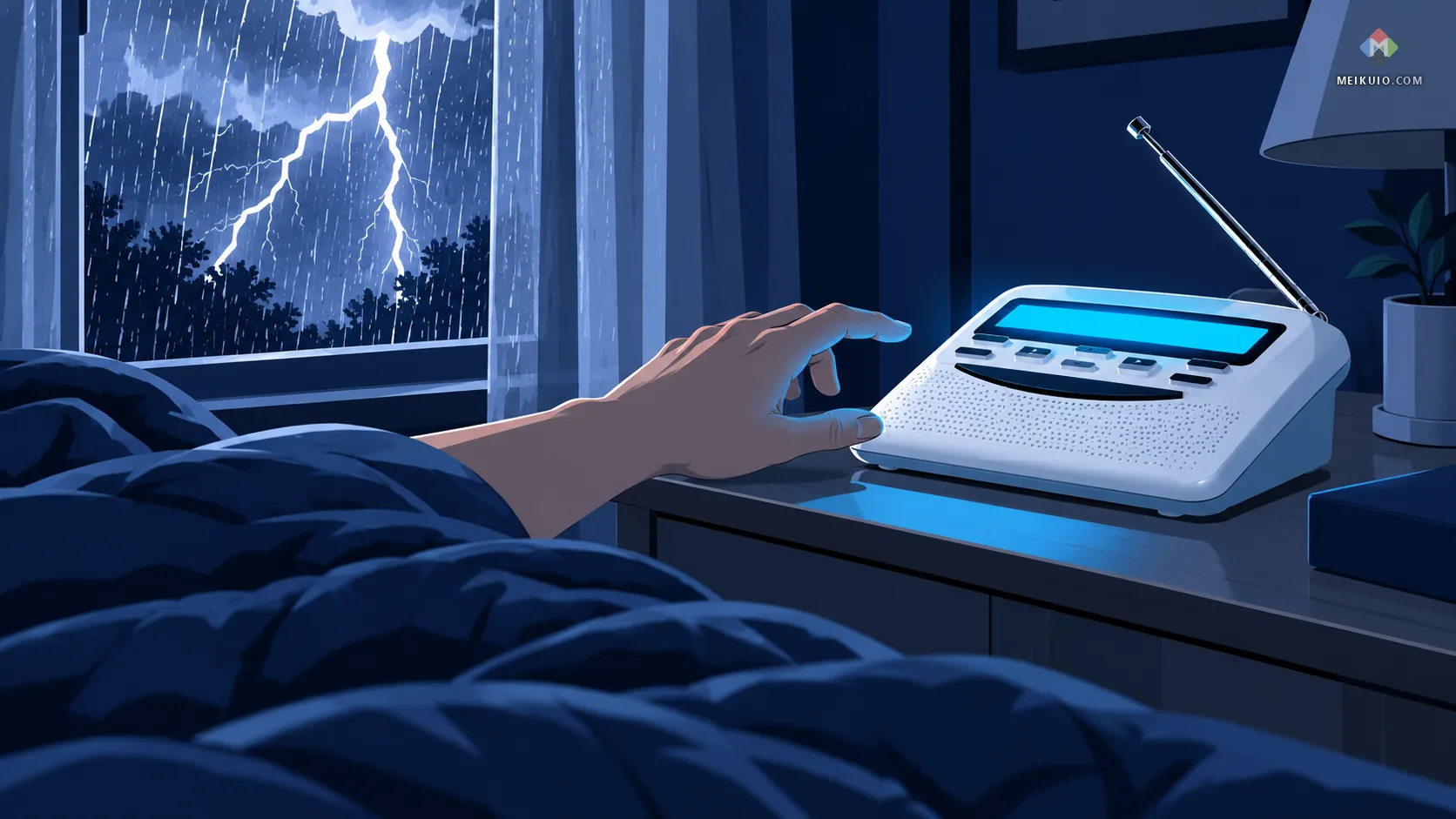
This is the radio for the first job, and the best NOAA weather radio on this list for the money. Midland calls it “the most widely used NOAA Weather Alert Radio.” I can’t check that. I can check the paperwork, and it holds. Midland’s page lists “S.A.M.E. Digital Technology,” “25 Programable Locations” and “Public Alert Certified,” and the WR120 is on the NWS list. It plugs into the wall and keeps watch on three AA batteries when the power drops. Midland’s spec list marks those batteries “Not Included,” so buy them with it. The siren is rated at 90 dB.
Two details sold me on paper. Midland’s FAQ says tornado and hurricane warnings “are always on by default and cannot be disabled,” so you can’t silence the alerts that matter by accident. And an NWS notice explains that the WR-120 expects the weekly test: “If the radio goes for ten days without receiving a test, it gives out one beep every ten minutes.” A radio that tells you it’s gone deaf is worth a lot.
On the back sit jacks for an external antenna and an external alert, and Midland lists its SHKR100 pillow shaker as compatible with the WR120. GearJunkie and CNN both include it, but only in their lists of other radios, and GearJunkie’s card text calls it the “Midland WR210.” Midland’s page can’t settle on a count of alert types either: “85+ EMERGENCY ALERTS” at the top, “Over 60 Emergency Alerts” in the spec list.
The catch: it’s a weather radio and nothing else. Midland lists no crank, solar panel, USB port or flashlight, so it won’t charge a phone or light a hallway. If you want a second SAME option, Sangean’s CL-100 is on the NWS list too, takes up to 25 location codes and, in Sangean’s words, lets you “easily program them to sound alerts for surrounding counties.” The WR120 is $54.99 at Midland.
Midland WR400: best for heavy sleepers and the hard of hearing

The WR400 does the WR120’s job with more ways to get your attention. Midland calls it “the most advanced tabletop alert system available,” which is a sales line; the parts I can verify are the certification and the county count. It’s Public Alert certified and on the NWS list, and Midland says you can “Program up to 25 different counties/provinces.” You can set the alert as a siren at three volumes, a voice or a color-coded light, and there’s a USB port to charge a phone. Backup power takes four AA batteries, which Midland lists as “not included.”
Wirecutter names the WR400 its pick for people with accessibility needs and tried it with Midland’s strobe and pillow shaker. Both accessories plug into the back of the radio, and the shaker’s cord ends in a 3.5 mm plug. On Midland’s site the STR180 strobe is $34.99, the SHKR100 pillow shaker $39.99, and a bundle of the two $64.99. Midland lists the shaker as compatible with the cheaper WR120 too, so the WR400 isn’t the only way in.
The catch is price. At $109.99 it costs twice as much as the WR120 for the same certification. The extra buys a dual-alarm clock, the voice and light alerts, and a USB port. If no one in the house struggles to hear an alarm, the WR120 does the core job for half the money. Only one of the five guides recommends the WR400. That’s thin support. The documents carry this pick.
Midland ER310PRO: best for a long power outage
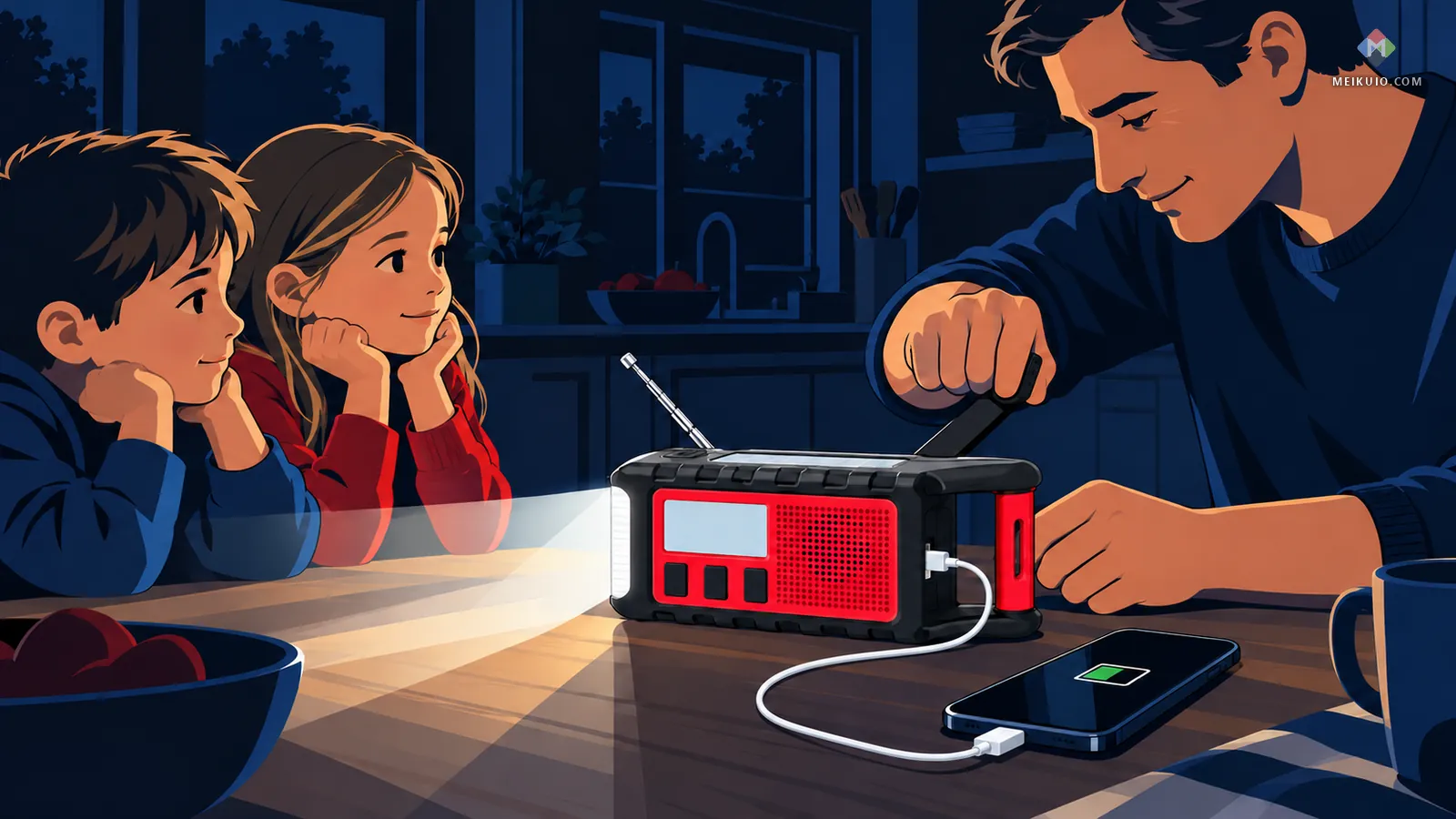
GearJunkie calls this its Best Overall and Wirecutter makes it its top pick. It’s built for the second job. It has a 10,000 mAh battery that doubles as a power bank, a hand crank, a solar panel, AM, FM and the seven weather channels. Midland’s manual adds a flashlight with an SOS strobe, a reading light and USB ports to charge the radio and a phone. If you want one box for a long outage, this is the best hand crank radio on the list.
Midland’s numbers disagree with each other. The product page says the battery “Lasts 200+ hours of radio operation.” Midland’s FAQ for the same radio says “up to 72 hours of radio playback, depending on volume level and whether lights or the power-bank function are used.” Both are Midland. I’d plan on the smaller one. Per the same FAQ, the battery isn’t user-replaceable, so the battery’s life is the radio’s life.
Its alert mode works, but it covers a region. Midland says that “When enabled, the radio stays in standby and automatically turns on to play NOAA alerts for your region.” Midland describes no county setting and doesn’t define the region, and the ER310PRO isn’t on the NWS list. GearJunkie’s crank number, “Turning the crank for a minute provides 9 minutes of radio use,” matches Midland’s manual, and its review credits the solar number to Midland’s user manual. Those are the maker’s numbers, repeated.
The catch: it can’t tell your county from the next one, so it shouldn’t be the only thing that can wake you. For riding out a long outage, though, nothing on this list carries more battery. It’s $109.99 at Midland.
Midland ER210: best compact crank radio
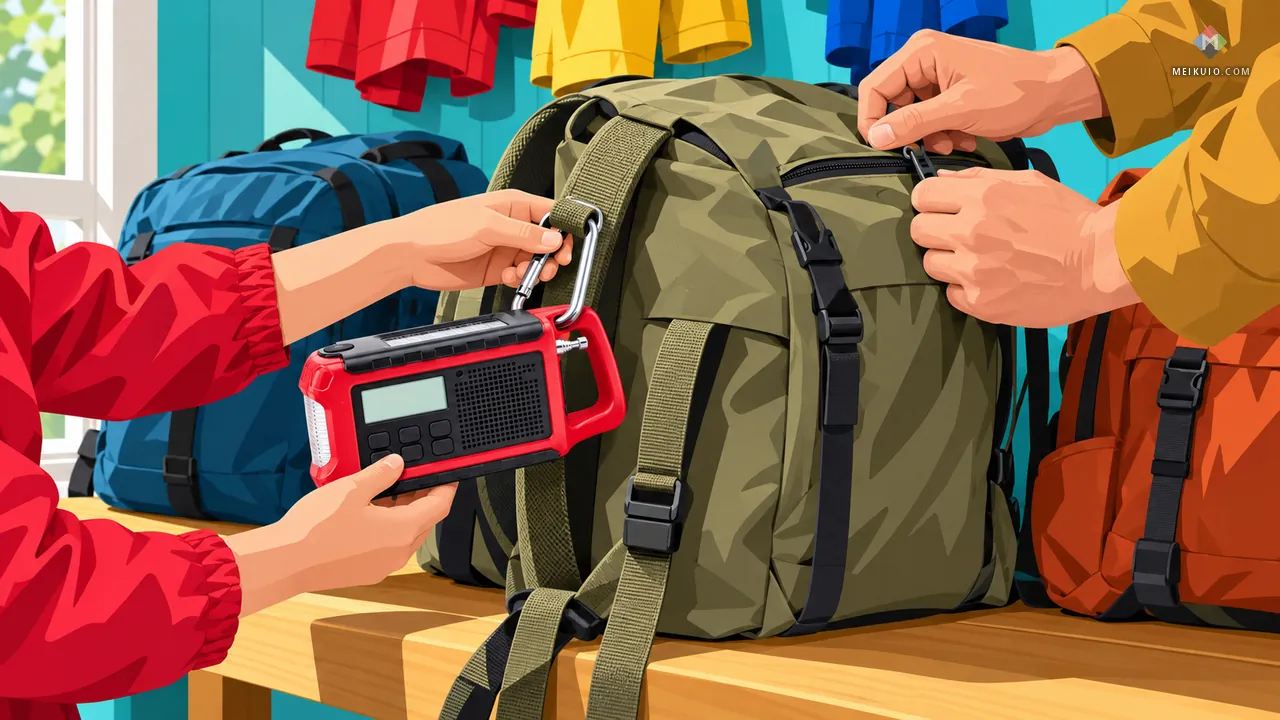
The ER210 is the ER310PRO’s smaller sibling, and it shows up on three lists: Wirecutter’s budget pick, Field & Stream’s pick for backpacking, and CNN’s roundup. Midland gives it a 2600 mAh lithium-ion battery with “up to 25 hours of normal use,” plus a crank, a solar panel and a flashlight. It’s the size you can throw in a go-bag or a glovebox and forget about.
Midland is candid about the solar panel: it’s meant to extend a charge, not to charge the battery fully. It’s just as candid about the alert: “The radio will sound the same alert for all alerts that the local station puts out, including the required weekly test. The alert will sound for 8 seconds.” That’s an eight-second alarm for every alert on the transmitter, and one more each week for the test.
The catch is the same as the bigger radio’s, with about a quarter of the battery. It isn’t on the NWS list, and it won’t separate your county from the rest of the transmitter’s area. For a go-bag or a car, the size is the point. It’s $64.99 at Midland.
Kaito KA500: best on AA batteries, with shortwave
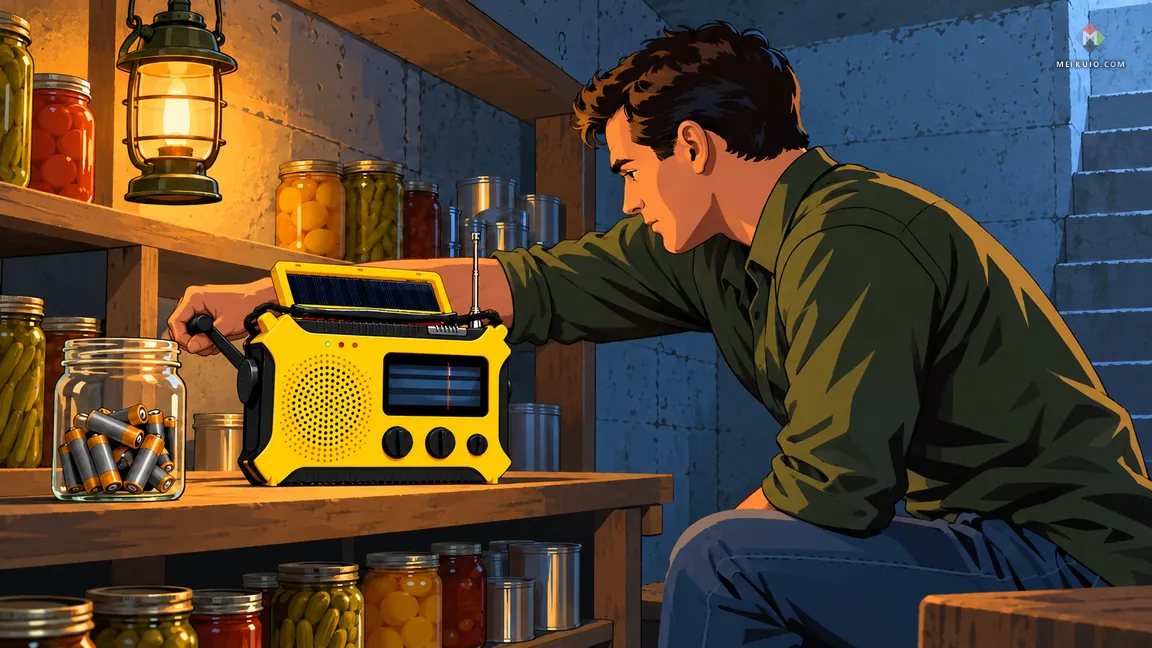
The KA500 runs on AA batteries as well as its own pack, and it adds shortwave. Kaito lists AM, FM, two shortwave bands and “7 pre-set NOAA weather channels with alert.” Power comes five ways: the AC adapter, a computer’s USB port, the crank, a solar panel that tilts through 180 degrees, and three AA batteries, “not included.” The built-in pack is three 600 mAh NiMH cells, and Kaito calls it replaceable. One line in Kaito’s description matters more than the rest: the crank “provides power for the radio even when no battery is installed.” By Kaito’s account, then, it still plays while you turn the handle with every battery in the house dead. It weighs 1.8 pounds.
It’s on the NWS list, approved for the All Hazards logo. Kaito describes no SAME county coding, so its alarm covers the whole transmitter, like the Midland crank radios. GearJunkie and Travel + Leisure both label it Most Durable, and CNN includes it too.
Why AA matters: when a sealed lithium pack fails, the radio fails with it. A drawer of AA batteries is a power source you can test and swap. The small built-in pack is the trade, and you’ll crank or swap cells sooner than on the Midland crank radios. At Kaito, it’s $54.99 for the radio alone and $64.99 with the AC adapter.
RunningSnail MD-090P: best budget crank radio
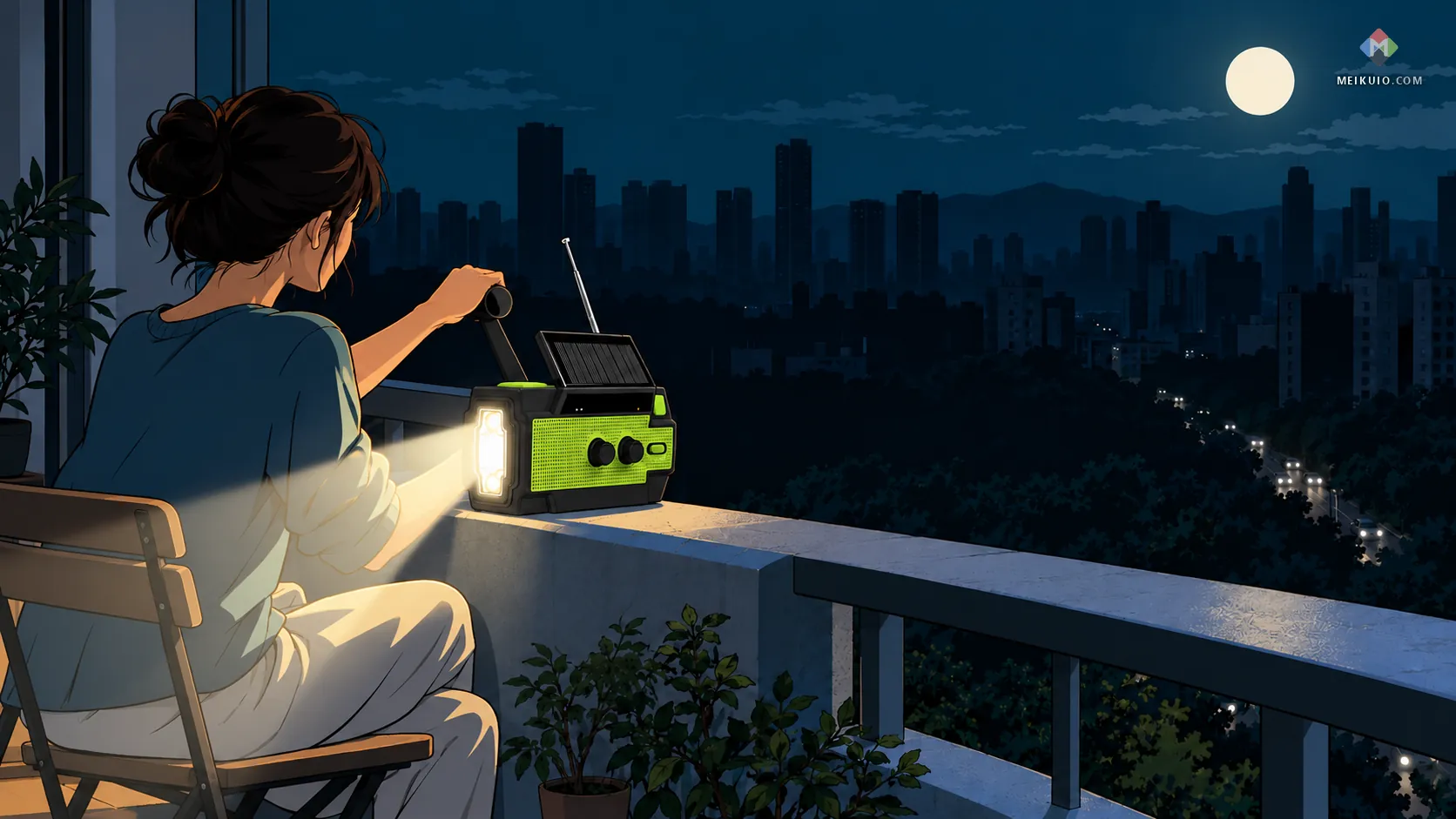
A RunningSnail crank radio appears in four of the five guides, more than any other radio on this page. At $36.90 on RunningSnail’s official site, marked down from $49.90 and shipped from China for another $8.00 to the US, the MD-090P is the cheapest way to get a crank, a solar panel, a flashlight and the weather band in one box. RunningSnail’s listing calls it a 4000mAh radio. Travel + Leisure labels it Best Value and Field & Stream Best Portable.
The alert is where the paperwork gets thin. RunningSnail’s store page promises “NOAA Alerts Instantly,” but then its own how-to says to “Switch to the weather band and scan for your local NOAA channel.” The official MD-090P product page never mentions an alert at all, and CNN’s testers came to the same reading: “it’s a weather band radio, so it doesn’t receive automatic weather alerts.” Treat it as a radio you turn on to listen.
The store’s crank figure is modest: “1 min cranking ≈ 3-5 min radio.” Cranking stretches a charge in an emergency. It won’t carry you through an evening of news. It isn’t on the NWS list. For the money, it’s a fine glovebox radio, and it’s $36.90 at RunningSnail.
C. Crane CCRadio Solar BT: best for everyday listening
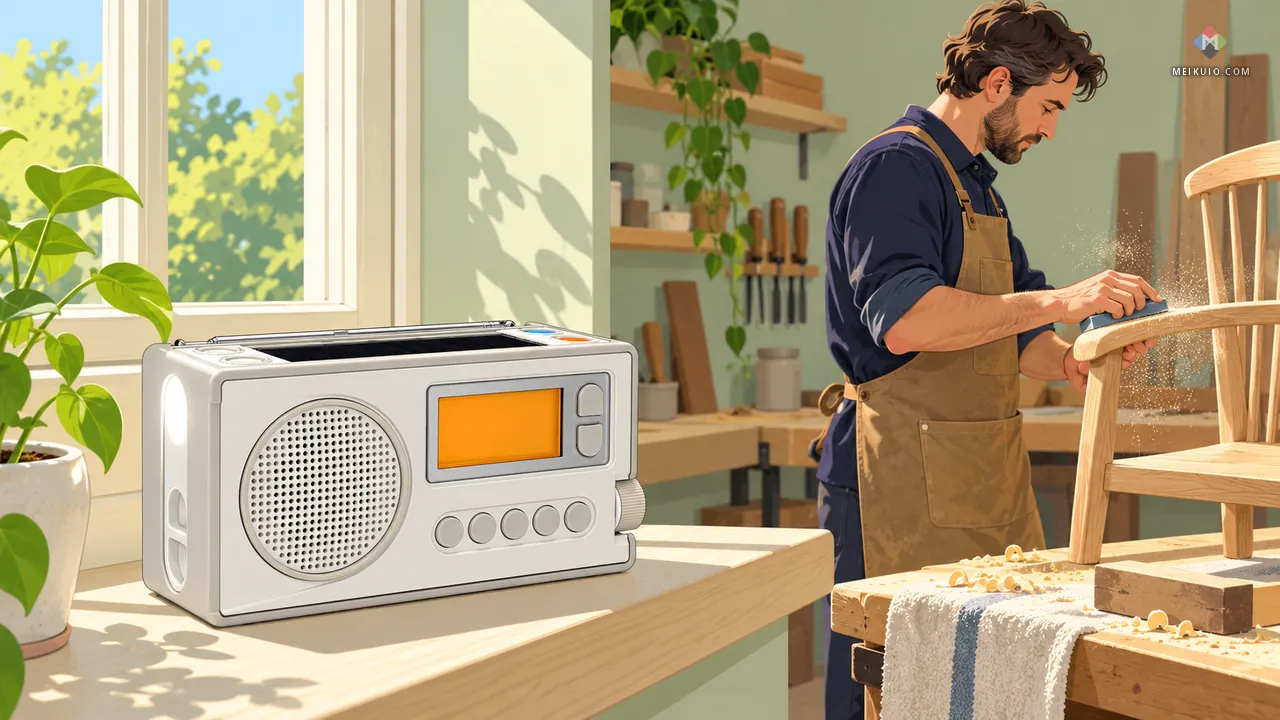
This one is meant to live on a sunny windowsill. C. Crane’s page says “Placed in a sunny window it’s perfect for the morning news” and “Reception is good for the size.” It streams from a phone over Bluetooth, runs on a 3,400 mAh 18650 lithium battery or AA cells, and recharges by crank, sun or USB. A full battery plays “More than 50 hours depending on volume level and power mode,” by C. Crane’s count. It weighs 1.1 pounds and measures about 6 by 3 inches, small enough for a kitchen shelf. If you swap in AA cells, skip lithium ones; C. Crane’s FAQ advises against them.
The weather alert runs on a timer, with no county code. You pick 4, 8 or 16 hours of monitoring, or leave it on, and you can keep listening to AM or FM while it watches. When NOAA issues an alert, “the radio will continuously beep for two minutes.” C. Crane doesn’t mention SAME, and the radio isn’t on the NWS list. GearJunkie names it its everyday Bluetooth pick. Wirecutter, which lists it as the CCRadio Solar, calls it “our go-to for listening to music thanks to its crisp sound.”
The catch: it costs the same $109.99 as the ER310PRO with about a third of the battery. Buy it if you’ll use a radio every day and want it charged when the bad day comes. C. Crane showed it “In Stock” on October 18, 2026, at $109.99.
One radio or two?
Two, for most homes. Ready.gov’s kit list names both kinds, “Battery-powered or hand crank radio and a NOAA Weather Radio with tone alert,” though it doesn’t say they must be separate boxes. Nothing on this list does both jobs well. The crank radio I found that claims SAME, Eton’s Sidekick, had no working product page on Eton’s site when I checked; only an Eton blog post calls it “S.A.M.E. certified.”
The agencies keep saying the same thing in different words. The NWS office in Chicago: “It is important to have multiple ways to receive warnings in case one of them fails!” FEMA, on September 1, 2026: “it’s important to have multiple ways to get alerts. The Emergency Alert System and National Oceanic and Atmospheric Administration Weather Radio also provide emergency alerts.”
The chart puts the makers’ prices from October 18, 2026 side by side. The WR120 and KA500 pair covers both jobs and runs on the same AA batteries; each radio takes three, and neither comes with them. The ER310PRO alone covers one job and part of the other. The pair with the RunningSnail is the cheapest pair here that covers both, and the pair with the ER310PRO is the one I’d want for hurricane country.
A Midland WR120 and a Kaito KA500 together cost $109.98, one cent less than one ER310PRO.
Two radios also means two places. The alert radio stays plugged in by the bed, where it does its one job every night. The crank radio lives in the closet or the go-bag with the flashlight, and it comes out when the lights go. That split is the best emergency radio setup I can defend on paper, because one failure doesn’t leave the house deaf.
If the budget stretches to only one, buy the WR120 first. A crank radio keeps you informed after the storm. The alert radio gets you to the basement before it.
If you already own a crank radio
Check the manual for an alert mode, switch it on and leave the radio by the bed for a week. If it never sounds for the weekly test, move it to a window and give it another week. Still silent, and it’s a listening radio, which is fine for the closet. Then add a SAME radio for the bedroom. If it does sound, it will sound for the whole transmitter, so decide whether you can live with that before you rely on it.
What if someone in the house can’t hear the alarm?
A siren works only on someone who hears it. A Reddit user in the Columbus, Ohio, forum wrote in March 2024 that during a tornado warning, “tornado sirens and nonstop vibrating phone warnings aren’t enough to wake me or my husband or my dogs up quickly.” Their phone was on silent and an air purifier was running. By the time they checked, the warning had been going for 17 minutes. They bought a weather radio.
On that same NWS feature list, a jack for a strobe or bed shaker is “optional for consumer receivers,” so look at the back of the radio before you buy. The WR120 and WR400 have one, and Midland sells the STR180 strobe ($34.99) and the SHKR100 pillow shaker ($39.99) to plug into it, and lists both as compatible with the WR120 and WR400. At Midland’s prices, a WR120 with the pillow shaker comes to $94.98, and a WR400 with the $64.99 strobe-and-shaker bundle to $174.98. Sangean’s CL-100 lists an external alert jack as well. Midland says its shaker “May be compatible with other weather alert radios that uses a 3.5 mm external jack connection,” so check the jack size if you own another brand.
For a heavy sleeper, the best weather radio is the one that can shake the bed. The WR400 adds a visual alert of its own, with LED patterns and a color-coded alert level indicator. That helps someone who can see the radio but can’t hear it. Whatever you set up, use the weekly test to check it. Wirecutter, which tried both Midland accessories, recommends “testing the pillow shaker to confirm that it works with your sleep setup before relying on it during an emergency.” If the shaker didn’t wake anyone on test day, don’t count on it for storm night.
Noise is the other problem. Earplugs, white noise and sleep buds help you sleep and work against you here; our sleep headphones guide covers the trade-off of sleeping through an alarm. Put the radio in the bedroom of the heaviest sleeper. Not in the kitchen. If that’s a parent who lives alone, set the radio up with them and be there for the first weekly test.
How to set up a weather radio for your county
Setup is short, and the NWS states the rule: “you must program your county, parish, independent city or marine area into the radio.” I’d do it in this order:
- Find your county’s SAME code. The NWS publishes a six-digit code for every county on its NOAA Weather Radio county coverage list, and you can also call 1-888-NWR-SAME. A first digit of 0 means the whole county; any other first digit marks part of a county.
- Find the transmitter that serves your county, and its frequency, on the same list. If your county reads “–No NWR Coverage–,” no transmitter is assigned to it, and a weather radio can’t be your main alarm. Lean on the other channels instead: Wireless Emergency Alerts on your phone, the Emergency Alert System on AM and FM, and your local warning system. FEMA’s advice is to “Sign up for your community’s warning system.”
- Tune the radio to that transmitter, not the loudest one. The NWS warns that if you program a stronger station that isn’t designated for your county, “You will not receive alerts.”
- Enter your county code. If storms usually reach you from a neighboring county, add that code too; Sangean’s CL-100 documentation suggests programming codes “to sound alerts for surrounding counties.”
- Choose which alerts wake you. Leave every warning on. Consider turning watches off if a 3 a.m. thunderstorm watch would make you unplug the radio for good.
- Put in fresh AA batteries for backup and set the radio where it hears the transmitter clearly. Reception “can vary from room to room,” the NWS says, so try another room before you give up on a radio.
You can program more than one county. The WR120 holds 25 locations, the WR400 25 counties and the CL-100 25 location codes, so a radio at home can also warn you about the county where your kids go to school or where an older parent lives, as long as the same transmitter serves both. The code list covers more than counties, too: parishes, independent cities and marine areas each have codes.
Then listen for the weekly test. A radio that never sounds it may have lost the signal. The WR120 will tell you itself, with one beep every ten minutes after ten days without a test.
How long will an emergency radio run in a power outage?
From about a day to more than a week on a full battery, by the makers’ own numbers, before you crank. These are the makers’ own claims for a full charge:
- Midland ER310PRO: “200+ hours” on the product page, “up to 72 hours” in Midland’s FAQ.
- C. Crane CCRadio Solar BT: “More than 50 hours depending on volume level and power mode.”
- Midland ER210: “up to 25 hours of normal use.”
- Midland WR120 and WR400: they run on wall power and fall back to AA batteries; Midland gives no standby figure on their pages.
- Kaito KA500: Kaito’s page gives no runtime figure; when the built-in pack runs down, three AA batteries take over.
I found no controlled, independent test of any of these radios’ full runtime. Treat every hour figure as a ceiling. Volume, the flashlight and charging a phone all eat into it, and Midland’s own FAQ says so. Even the best emergency radio runs down faster than its box says if you use it the way you will in a blackout.
Crank and solar, by the makers’ own numbers
Crank numbers are all over the place. RunningSnail’s store says “1 min cranking ≈ 3-5 min radio.” GearJunkie’s ER310PRO figure, 9 minutes of radio per minute of cranking, is the figure in Midland’s manual. For the smaller ER210, CNN’s tester reported that “It took a minute of hand-cranking to accumulate 32 minutes of listening time.” Treat any single number as one radio, one arm and one battery level. C. Crane explains why a crank feels different as the battery drains: “When the battery starts to get low it will accept more current and it will become harder to crank.”
Solar is a trickle. Midland says the ER310PRO’s panel “isn’t intended to charge the battery from a low or discharged state,” and the ER210’s panel only extends a charge. C. Crane is the optimist. On its product page, Bob Crane writes that the CCRadio Solar “stays charged in a sunny window with an oversize solar panel which means it may not need a power assist for years.” That’s a claim about topping up a radio that lives in the sun, not about reviving a dead one in a storm. Small panels have the same limit on every gadget, and our trail camera guide went looking for solar panels that actually keep up.
One prepper on Reddit wrote in January 2025 about two crank radios charged ahead of a big storm: “They both died on day 2. No amount of cranking did anything.” One owner’s bad pair proves nothing about a model, but it’s the failure worth planning for.
Storing it for months
Batteries drain on a shelf. Midland’s ER310PRO manual says to “Charge the battery every 3–6 months when not in use.” C. Crane recommends recharging the CCRadio Solar’s battery “at least every six months,” and says its radio ships with the battery at “a low charge,” to be fully charged “before using the radio or placing into storage.” Put the dates in your calendar next to the smoke alarm test.
The bedside radio is simpler. It runs on wall power and sits on its AA backup, so the job is to keep it plugged in and swap those batteries on a schedule. A hand crank emergency radio in a closet needs more care: charge it fully, store it charged, and check it on the calendar dates. A dead radio in a go-bag is worse than none, because you’ll count on it.
Does your phone replace a weather radio?
Not if you live where tornadoes or flash floods happen, and the NWS’s own rules show why. Your phone gets Wireless Emergency Alerts, the government alerts pushed to phones, but the NWS sends only some of its warnings that way: tornado, hurricane, typhoon, storm surge, extreme wind, dust storm, snow squall and tsunami. It sends severe thunderstorm warnings “only when the damage threat is destructive” and flash flood warnings “only when the damage threat is considerable or catastrophic.” Winter storm and heat warnings aren’t on that list at all. A weather radio receives every warning its transmitter broadcasts, whether or not it sounds the alarm for each one.
The NWS sends flash flood warnings to phones only when the damage threat is considerable or catastrophic.
A phone alert is also short by rule. Under 47 CFR 10.430 the FCC caps the text at 360 characters, or 90 on parts of a network that can’t carry 360. That cap is part of what the FCC actually regulates. A weather radio plays the full NWS broadcast, as long as you need it.
Phones can be late, silenced or dead. In the same Columbus thread from March 2024, another user wrote: “Last night though we didn’t get any phone alerts until 20 minutes after the radio activated and we were already in the basement.” I can’t tell you why those phones lagged. I can tell you the radio didn’t.
Your phone does a lot, and what your phone can do on its own keeps growing. But an alert on it depends on a carrier, a tower, a battery and your settings. I’m wary of gear that dies with its app, and a weather radio has no app to die. Even the best emergency radio can’t help if it’s off, and outdoor sirens don’t fill the gap at night either. As the NWS puts it, “Sirens are an outdoor warning system designed only to alert those who are outside that something dangerous is approaching.”
Texas reached the same conclusion in law. In a 2025 special session the Legislature passed SB 1, the Heaven’s 27 Camp Safety Act, a youth-camp law that cites FEMA’s flood hazard maps. It requires every youth camp to “maintain an operable radio capable of providing real-time weather alerts issued by the National Weather Service or a similar professional weather service at the camp.” A radio, written into the statute.
If the cell towers go down
Then you’re back to broadcast. NOAA Weather Radio runs on its own NWS transmitters, separate from the cell network, and AM and FM stations carry the Emergency Alert System, the national system that puts alerts on broadcast radio and TV. FEMA names both in the bulletin quoted above. That’s why the crank radio earns its shelf space. It’s the radio that still works on day three, when the tower is down and the phone is dead. For that job, any radio here with AM, FM and the weather band will do. The ER310PRO carries the biggest battery, and the KA500 falls back on AA cells.
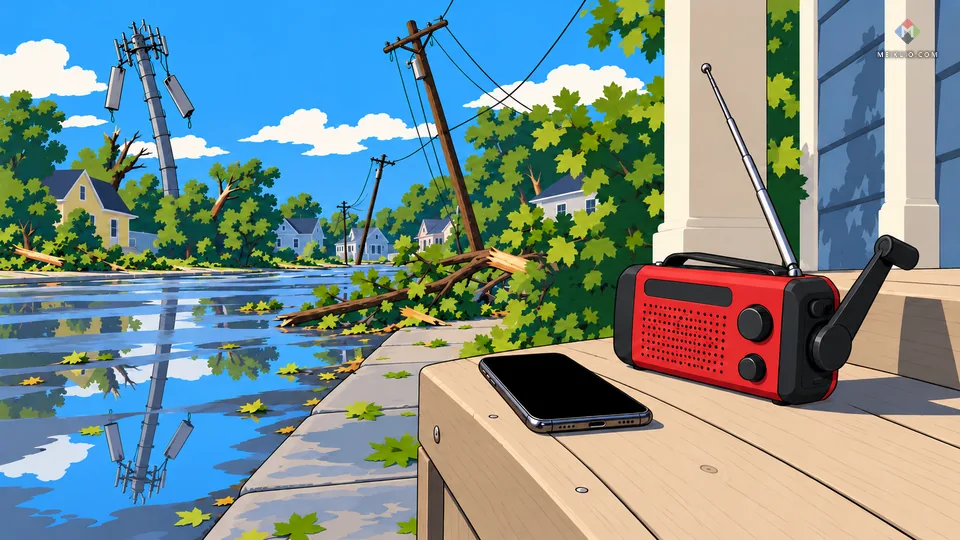
Where NOAA Weather Radio doesn’t reach
About 40 miles from a transmitter, and not everywhere. The NWS says “The range for NWR reception is about 40 miles from the transmitter,” and that “Reception can vary from room to room.” Hills and basements cut it. Some counties have no assigned transmitter at all, and the NWS county list marks them “–No NWR Coverage–.”
Transmitters go down, too. When they do, the NWS posts special notices, and on October 18, 2026, its feed carried outage notices for transmitters in Marion, Indiana (September 30, 2026) and Summerville, Georgia (August 12, 2026). If your radio goes quiet for the weekly test, check that feed before you blame the radio. If the signal is just weak, try a window first. The WR120 also has an external antenna jack.
Radios can fail on the receiving end as well. In 2007 the Consumer Product Safety Commission announced a recall of about 66,000 Oregon Scientific weather radios because “The radios could fail to receive National Weather Service alert signals in certain areas of the country.” It’s an old case from a brand not on this list, but it’s a good argument for reading a recall before you buy any safety device, and for listening to the weekly test.
Field notes
- The two jobs: waking you for a warning in your county, and riding out an outage. Only the Midland WR120 and WR400 on this list wake you for your county alone; both are Public Alert certified and on the NWS list.
- The logos: the NOAA All Hazards logo allows tone-only radios; Public Alert requires SAME county coding.
- The guides: 24 radios across five first-page guides on October 18, 2026; 4 on the NWS list; SAME described by the maker for 2 of the 14 with a maker page.
- Runtime: Midland rates the ER310PRO at 200+ hours on its product page and up to 72 hours in its FAQ.
- The phone gap: the NWS sends flash flood warnings to phones only at a considerable or catastrophic threat, and phone alerts are capped at 360 characters.
- The cost: WR120 plus KA500, $109.98; ER310PRO alone, $109.99; makers’ prices on October 18, 2026.
- Sources: NWS pages on NWR receivers, the All Hazards logo, SAME, reception, county coverage, special notices and Wireless Emergency Alerts; Ready.gov kit list; FEMA (September 1, 2026); 47 CFR 10.430 (eCFR, up to date as of October 15, 2026); Texas SB 1 enrolled text; CPSC recall 07-292; makers’ product pages, manuals and FAQs; GearJunkie, CNN Underscored, Wirecutter, Travel + Leisure and Field & Stream.
Frequently Asked Questions
What type of radio is best for emergencies?
The best emergency radio setup uses two types. A weather alert radio with SAME, like the Midland WR120, wakes you for warnings in your county. A crank or battery radio, like the Midland ER310PRO, keeps you informed when the power is out. Ready.gov’s kit list names both kinds.
Which weather radio does NOAA recommend?
None by name. The National Weather Service says it does not endorse a specific make or model. It tells buyers to look for the Public Alert or NOAA Weather Radio All Hazards logo, and only Public Alert requires SAME county coding.
What is the best radio if cell towers go down?
A crank or battery radio with AM, FM and the weather band, such as the Midland ER310PRO or the Kaito KA500. NOAA Weather Radio runs on its own transmitters, and AM and FM stations carry the Emergency Alert System, so neither needs the cell network.
What is SAME on a weather radio?
SAME, or Specific Area Message Encoding, lets a weather radio sound only for the counties you program. Every NWS alert carries county codes, and the radio compares them with the six-digit codes you entered. That cuts false alarms for storms a few counties away.
How do I set my weather radio to my county?
Find your county’s six-digit SAME code on the NWS county coverage list or by calling 1-888-NWR-SAME. Tune the radio to the transmitter that serves your county, enter the code, and wait for the weekly test to confirm the radio hears it.
Do hand crank radios really work?
They work, at very different rates. RunningSnail’s store says a minute of cranking gives 3 to 5 minutes of radio, Midland’s manual says 9 for the ER310PRO, and CNN’s tester got 32 from the ER210. Use the crank to stretch a charge, not to run the radio all day.
What frequency is NOAA Weather Radio on?
NOAA Weather Radio uses seven VHF frequencies, from 162.400 to 162.550 MHz. A plain AM/FM radio can’t receive them. You need a radio with a weather band to listen, and an alert radio if you want it to wake you.
Can an emergency radio charge my phone?
Many can. The Midland ER310PRO has a 10,000 mAh battery that works as a power bank, and the WR400 has a USB port. Charging a phone shortens radio time, and Midland’s FAQ lists the power-bank function among the things that cut runtime.
Are NOAA weather radios worth it if my phone gets alerts?
Yes, if you live where tornadoes or flash floods happen. The NWS sends only some warnings to phones; flash flood warnings go only at a considerable or catastrophic threat. A weather alert radio receives every warning its transmitter broadcasts and sounds for the ones in your area.
What radio should I have for the worst-case emergency?
Have two: a SAME weather radio for warnings and a crank or AA radio for news when power and cell service fail. FEMA says to have multiple ways to get alerts, and it names the Emergency Alert System and NOAA Weather Radio among them.
My Take
If you can buy only one, the best emergency radio for your house is the one that does the job you’ll need at 3 a.m., and that job is the alarm. The top guides crown crank radios, and crank radios are good at what they do. But a radio that waits for you to turn it on can’t warn you about the storm you slept through. Only two of the seven radios here wake you for your own county and stay quiet for the rest, and they’re the plain tabletop ones nobody puts first.
Here’s what I’d do. I’d buy a Midland WR120 for the bedroom of the heaviest sleeper, program our county and the one our storms come from, and put three AA batteries in it the day it arrives. If its siren didn’t wake that sleeper on test day, I’d plug in the $39.99 pillow shaker. I’d add a Kaito KA500 for the closet, because it runs on the same AA batteries. If we expected long outages and wanted the power bank, I’d add an ER310PRO instead. I’d put the charging dates on the calendar. And I’d stop reading the word NOAA on a box as a promise to wake me for my county. The words I’d look for are Public Alert, or SAME.