

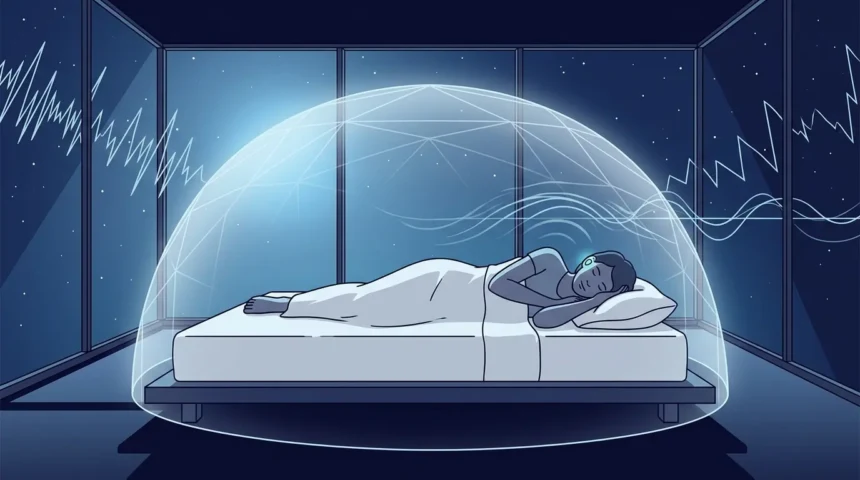
The best noise cancelling headphones for sleeping mostly don’t cancel noise. If a snoring partner sent you here, both sleep-first earbud makers say cancellation is the wrong tool for that job, and one prints it on its own homepage. The only noise numbers with a published test behind them belong to earplugs.
- What “noise cancelling” means once you’re asleep
- How we picked, and what we refuse to claim
- The picks, by what each maker actually claims
- Soundcore Sleep A30: the hybrid that confesses in a footnote
- Ozlo Sleepbuds 2: the heir that argues against the category’s name
- QuietOn 4: cancellation with nothing else attached
- Loop Quiet 2: the earplug that outprints the electronics
- SleepPhones Wireless: the headband that promises nothing
- Yogasleep Dohm Classic: the fix that stays out of your ear
- What we left out, and why
- Is there a number on the box, and who is allowed to print it?
- The rule that might already cover these earbuds
- Why the sleep brands sell masking, not cancelling
- What happens when the maker stops caring
- What breaks first, in owners’ words
- “HSA/FSA eligible” is not an approval
- When does a sleep sound device become a medical device?
- How to check any pair yourself in five minutes
- What if the honest answer is earplugs?
- The option that isn’t a purchase at all
- The alarm you still need to hear
- Which one fits which sleeper?
- Who is telling you this, and what do they earn?
- Frequently Asked Questions
- Do noise cancelling headphones actually work for snoring?
- What blocks as much noise as foam earplugs?
- Can I use sleep earbuds without the companion app?
- Does Bluetooth stay on all night in sleep earbuds?
- Is it safe to sleep with headphones in every night?
- Why don’t sleep headphones list a decibel rating?
- Are sleep earbuds really HSA or FSA eligible?
- What happened to Bose Sleepbuds?
- My Take
I spent a day reading what each device claims, what the label is legally allowed to say, and what the one enforceable noise number in America actually covers. What follows is that reading, priced and dated.
What “noise cancelling” means once you’re asleep
Everything sold for sleeping through noise works in one of four ways, and the words on the box rarely tell you which one you’re buying. Two identical-looking earbuds can run on opposite principles. One inverts the soundwave of your air conditioner. The other seals your ear canal and plays pink noise over the top of everything else.
Blocking is physical. A foam plug, a silicone plug, or an industrial earmuff lowers the sound pressure that reaches your eardrum, across the whole spectrum, with no battery. Cancelling is electronic: a microphone hears the noise, a processor generates the opposite wave, and the two cancel. It works best on steady low rumble, engines, HVAC, traffic. Masking doesn’t reduce anything. It adds sound, raising the floor of what you hear so that a sudden spike, a snore, a door, a dog, no longer clears the threshold that wakes your brain. And the fourth option skips your ears entirely: a machine by the bed, heavier curtains, or fixing the snorer instead of the listener.
That distinction is the whole buying decision, and it does not run where the marketing suggests. Blocking and cancelling lower what reaches your eardrum; masking raises what you hear, deliberately. But for a snore the split that matters is cancelling against everything else: a physical seal cuts the snore along with the rest of the spectrum, cancellation mostly cannot catch a spike that sharp, and masking covers whatever survives. Which is why the phrase you typed into Google and the products it returns are quietly at odds, and why grouping this market by shape, in-ear against over-ear against headband, tells you nothing that matters.
One more term you’ll meet below: the Noise Reduction Rating, or NRR. It is the number printed on hearing protection sold in the US, it’s federally mandated, and it is the only noise figure on any box in this article that a regulation stands behind. Sleep earbuds don’t carry it. Keep that in mind while you read what they carry instead. A CPAP machine at least tells you it’s a prescription device with rules attached. A sleep earbud tells you nothing you could check.
More Read

How we picked, and what we refuse to claim
We don’t buy review units and we don’t run a sound chamber. So this guide is built from the things that can actually be verified: the text of the federal labeling rule, the public registries every legal device sits in, each maker’s own product pages read line by line on August 27, 2026, and the failure reports of people who have slept in these things for months. Where a claim can’t be checked, I say so instead of rounding it up to a fact. It’s the same method we used to check a certification register against the marketing built on it, and it holds up better than a week of subjective testing, because the documents don’t depend on how I slept.
Ranking criteria, in order: whether the mechanism matches the noise you’re escaping, whether the housing survives a side sleeper’s pillow, what remains of the product if the maker walks away, whether any measured attenuation figure exists at all, what happens at the moment the battery dies, and whether you can still hear a smoke alarm. Sound quality is last on purpose. You’ll be unconscious for most of the performance.
And what we refuse to claim: we have no decibel measurements of our own. Neither, as it turns out, does anyone ranking these products. The seven pages I could measure by script were Tom’s Guide, ZDNET, CNET, Popular Science, No Sleepless Nights, and the near-identical sleep posts on JBL’s blog and Infinity’s store. Not one measured anything. Five print no decibel figure at all. The two that do are repeating a maker’s own number, and one of those belongs to a pair of earplugs the publication introduces with the words “these aren’t headphones.” Wirecutter and CNN Underscored also rank for this term; neither would open for our tooling, so they are excluded from that count rather than counted against. Trail cameras have the same gap: the megapixel number on the box is not the sensor’s native resolution.
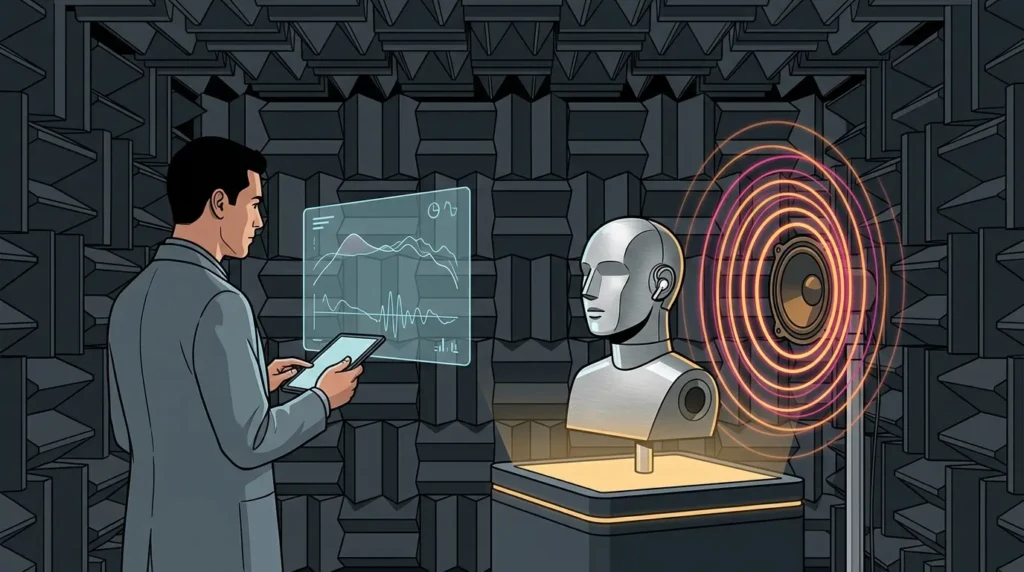
Seven ranking pages, zero measurements. The two decibel numbers printed anywhere in that field were both copied from a maker’s own box.
The picks, by what each maker actually claims
Here are the best noise cancelling headphones for sleeping as the market actually exists: one hybrid that admits its limits in a footnote, one masker that argues against the category’s name, one pure canceller with no audio at all, and three honest ways out of the category entirely. If you came here about a snorer and want the short answer now: seal first, cheaply, then add masking if the seal alone leaves you awake. The reasoning is in the mechanism section, and the cost of testing it is under thirty dollars. Every price was read on the maker’s own page on August 27, 2026. The column that matters is the one no other guide prints: whether the maker publishes any measured number for how much noise the product removes. One honest caveat about the column that isn’t here. Side-sleeping comfort is our second ranking criterion and the hardest to source, because the only measurement anyone publishes is the A30’s roughly 3 grams per bud. Everything else, ours included, is vendor phrasing plus owner reports, and we’re not going to dress that up as a score.
Note
All prices were read on each maker’s own page on August 27, 2026, and this category moves. QuietOn’s store localised our session to euros and offered no US figure, so we print what we saw rather than a converted guess. Sale prices (the A20 below, for instance) are marked as such.
Soundcore Sleep A30: the hybrid that confesses in a footnote
The A30 is the closest thing to what the search phrase promises: it carries real active noise cancellation, alongside a passive seal and a snore-masking layer. Anker calls this the Triple Noise Reduction System, and the product title leads with “Smart ANC.” Then, on the same page, in a line most buyers will never reach: “Note: Snoring is masked by snore-masking audio, not ANC.” That sentence is the most honest thing any vendor in this market has published. The headline feature does not handle the number-one reason people buy the product. The maker knows it, and printed it.
What the page never prints is a decibel figure. The word ANC appears 28 times on the A30’s product page. A measured attenuation number appears zero times. The buds are about 3 grams each, built flat for side sleepers, with an in-ear alarm and sleep tracking in the app. At $199.99 it’s the best engineered object in this list. Just know which of its three systems will actually be working against your partner’s snoring, because Anker told you.
Ozlo Sleepbuds 2: the heir that argues against the category’s name
Ozlo exists because Bose gave up. Its own story page credits a founding team that spent “years leading innovation at companies like Bose,” and Bose’s support pages send stranded Sleepbuds owners to Ozlo, describing it as a third-party product that incorporates technology originally developed by Bose. Both ends of that sentence come from the two companies involved. The FCC filing adds the part neither markets: the entity behind the buds is registered as Drowsy Digital Inc, which is the most honest corporate name I’ve read all year.
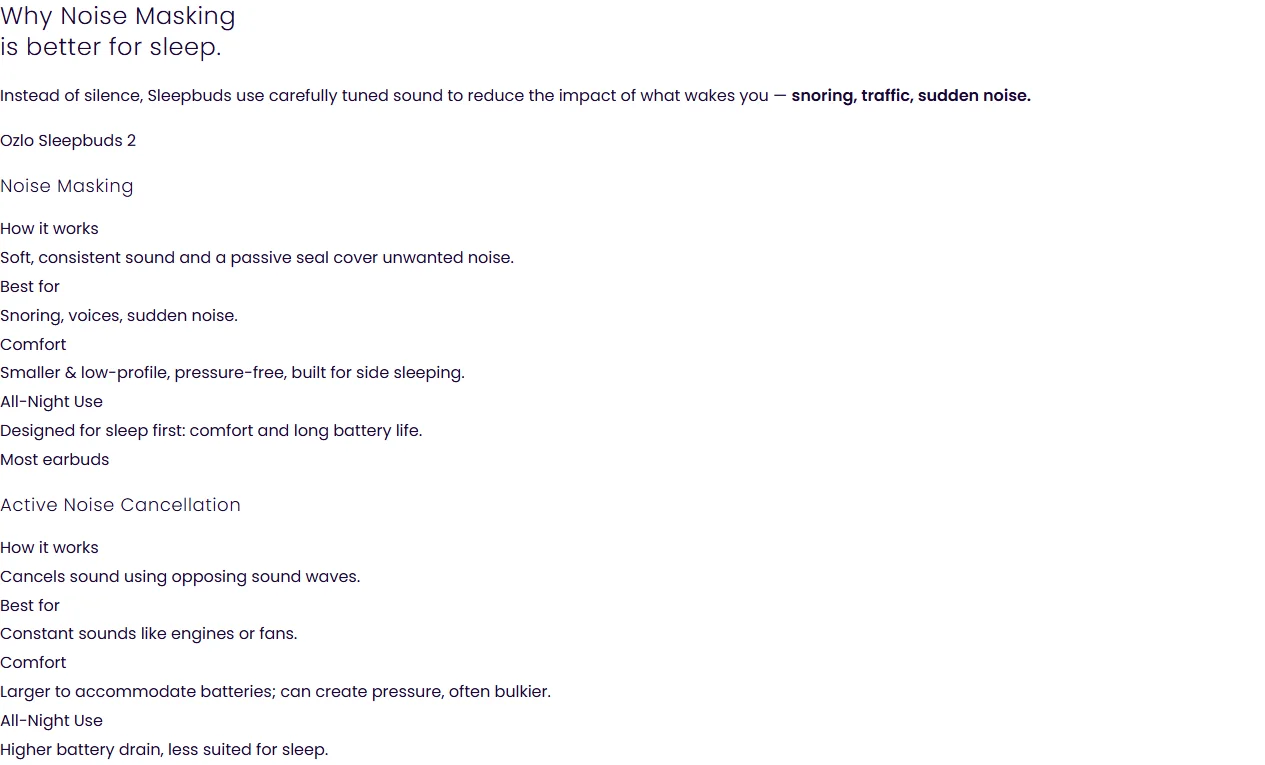
The Sleepbuds 2 are pure masking plus a passive seal. No cancellation at all, and Ozlo isn’t shy about it: a comparison table on its own homepage, titled “Why Noise Masking is better for sleep,” describes ANC as best for constant sounds like engines or fans, “larger to accommodate batteries,” and “Higher battery drain, less suited for sleep.” A vendor arguing, on its own homepage, that the defining feature of this article’s search term is the wrong tool. The buds are rated up to 14 hours, fit flat for side sleeping, wake only the wearer, and cost $279. They are also app-dependent for their sound library, and given how this exact product line already died once, that should give you pause. More on that below.
QuietOn 4: cancellation with nothing else attached
If you read the search phrase literally, this Finnish product is its only honest answer. The QuietOn 4 is an active noise cancelling earplug: microphone, inverted wave, foam tip, and nothing else. Its own pitch is “No Apps, Bluetooth or Sound Masking. Just uninterrupted rest.” No radio also means no FCC ID, which is correct, not suspicious: the equipment authorization rule covers intentional transmitters, and this device isn’t one. Up to 28 hours per charge, replaceable Comply foam tips in four sizes.
Because there’s no app and no server, there is nothing here for a vendor to switch off later. In this category, that is worth paying for. The store quoted our session 259 euros and localises pricing by region, so check what it shows you. What it doesn’t show anywhere: a measured attenuation figure. Even the purest canceller on the market doesn’t put a number on the cancelling.
Loop Quiet 2: the earplug that outprints the electronics
A $24.95 ring of silicone that does one thing: seals the canal and sits flush enough to sleep on. No battery, no firmware, no bedtime negotiation with Bluetooth. And unlike every powered product above it, Loop prints a number: 24 dB of noise reduction, labelled SNR. Here’s the fine print on that fine print: SNR is the European rating scale. On the US product page we read, the American NRR figure doesn’t appear at all. So the only number a US buyer gets for this plug was measured under a different continent’s system. SNR and NRR are computed differently and are not interchangeable, which means you cannot line Loop’s 24 up against foam’s 33 and call the gap nine decibels. It’s still more disclosure than anything with a charging case offers.
Owners on the sleep-headphones subreddit report mild soreness from sleeping on them in certain positions, which the softer Loop Dream model exists to fix. Start with the Quiet. It’s the cheapest experiment in this article, and for a lot of people it ends the search.
SleepPhones Wireless: the headband that promises nothing
AcousticSheep’s SleepPhones are flat speakers in a fleece band, $99.95, and they earned a spot here for a strange reason: their product page never claims noise cancellation even once. The band doesn’t seal your ear. It plays audio, podcasts, white noise, whatever you stream, while lying comfortably under a cheek that would crush any earbud. If your problem is a racing head rather than a loud room, or your ear canals reject anything inserted in them, this is the tool. If your problem is a snorer, an open-ear speaker is a polite gesture against artillery.

Yogasleep Dohm Classic: the fix that stays out of your ear
The Dohm is a fan in a plastic shell, $49.99, essentially unchanged for decades, and it’s the control group for this whole article. Real moving air generates the masking sound, so there is no loop to notice, nothing in your ear, no charge cycle, no app, and no company that can brick it. It masks the whole room, which also makes it the only pick that treats both people in the bed. Its limit is physics: it sits across the room from your ear, so a snorer ten inches from your head can still punch through. Owners often end up running a Dohm and wearing a plug, which costs less combined than one pair of sleep earbuds.
What we left out, and why
Bose Sleepbuds II are out because they’re a discontinued product with a withdrawn app, whatever the older guides still say; the full story gets its own section below. Kokoon’s NightBuds and the Philips sleep headphones built with Kokoon were on our census, but we couldn’t confirm a live, orderable US product line on the maker’s pages the day we checked, and we don’t recommend hardware we can’t confirm is being sold and supported. The over-ear giants, the Bose QuietComfort and Sony flagships that general-audio guides slip into sleep lists, are out on geometry alone: a rigid cup between your skull and a pillow is a daytime product, and one field guide’s advice to sleep in studio headphones is how we knew it wasn’t written by anyone who tried. The $20 marketplace buds are out for reasons we itemise later: no named maker, no findable FCC ID in the listings, and decibel claims with no test standard named anywhere. And electronic hearing protection from the gun-range aisle technically sleeps fine, but its muffs share the pillow problem, so it stays a day-job tool.
Is there a number on the box, and who is allowed to print it?
Exactly one noise number in America has a federal regulation standing behind it, and none of the products above carry it. It’s the Noise Reduction Rating. The rule is 40 CFR Part 211, Subpart B, written by the EPA, and it is startlingly specific: the label must state “Noise Reduction Rating,” must give the value in decibels, and must include the phrase “(When used as directed).” It applies to every hearing protective device manufactured on or after September 27, 1980. The test behind the number is fixed too: ANSI standard S3.19-1974, a lab method where a trained experimenter fits the plug into the subject’s ear.
Read those dates again. The test is from 1974. The rule took effect in 1980. The EPA office that ran the program, the Office of Noise Abatement and Control, was defunded and closed in 1981, one year into enforcement, with noise handed to state and local governments. The agency’s own page today says it retains the authority to study noise and evaluate the effectiveness of existing regulations, which is the institutional voice for “the lights are on and nobody’s home.” The Administrative Conference of the United States puts it flatly: since 1981, EPA has engaged in only very limited enforcement of existing noise regulations, and the standards it had already issued “have remained in effect, thereby preempting state and local governments from adopting different standards.” Frozen, and load-bearing. In August 2009 the EPA did propose modernising the label with newer subject-fit test methods, S12.6 and S12.68, which produce lower and more realistic numbers. It was published as a proposed rule at 74 FR 39150 and never finalised; the Federal Register lists no final rule touching Part 211 in the seventeen years since. The 1974 test is still the law in 2026.
It gets better. In January 2025, NIOSH, the federal institute for occupational safety, formally scrapped its own decades-old guidance on how to discount the label. Publication 2025-104 supersedes the 1998 derating rules and tells employers to stop estimating from the printed NRR and instead fit-test each worker individually, now that the equipment to do so exists. Translated from federal: even the one legal number should not be taken at face value, per the government that oversees it. And the manufacturers agree. On 3M’s own page for its Yellow Neons foam plugs, an NRR of 33 for the regular and large sizes together, 32 for regular alone, and the highest legally labelled figure we found, that number sits directly above this: “3M makes no warranties as to the suitability of the NRR for this purpose. 3M strongly recommends personal fit testing of hearing protectors.” Followed by a recommendation to cut the printed number in half to estimate typical real-world protection.
The strictest noise label in America runs on a 1974 test, lost its enforcer in 1981, and its biggest manufacturer recommends halving it.
Now the other side of the ledger. For active noise cancellation, a measurement standard does exist: IEC 60268-24:2023, an international method written specifically for consumer ANC headphones and earphones. It is a voluntary industry standard, not a regulation, and it explicitly excludes equipment intended for hearing protection. In all the product pages I read for this article, not one vendor cites it. Not Soundcore, not Ozlo, not QuietOn, not Bose. So the situation for a buyer in 2026 is this: the mandatory number covers a category these products legally aren’t, the voluntary number exists and nobody uses it, and the marketing space in between is completely unpatrolled. We saw the same pattern when the FCC redrew the router market: the rule is real, and everything around it is vibes.
Foam has no exact price in the source; a few dollars is not zero. Foam prints legally required NRR 33; Loop prints SNR 24 on a European scale. Room-level Dohm: rating not applicable. SleepPhones claims no attenuation figure; A20, A30 and Ozlo publish none. No powered product prints measured attenuation; this price axis is not an effectiveness score.
The rule that might already cover these earbuds
The EPA rule defines its own scope, and the definition in 40 CFR 211.203 reaches further than a sleep-earbud marketer would like: a hearing protective device is “any device or material, capable of being worn on the head or in the ear canal, that is sold wholly or in part on the basis of its ability to reduce the level of sound entering the ear. This includes devices of which hearing protection may not be the primary function, but which are nonetheless sold partially as providing hearing protection to the user.”
Sold, in part, on its ability to reduce the level of sound entering the ear. Now hold that sentence against the Amazon listing for the Soundcore Sleep A20, which is titled, in part: “30 dB High-Frequency Noise Reduction.” A worn-in-the-ear device, sold on a stated ability to reduce sound entering the ear, with a decibel claim in the product title. On Soundcore’s own site, the same product carries no decibel number at all, just “Twin-Seal ear tips with 3x stronger Passive Noise Blocking,” a multiplier with no baseline. The further the listing gets from the maker’s own domain, the braver the number becomes.
Does that make these products mislabelled hearing protectors? I’m not claiming that, and I want to be precise about why: we found no EPA interpretation letter, no enforcement action, and no court decision applying that definition to a sleep audio product. What I am claiming is narrower and, I think, worse. The literal text arguably reaches these products, and the agency that would decide stopped patrolling in 1981. So nobody has ever had to find out. The sleep-earbud market lives in the gap between a rule’s words and a rule’s enforcement. Vendors get the benefit of “noise reduction” as a phrase without the burden of it as a measurement.
Why the sleep brands sell masking, not cancelling
The physics, briefly and without mercy for the marketing. Active cancellation works by prediction: the microphone hears a waveform, the processor computes its inverse, the speaker plays it, and for a steady drone the math is easy because the next moment resembles the last one. A snore is the opposite of that. It’s an irregular, broadband spike with a sharp attack, different every time, and by the moment the processor has characterised it, the sound has already reached your eardrum. Cancellation shaves the low steady floor of a snore and leaves its jagged top mostly intact. Masking doesn’t try to subtract. It raises the level of what your brain treats as background until the spike no longer stands out enough to trigger a wake-up. Louder, not quieter. For erratic noise, more effective.
Both sleep-first vendors say this themselves; you just have to read them side by side. Ozlo’s homepage table, under the heading “Why Noise Masking is better for sleep”: masking is best for “Snoring, voices, sudden noise,” while ANC is best for “Constant sounds like engines or fans,” with “Higher battery drain, less suited for sleep.” Soundcore’s A30 page, under the ANC halo of its own title, concedes the identical point in its footnote: snoring is handled by the masking audio, not the cancellation. Ozlo’s story page goes further and frames the whole company that way, saying its breakthrough came “not through noise-cancelling headphones or smart alarms” but through sound-masking buds. Two competitors, one physics.
So why does everyone still search for noise cancelling headphones for sleeping? Because Bose taught the world that noise control equals ANC, and the phrase outlived the products. Which brings us to the part of this story where the inventor leaves the room.
What happens when the maker stops caring
Bose invented this category and named it correctly: noise-masking sleepbuds, no cancellation claimed. Then it walked away, and the paper trail is a preview of every app-dependent gadget’s afterlife. From Bose’s own support page: “Bose Sleepbuds were discontinued in 2023. Despite their passionate following, Sleepbuds did not reach the level of adoption we hoped they would. On 21 July, 2025, we will end development of the Bose Sleep app and remove it for download.” What’s left for owners is Phone-free mode: lock the buds to one stored sound before the app dies, and that single setting is your product now.
The stranded owners’ reports split exactly the way software people would predict. One owner posted that a full data transfer to a new phone carried the app along and everything still works. Another, setting up fresh with the app gone from the store, wears buds locked to whatever they last played. Same hardware, opposite outcomes, decided by a backup path. PopSci’s buying guide, last updated April 5, 2022, still lists Bose Sleepbuds II as its best wireless earbuds for sleeping. The guide outlived the product, the app, and the company’s interest. We’ve written about what happens when a gadget’s brain lives on someone else’s server, and about the dead products that buying guides keep recommending. This category now has both problems at once.
Score the current picks against that history. QuietOn: no app, no radio, nothing to switch off. Dohm, foam, Loop, SleepPhones: same immunity. The A30 keeps its basic modes on the hardware but manages sounds and settings through the app. Ozlo’s library and controls are app-side too, and Ozlo is a small company continuing a product a giant already abandoned once. I’m not predicting its death. I’m saying the category has a documented failure mode, and only some of these products are built to survive it.
What breaks first, in owners’ words
Review-week units don’t fail. Month-three units do, and the long-term reports cluster around the same few parts. These are owners’ accounts from the sleep-headphones and sleep-hackers subreddits, posted across the last three years and quoted as reports, not as our measurements.
The battery wakes you. The single most repeated complaint about generic buds, and the one no spec sheet mentions: “found they beeped after about 4 hours to let you know the battery was dying which woke me up!” A low-battery voice prompt, in your sealed ear, at 3 a.m. Design working exactly as intended, against you.
The charging contacts corrode or lose the silicone. A Sleep A20 owner, two months in: “The left earbud now refuses to charge past around 60 percent and turns off during the night even when it is sitting in the case all night.” A community fix thread for the A30 points at the sleeve: the silicone tip shifts and covers the charging pins. Skin oil, sweat, and a nightly eight-hour press against a pillow are conditions no daytime earbud endures.
The radio never sleeps. An A30 owner noticed the buds reconnect instantly every morning: “the A30 doesn’t completely power down, and Bluetooth remains active throughout the night.” Ozlo units have their own thread of single-bud volume drops and connection losses, ending in “Two weeks ago the left bud just died.” And the cheap headbands die young: sudden failure at month three, wires exposed where the band gets slept on. It’s the same lesson as the real three-year cost of any gadget: the sticker is the down payment.
And the exit interview, from an A30 owner a week in: the cancelling “seemed weaker than just earplugs alone (I’ve got silicone Ohropax and tested foam ones in the past)… I threw 250 bucks away, don’t make the same mistake!” Their figure, not ours; we read $199.99 on Soundcore’s page in the US on August 27. One report, not a lab result. But it rhymes with the physics section above, and nobody who bought foam plugs has ever posted that they beeped.
“HSA/FSA eligible” is not an approval
Both premium vendors sell the health angle at checkout. Ozlo’s page offers pre-tax HSA/FSA payment through a processor called Flex; Soundcore puts “HSA/FSA Eligible” directly in the A30 page’s title. It reads like a certification. It is a payment method.
No US agency approves consumer products for HSA or FSA spending. We flagged the same mechanism when health rings started selling on pre-tax dollars: the tax code’s definition of medical care, and IRS Publication 502’s non-exhaustive list, decide what qualifies, and your plan administrator, then potentially the IRS, decides whether your claim survives. In March 2024 the IRS published an alert about exactly this pattern, IR-2024-65, reminding taxpayers that “personal expenses for general health and wellness are not considered medical expenses under the tax law” and warning about companies misrepresenting wellness purchases as medical care. A doctor’s Letter of Medical Necessity can legitimise a dual-purpose purchase, and the sellers’ payment processors are built around obtaining one, but a letter is not a guarantee, and if a claim is disallowed, the tax consequences land on you, not on the earbud company. Neither vendor’s product page carried a disclaimer about that risk anywhere near the payment button when we read them.
None of which makes the purchase improper; sleep is health, and plenty of plans will take it with paperwork. Just file this next to what the law already gives you before you pay anyone: the eligible sticker moves the risk to you. Foam plugs need no paperwork at all.
When does a sleep sound device become a medical device?
It becomes a medical device the moment its packaging names a disease. The FDA regulates a product called a tinnitus masker, defined in 21 CFR 874.3400 as an electronic device generating noise “of sufficient intensity and bandwidth to mask ringing in the ears.” That’s a Class II medical device: premarket notification, special controls, professional fitting language. Functionally, it’s a noise generator in your ear. Same hardware. Different sentence on the box. Sold “for sleep” with no disease claims, it is a general wellness product the FDA deliberately leaves alone under its low-risk wellness policy, whose current final guidance is dated January 2026.
So the regulatory status of the object in your ear is determined by the sentence on its box. Say it soothes tinnitus, and it’s a regulated device. Say it helps you sleep, and it’s a lifestyle gadget. Every vendor in this article writes its copy accordingly, which is why you’ll see snoring, traffic, and “restful sleep” everywhere, and medical words nowhere. That’s also your reading key as a buyer: wellness framing means nobody reviewed the claims. A device that crosses into medicine proper, like a CPAP machine, pays for its stronger claims with prescriptions and recalls. These products chose the unregulated sentence.
How to check any pair yourself in five minutes
Five checks, all free, all on your phone, in the order that eliminates fastest.
- Find the mechanism sentence. Somewhere below the hero image, every honest page admits whether it blocks, cancels, or masks. If you can’t find the sentence, that is the answer.
- Search the page for “dB.” A measured attenuation figure with a named test scale (NRR for US hearing protection, SNR for the European system) is disclosure. A number with no scale, or a multiplier like “3x stronger,” is copywriting.
- Look up the FCC ID. Any Bluetooth product must carry one; type it into the FCC’s equipment authorization search and you’ll see the real manufacturer, test reports, and internal photos. We ran the two big ones: the A30 traces to Anker Innovations Limited, the Ozlo buds to Drowsy Digital Inc. A Bluetooth listing with no findable FCC ID is a product with no accountable maker. Note what the grant does not cover: it certifies radio interference rules, not battery safety, which is CPSC territory, and the CPSC’s recall database has already seen wireless audio recalled for charging-case fire hazards, including an Audio-Technica case recall in 2021. Search both databases; it’s the same two-minute registry habit that sorts the drone market.
- Find the app-death plan. One question: what does this device still do if the app is gone? The Bose section above is what “I didn’t check” looks like eight years later.
- Read the battery-death behaviour. Not the hours, the moment of death: does it announce a low battery out loud into your sealed ear? Spec sheets are silent on this; owner threads are not.
What if the honest answer is earplugs?
Run the logic without sentiment. You want less noise while unconscious. The device class with the only legally mandated performance number is passive hearing protection. A pack of 3M foam plugs carries NRR 33, the highest labelled figure we found, for a few dollars. No powered product in this article prints a number tied to a published test method, at any price. If pure quiet is the goal and your ears tolerate foam, the search ends at the pharmacy, and the physics only adds one caveat: past a certain point sound reaches the inner ear through the bones of the skull, so no plug makes the world silent. Quieter, yes. Off, no.
A few dollars of foam is the only thing in this market legally required to tell you how much noise it blocks.
Now the bottom of the market, because the search results will show it to you anyway. Amazon and Walmart carry rotating white-label sleep earbuds at twenty dollars and change, under brand names that exist for one production run, and Google’s own shopping row for this search served us two of them beside the $449 Bose. The listings we checked disclosed no FCC ID, no named legal manufacturer, and no warranty contact in their retail specifications.
Watch what happens to the numbers down here. Searching Amazon for sleep earbuds on the day we wrote this returned a listing advertising “33dB Noise Cancelling” with no test scale named at all, sitting in the same results as Loop’s “20-26dB SNR,” which names its scale. Same page, same shopper, one number accountable to a published method and one accountable to nobody. A bare decibel figure with no standard behind it is not a specification. It’s a lottery ticket with a speaker glued to it.
The option that isn’t a purchase at all
Every product on this page treats the listener. None of them treats the source. If one person’s snoring is what wakes the other, the cheapest fix in this whole article may be a conversation rather than a checkout: positional changes, nasal strips, a dental appliance, and, where the snoring comes with gasping or daytime exhaustion, an actual sleep apnea evaluation. That last one matters beyond the bedroom, and the device it leads to is regulated in a way none of these earbuds are, as we found when we read the rules behind buying a CPAP machine. Loud, irregular snoring is a symptom before it is an inconvenience. Sealing your own ears works, and it also means nobody looks at the snorer for another year.
The alarm you still need to hear
Every product in this article is in the business of making you harder to wake. That includes the sounds you must not sleep through: a smoke alarm, a child, a phone call from the hospital. The premium buds solved half of it. The in-ear private alarm on the A30 and Ozlo wakes you without waking a partner, which is genuinely useful. The other half cuts against you, and it follows from the physics two sections up: masking exists to stop sudden sounds from clearing your waking threshold, and a smoke alarm is a sudden sound. The mechanism that hides a snore is the same mechanism that can hide the thing you must not sleep through. Foam with NRR 33 doesn’t triage either. It attenuates your baby monitor exactly as faithfully as your neighbour’s bass.
Test it before you rely on it
Whatever you buy, run one drill before the first real night: wear it, have someone trigger your smoke alarm test button and your phone’s alarm at bedside volume, and confirm both reach you. Add a weather radio to the drill if you keep one by the bed; our guide to the best emergency radio covers a Midland model that drives a strobe or a pillow shaker for sleepers who won’t hear the siren. If you’re on call for a child or a patient, the safer end of this list is the end that puts nothing in your ear: a room-level machine leaves your hearing intact and simply raises the floor, so an alarm still arrives at full strength. If you want something in-ear anyway, take the pair with a private alarm and run the drill above before you rely on it. And an owner in the sleep-headphones community with Meniere’s disease reported trouble with in-ear pressure devices; if you have any ear condition, that’s a conversation with your doctor, not with a product page.
Which one fits which sleeper?
Match the mechanism to your actual noise, then spend as little as that requires.
Zero acoustic measurements. Only Popular Science and ZDNET print maker attenuation figures; ZDNET’s refers to earplugs. CNET’s decibel line is safe listening volume, not noise reduction. JBL and Infinity publish the same article; both are Harman brands. Wirecutter and CNN could not be opened and were excluded, not counted as zero.
Who is telling you this, and what do they earn?
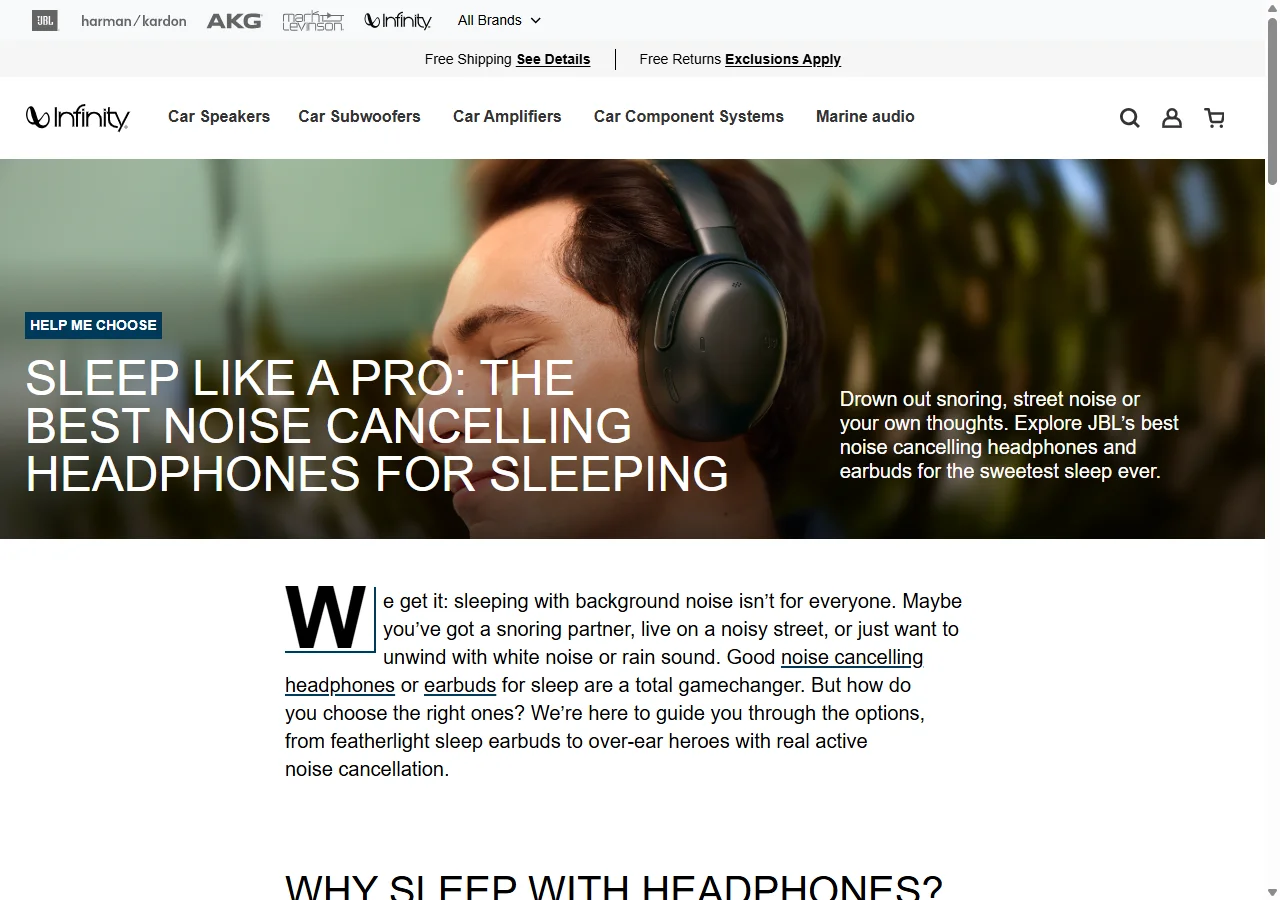
Two of the nine organic results for this search term are the same article published twice by the same owner. JBL’s blog runs a post titled “the best noise cancelling headphones for sleeping,” recommending JBL. The web store of Infinity, a car-audio brand, runs the identical text word for word, still reading “Explore JBL’s best noise cancelling headphones and earbuds for the sweetest sleep ever.” Nobody changed the brand name. Both marques belong to Harman International, which has been a wholly owned subsidiary of Samsung Electronics since 2017, per Harman’s own site. One corporation, two search slots, one recycled sales pitch wearing two logos. That is a third of the page you searched.
The rest of the field: an enthusiast blog whose 6,396-word comparison carries 15 affiliate links and no measurements, big-brand roundups that tested subjectively and printed no numbers, one guide still recommending a product discontinued in 2023, and community threads, which, for all their chaos, were the only place we found the charging-pin failures and 3 a.m. battery beeps documented at all. We earn from ads and may earn from products we recommend; the difference we can offer is that every claim above traces to a regulation, a registry, or a named page you can open yourself, the same way we price categories whose products we don’t sell.
Field notes
- The number gap: across seven ranking pages measured by script on August 27, 2026 (735 to 6,396 words each), none ran an acoustic measurement; five print no decibel figure at all, and the two that do repeat a maker’s number, one of them for Loop earplugs, introduced as “these aren’t headphones.”
- The one legal label: NRR under 40 CFR Part 211 Subpart B applies to hearing protectors made on or after September 27, 1980, rests on the ANSI S3.19-1974 experimenter-fit test, lost its enforcement office in 1981, and the August 2009 modernisation proposal (74 FR 39150) was never finalised; NIOSH publication 2025-104 (January 2025) replaced label derating with individual fit testing.
- Vendors against their own category: Ozlo’s homepage calls ANC “less suited for sleep”; Soundcore’s A30 page footnotes that snoring is masked by audio, not ANC; the A30 page uses the term ANC 28 times and prints zero attenuation decibels.
- Prices as read on maker pages, August 27, 2026: Sleep A30 199.99 dollars; Sleep A20 149.99 on sale from 179.99; Ozlo Sleepbuds 2 at 279; Loop Quiet 2 at 24.95 with a 24 dB SNR (EU scale, no NRR shown); SleepPhones Wireless 99.95; Dohm Classic 49.99; QuietOn 4 quoted 259 euros with regional pricing; 3M E-A-Rsoft foam NRR 33 with 3M advising personal fit testing and halving the printed rating.
- The Bose timeline: Sleepbuds discontinued 2023; Bose Sleep app removed from download July 21, 2025; remaining hardware locked to Phone-free mode; Bose directs owners to Ozlo, built by ex-Bose engineers under the legal name Drowsy Digital Inc (FCC ID 2BAGA010011L).
- Two slots, one owner: the JBL and Infinity results in this query are the identical article; both brands are Harman International, a Samsung subsidiary since 2017.
- Sources: 40 CFR Part 211 Subpart B and 21 CFR 874.3400 (eCFR); EPA Clean Air Act Title IV noise pages; Federal Register proposed rule E9-18003, 74 FR 39150 (August 2009); NIOSH DHHS Publication 2025-104; IEC 60268-24:2023 (IEC webstore); FDA General Wellness final guidance (January 2026); IRS IR-2024-65 and Publication 502; FCC equipment authorization records; CPSC recall database; vendor pages for Soundcore, Ozlo, QuietOn, Loop, AcousticSheep, Yogasleep, and 3M as read on August 27, 2026.
Frequently Asked Questions
Do noise cancelling headphones actually work for snoring?
Mostly no, and the makers say so. Cancellation nulls steady low-frequency rumble; a snore is an irregular spike that arrives faster than the processor can invert it. Soundcore’s own A30 page states snoring is handled by masking audio, not ANC, and Ozlo’s site calls ANC less suited for sleep. For snoring, a sealed plug, masking, or both is the working combination.
What blocks as much noise as foam earplugs?
In printed, regulated numbers: nothing else in this market. 3M foam plugs carry NRR 33, the highest labelled rating we found, and no powered sleep device publishes any attenuation figure at all. One A30 owner’s verdict after a week was that the electronics seemed weaker than plugs alone. If maximum quiet is the only goal, foam wins on disclosure and usually on performance.
Can I use sleep earbuds without the companion app?
Depends on the design, and it decides the product’s lifespan. QuietOn has no app at all. The A30 and Ozlo keep basic playback on the hardware but manage sound libraries, alarms, and settings through their apps. Bose Sleepbuds owners learned the hard way: when that app was withdrawn in July 2025, remaining units locked to one stored sound. Ask the app-death question before paying.
Does Bluetooth stay on all night in sleep earbuds?
Often yes. An A30 owner documented that the buds reconnect instantly every morning, meaning the radio never fully powered down overnight. QuietOn contains no Bluetooth by design, and any passive plug or headband obviously carries none. If overnight radio bothers you, that’s the sorting question.
Is it safe to sleep with headphones in every night?
For most people the recorded issues are mechanical: pressure soreness on the side you sleep on, moisture and wax buildup under a nightly seal, and volume habits. Keep playback low, clean tips regularly, and give ears open-air time. One owner with Meniere’s disease reported problems with in-ear pressure devices; with any ear condition, ask your doctor before sealing anything in overnight, and make sure you can still hear a smoke alarm regardless of what you wear.
Why don’t sleep headphones list a decibel rating?
Because no rule requires one. The mandatory NRR label covers hearing protection; sleep audio is sold as consumer electronics, outside that rule. A voluntary IEC standard for measuring consumer ANC exists (60268-24:2023) and none of the vendors we read cites it. The result: the phrase noise reduction sells the product, and no number has to back it.
Are sleep earbuds really HSA or FSA eligible?
The stores will take the card; that’s what eligible means there. No agency approves products for HSA/FSA, qualification runs through the tax definition of medical care, often via a Letter of Medical Necessity, and the IRS warned in March 2024 (IR-2024-65) about wellness purchases dressed as medical ones. If a claim fails, the tax bill lands on you. It can be legitimate; it is never automatic.
What happened to Bose Sleepbuds?
Bose discontinued Sleepbuds in 2023 for weak adoption, by its own account, and withdrew the Sleep app from download on July 21, 2025. Existing pairs still work in Phone-free mode, locked to a pre-selected sound; owners who transferred phones with full backups kept the app, fresh installs can’t get it. Bose points owners to Ozlo, founded by former Sleepbuds engineers, as the continuation of the technology.
My Take
This market sells a phrase it quietly disowns in its own footnotes. The two companies that build sleep-first earbuds both tell you, on their own pages, that active cancellation is the wrong tool for the noise most buyers are escaping, and not one powered product prints a number you could hold it to. Meanwhile the only device class with a legally mandated rating costs a few dollars, and even that number runs on a 1974 test that the government’s own institute stopped trusting this decade. The gap between what’s claimed and what’s measured isn’t a detail of this category. It is the category.
What I’d do in your bed: spend $25 on Loop Quiet 2 or a handful of dollars on 3M foam first, and give it three nights; that experiment settles most cases. If you need audio or a private alarm on top, the A30 at $199.99 is the best-engineered option and its maker’s honesty about the snoring footnote earns it the nod over the $279 Ozlo, which asks a premium plus app dependence from a company continuing a product line that already died once. And if you’re tempted by a twenty-dollar bud printing a bare decibel number with no test behind it: the label rule that would have to answer for that number lost its police in 1981. Nobody is coming to check it for you. That’s this whole market in one sentence.