





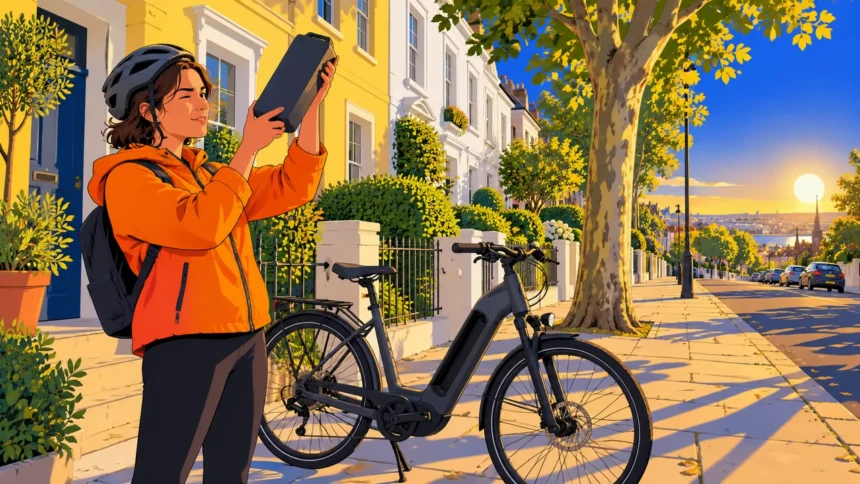
The best electric bike for most people in 2026 is the Aventon Level 4 REC, and it’s one of only two of the ten bikes OutdoorGearLab marks “Yes” for UL 2849 whose name I found in a lab’s own directory. I looked up the picks the big guides repeat. Most say “UL certified.” Fewer can show you the record. Here’s which ones can.
- Which electric bike should you buy?
- How I checked these e-bikes
- What does “UL certified” actually mean on an e-bike?
- Which of the guides’ best electric bikes have a lab record?
- What should you avoid when buying an electric bike?
- Why did e-bike certification turn into a legal requirement?
- The best electric bikes of 2026, checked one by one
- 1. Aventon Level 4 REC: best electric bike for most people
- 2. Ride1Up Portola 02: best e-bike under $1,000
- 3. Ride1Up Roadster V3: best lightweight city e-bike
- 4. Velotric Fold 1 Plus: best folding e-bike for a full commute
- 5. Aventon Abound LR: best cargo e-bike
- 6. Velotric Tempo: best low-step e-bike you can still lift
- 7. Velotric Nomad 2: best fat-tire e-bike
- 8. Aventon Current ADV: best electric mountain bike
- What happens to your e-bike if the company goes bankrupt?
- Class 1, 2 or 3: which e-bike class do you need?
- Hub motor or mid-drive: which is better on an e-bike?
- How much should you spend on an electric bike?
- Is it safe to charge an e-bike battery indoors or overnight?
- Is an e-bike conversion kit a good idea?
- Can you get a rebate or tax credit for an e-bike?
- How to choose: five trade-offs
- Frequently Asked Questions
- What is the best electric bike for most people?
- Is UL 2849 the same as UL 2271?
- How do I check if an e-bike is UL certified?
- What e-bikes should you stay away from?
- What is the difference between a Class 2 and Class 3 e-bike?
- What happens to my e-bike if the company goes bankrupt?
- Is there a federal tax credit for electric bikes?
- Are Costco and big-box store e-bikes any good?
- My Take
Which electric bike should you buy?
Pick the job first, then the bike. A commuter, a folding bike for an apartment, a longtail that carries two kids and a fat-tire bike for gravel roads are different machines, and a price band won’t tell you which one you need. Then check the electrical system. That part decides whether a lab tested the battery in your hallway as a whole system or only as a pack, and most guides take it on the seller’s word.
Here are my eight picks. The record column shows what I found when I looked each one up on October 30, 2026, and the + next to it opens the file or certificate number.
If you already know the job, start here:
More Read

- Riding to work on pavement: Aventon Level 4 REC.
- A first e-bike under $1,000 that folds: Ride1Up Portola 02.
- Stairs, a small elevator or a wall hook: Ride1Up Roadster V3.
- Train plus bike, with real miles at each end: Velotric Fold 1 Plus.
- Kids and groceries: Aventon Abound LR.
- An easy step-over and a bike you can lift into a car: Velotric Tempo.
- Sand, snow and gravel roads: Velotric Nomad 2.
- Help on trail climbs: Aventon Current ADV.
How I checked these e-bikes
I didn’t ride these bikes, and I didn’t buy them. Ride feel, range and hill climbing come from the testers who did, and I name them each time. What I added is the paperwork check that none of the nine top guides I read runs. It takes minutes per bike. Anyone can repeat it.
On October 30, 2026, I searched two public directories run by testing labs. UL Solutions’ Product iQ has a free, abridged mode that shows each listing, its file number and the models it names. TÜV Rheinland’s Certipedia shows each certificate, the standard, the model designation and the issue date. Both are free: Product iQ’s abridged search at productiq.ulprospector.com works without an account, and Certipedia sits at certipedia.com. Product iQ files e-bike electrical systems tested to UL 2849 under category QGNS, which listed 54 companies that day. I searched both directories by brand and by model name, opened every listing that matched, and compared the model names with what each maker sells today.
Then I read each maker’s own wording about certification, word for word, and checked the brands against the U.S. Consumer Product Safety Commission’s warnings. I also read in full nine of the guides that rank for “best electric bike” and “best ebike” and noted what each says about safety records. I saved the full text of seven of them, so the counts below use those seven. The same registry-first approach runs through the drone guide, where the federal record decides the pick, and the router guide built on looking a device up in a federal record.
What “not found” means here
I searched two directories. SGS, Intertek, CSA and other labs also certify e-bikes, and I couldn’t search their records the same way. A listing can also sit under a factory’s name instead of the brand’s, and UL’s own page warns that a listing “may not show all models included.” So “not found” means not found in those two directories on October 30, 2026. It doesn’t mean uncertified. Ask the seller for the certificate number and the lab’s name.
What does “UL certified” actually mean on an e-bike?
It should mean an accredited lab tested a sample and lists the product in its own directory. New York State’s law defines an accredited lab as a Nationally Recognized Testing Laboratory recognized by OSHA, or a lab accredited to ISO 17025 or ISO 17065, and California uses the same idea. Two standards matter. UL 2849 covers the e-bike’s whole electrical system: battery, charger, motor, controller and the wiring between them. UL 2271 covers the battery pack alone. A bike can carry a certified battery and still have a charger and controller nobody certified as a set.
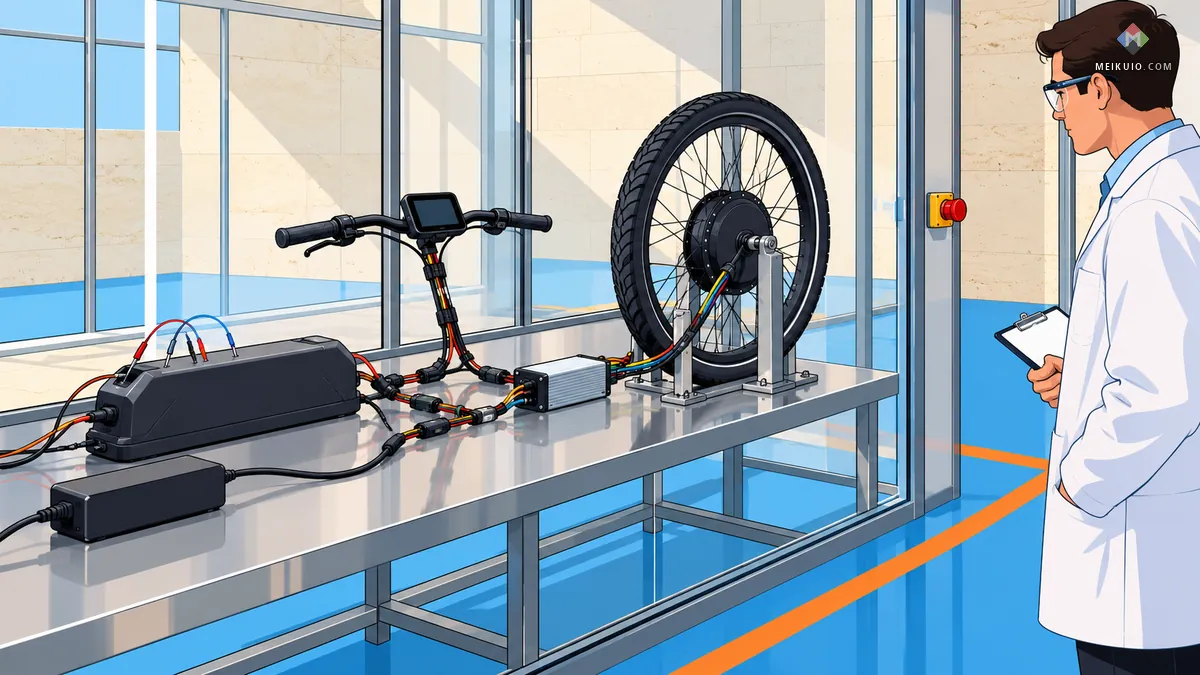
New York City writes the difference into law. Its consumer protection department says “Powered bicycles, such as e-bikes must be certified to UL standard 2849,” while storage batteries “must be certified to UL standard 2271.” It also requires that products “display the logo, wordmark, or name of the accredited testing laboratory to show its certification.”
A sticker on the box is a claim. A listing in the lab’s directory is evidence you can check.
Makers say different things, and the difference hides in the wording. Lectric’s certification page says “All Lectric eBikes are UL 2849 certified.” The same page also says “Every model is designed to meet UL 2849.” Velotric writes “Most Velotric e-bikes are both UL 2271 Recognized and UL 2849 Certified.” Rad Power Bikes says “All Rad ebikes are either UL Certified or tested by ACT to comply with UL 2849.” Segway’s page for the Myon says its “battery is UL-certified.” Each sentence promises something different.
Three more words trip buyers up. “Certified” or “Listed” means the lab covers a finished product. “Recognized” means the lab covers a component meant to go inside something else, which is why Velotric calls its batteries “UL 2271 Recognized” and its bikes “UL 2849 Certified.” EN 15194 is the European e-bike standard, and a bike built for Europe can meet it without any US listing.
A real certificate is also more than a one-time test. TÜV Rheinland’s directory explains that it “tests a product sample and conducts repeat factory inspections to assure continued compliance,” and that a certificate stays valid unless the standard expires or the client cancels it. Each certificate also warns that its standards “reflect the status at the time of the release of this certificate.” So the issue date matters, and an older certificate for an earlier version doesn’t vouch for this year’s bike.
The guides repeat these claims instead of checking them. OutdoorGearLab’s comparison table has a row called “UL 2849 Certification” and prints “Yes” for every bike it lists. RiderGuide tells readers to insist “on a UL 2849 or UL 2271 certified battery,” which treats a whole-system standard as a battery standard. Ebike Escape says “Every bike on this list meets UL standards.” Of the nine guides I read in full, none ties an individual pick to a lab’s record.
To check a bike yourself before you pay:
- Ask the seller which lab certified the bike and for the file or certificate number. A real answer names a lab, such as UL Solutions, TÜV Rheinland, SGS or Intertek.
- Look the number up in that lab’s directory. For UL, search Product iQ for the file number or the category QGNS. For TÜV Rheinland, search Certipedia for the certificate number.
- Match the model name as well as the brand. A listing for last year’s version, or for the battery alone, doesn’t cover the bike in front of you.
Which of the guides’ best electric bikes have a lab record?
Fewer than the “Yes” column suggests. OutdoorGearLab’s guide is one of the best-tested on page one, and it prints “UL 2849 Certification: Yes” for ten bikes. I looked up all ten in Product iQ and Certipedia on October 30, 2026. Two are named in a listing. Two sit under a generic name that could cover an older version. Three I couldn’t match. Two I couldn’t find at all. And for one, the maker’s own page says “tested,” not certified.
The two clean matches are the Aventon Level 4 REC, named in UL listing E541149, and the Ride1Up Vorsa ST, named in TÜV certificate CU 72501077 to ANSI/CAN/UL 2849, issued March 28, 2025. The two generic ones are Aventon’s own. The Aventure 3 appears in UL’s listing only as “AVENTURE,” and the closest record for the Soltera 3 ADV is TÜV certificate CU 72504243, issued October 17, 2025, which names the model only as “SOLTERA.” Both may well cover today’s bikes, but neither listing names a generation, and by my own rule that means asking Aventon for the document that names the model.
The three I couldn’t match are the Segway Myon, the Segway Xafari and the Electra Townie Go. Segway’s maker, Ninebot, holds a UL listing (file E519735), but it names models by codes such as A200 and 210101U, and Segway’s Myon page claims only that the “battery is UL-certified.” Trek, which owns Electra, holds a component listing for Canada in Product iQ, and I couldn’t find a US system listing for the Townie Go.
The two I couldn’t find are both Lectric: the XP4 and the XP4 750. The one where the maker contradicts the guide is the Rad Power RadRunner Max. Rad’s page says it was “Tested by ACT for compliance with UL 2849 and UL 2271,” and Rad’s UL listing names only the RadExpand 5 Plus and RadWagon 5. Two clean matches out of ten “Yes” answers is a 20 percent hit rate for the claim most readers take on trust.
None of this means OutdoorGearLab rode the bikes badly. Its range and hill tests are some of the best on the page, and I quote them below. It means the safety column repeats the makers’ claims, as the other guides I read do.
What should you avoid when buying an electric bike?
Avoid a bike whose safety claim you can’t trace to a lab, and avoid a model the CPSC has warned about. Those two checks take ten minutes and they catch more than a spec sheet does. The rest of this list is the fine print I’d read before checkout.
Start with the wording. “Tested to,” “meets,” “designed to meet” and “built to” describe what a maker aimed for. They don’t describe a lab’s listing. Rad’s own product page for the RadRunner Max says the bike was “Tested by ACT for compliance with UL 2849 and UL 2271.” In UL’s directory, Rad Power Bikes’ listing (file E538892) names two models, the RadExpand 5 Plus and the RadWagon 5. OutdoorGearLab calls the RadRunner Max its best utility e-bike and marks it “Yes” for UL 2849. ACT is the testing lab Rad names, and “tested for compliance” is a test result, not a certification listing. My call: stop using the three Rad battery models the CPSC named, and if you buy a new Rad, choose one of the two models in its UL listing.
Then check the brand that shows up everywhere. Lectric’s XP4 appears on six of the seven guides whose full text I saved, the XPedition on five, and Google’s AI Overview names the XP 4 as its budget pick. I searched Product iQ and Certipedia for “Lectric,” “XPedition,” “XP Lite” and “XP Trike” and found no listing. Lectric’s page names no lab either. I’m not calling the bikes unsafe. Until Lectric shows a certificate that names your model, I’d treat the claim as unverified and buy a bike with a named listing.
Then search the CPSC’s warnings, which go out when a company won’t agree to a recall. On November 24, 2025, the agency told owners to stop using Rad battery models RP-1304, RAD-S1304Y and HL-RP-S1304, citing “31 reports of fire, including 12 reports of property damage totaling approximately $734,500,” and said Rad “has refused to agree to an acceptable recall.” In 2026 it warned twice about Ridstar e-bikes: on March 19 about the Q20 and Q20 Pro, whose batteries and wires “can ignite,” and on June 25 about the Q20 and Q20 Lite, because “the front wheel can detach without warning,” with 32 such reports.
Finally, avoid a bike that ships in one class and unlocks into another from a menu, unless you know your local rules. That setting shows up on most direct-to-consumer bikes I looked at, and I cover it in the class section below.
Why did e-bike certification turn into a legal requirement?
Because lithium-ion battery fires kept killing people, and voluntary standards didn’t stop them. From 2019 through 2023, the CPSC counted 227 fire, explosion and smoke-inhalation incidents that “potentially could have been prevented” by its proposed rule; 90 of them were tied to 39 deaths and 181 injuries. That count covers all micromobility, from e-bikes to hoverboards.
New York City moved first. Local Law 39 of 2023 bars selling, leasing or renting uncertified e-bikes and batteries, and the city’s consumer protection department enforces it. New York State followed in 2024 with a statewide battery certification law, bill S.154-F. Since January 1, 2026, California’s SB 1271 has barred selling an e-bike in the state unless an accredited lab tested its battery to a standard referenced in UL 2849 or Europe’s EN 15194. The lab’s name or logo has to appear on the packaging, the paperwork or the bike, and if you ask, the seller has to hand over the lab’s test report. Rental e-bikes must meet the same battery rule from January 1, 2028.
The federal rule is still a proposal. The CPSC published it in the Federal Register on June 24, 2026, as document 2026-12749, with comments due by August 24, and it would create a new 16 CFR part 1265. The agency’s own finding is blunt: “micromobility products as a whole do not substantially comply with the applicable voluntary standards.” The proposal would make UL 2849 and UL 2271 mandatory, add a tamper-resistant battery enclosure, a post-discharge charge test and a reverse-polarity test, and cover “components sold in eBike electrical system conversion kits.” It would take effect 180 days after a final rule. No final rule had appeared by October 30, 2026.
That’s the same pattern I saw with CPAP machines, where a federal safety notice changed which models I’d recommend. The paperwork arrives after the damage.
The best electric bikes of 2026, checked one by one
Each card starts with the lab record I found, then what the maker says, then how independent testers rated the bike. Prices are what the makers’ US stores showed on October 30, 2026. Sale prices on e-bikes change weekly, so check before you buy.
1. Aventon Level 4 REC: best electric bike for most people
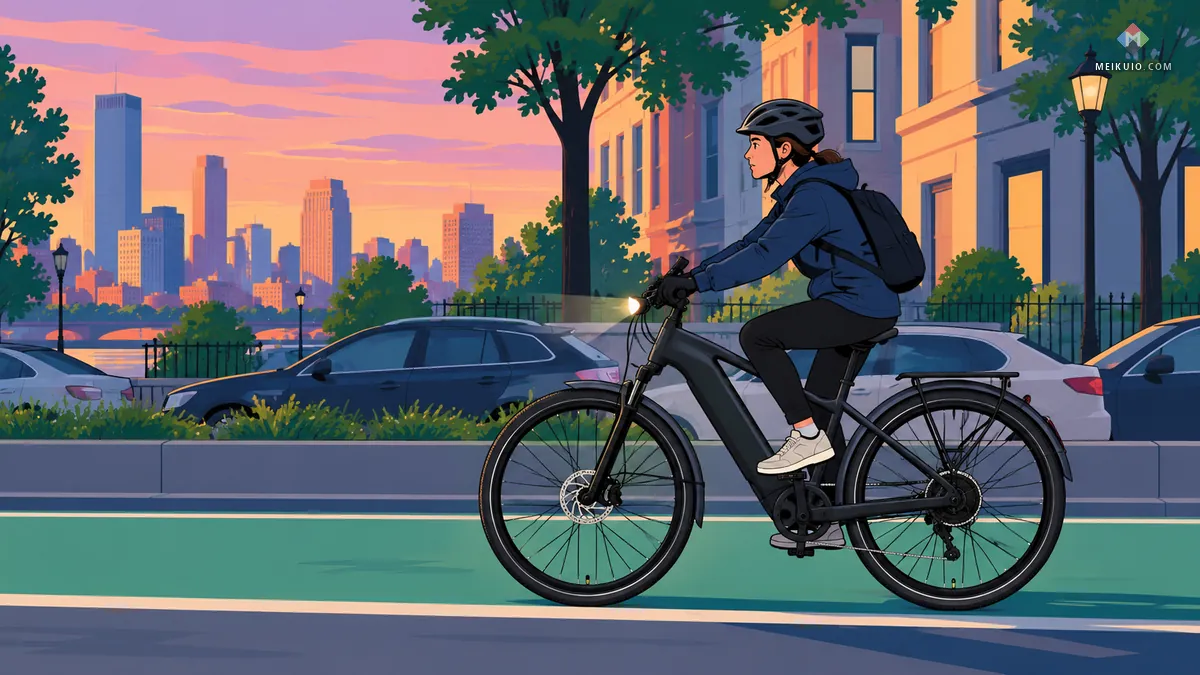
The Level 4 REC is the commuter the field agrees on, and its paperwork holds up. UL’s listing for Ride Aventon Inc., file E541149, names “Level 4 REC” alongside the Level 4 ADV, the Abound SR and LR, the Current and the Pace 5 REC. Aventon also posts lab documents for its current models on its Safety Certified page.
Aventon describes it as “pairing a 750W hub motor with up to 75 miles of range,” with suspension and app connectivity for tracking. Bicycling named it the best overall e-bike, OutdoorGearLab calls it the best everyday e-bike, and Google’s AI Overview for “best electric bike” lists it as the commuter pick. The store showed $1,799, down from $1,999.
REC and ADV are Aventon’s trim names: REC uses a hub motor, ADV a mid-drive. Treat the 75-mile figure as a pedaling number; OutdoorGearLab’s minimal-pedaling test got 33.4. Two variants matter. The Level 4 REC also comes as a step-through at the same $1,799, for riders who’d rather not swing a leg over. The Level 4 ADV is the mid-drive version at $2,699, down from $2,799, and it sits in the same UL listing, so moving up doesn’t cost you the record. I’d pay the difference only for steep hills; on flat commutes the REC’s hub motor does the job. Aventon also builds app connectivity “for security and peace of mind” into the REC, which matters more than it sounds when the bike costs as much as a used scooter.
Who it’s for: anyone riding to work on pavement who wants one bike that does everything competently. Who should skip it: riders who carry the bike up stairs. OutdoorGearLab puts it at about 70 pounds.
2. Ride1Up Portola 02: best e-bike under $1,000
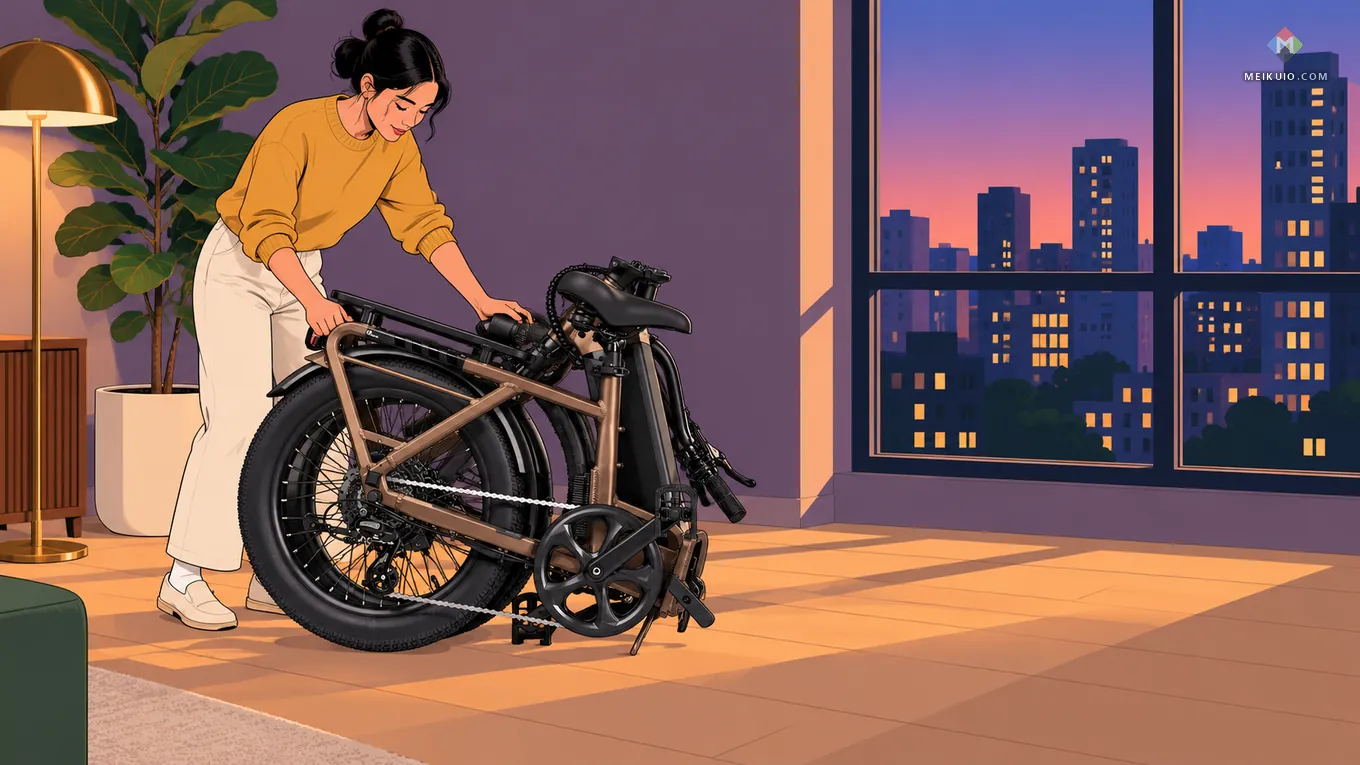
This is the one pick where the record and the product name don’t line up exactly, and I’d rather show you than hide it. TÜV Rheinland’s certificate CU 72500092, issued January 23, 2025, certifies Ride1Up’s “Electrical Systems for eBikes” to ANSI/CAN/UL 2849 for designations “PORTOLA-10.4AH” and “PORTOLA-13.4AH.” Those are the earlier Portola’s battery sizes. The Portola 02 ships with 10Ah or 15Ah packs, and I found no listing that names the 02.
Ride1Up’s product page says “Certified ANSI/CAN/UL 2849” and lists a 750W hub motor with 90Nm of torque, a torque sensor, Class 1 to 3 settings and 25 to 45 miles of range on the 10Ah pack. RiderGuide named the Portola 02 its best folding e-bike, and Ebike Escape called it “A Premium-Feeling Folder Under $1,000.” The store showed $995. The Portola 02 Lite drops the rear rack, fenders and rear lights and was on sale from $795, down from $895.
The spec sheet is generous for the money. Ride1Up quotes 30 to 60 miles on the 15Ah pack, 28 mph on pedal assist and 20 mph on the throttle, and it lets you switch between its torque-sensing mode and a cadence mode. TÜV Rheinland also lists several Ride1Up battery packs certified to UL 2271, including a 48V 15Ah pack issued in December 2025, but none of those records names the bike it ships with. That’s why this card carries a caveat the others don’t.
Who it’s for: a first e-bike on a tight budget, especially if it lives in an apartment. Who should skip it: anyone who needs the certificate to name their exact model, for a building manager or a rebate. Ask Ride1Up for the 02’s certificate number first.
3. Ride1Up Roadster V3: best lightweight city e-bike

The Roadster V3 looks like a plain city bike and has a clean record. TÜV certificate CU 72500127, issued January 23, 2025, certifies the electrical system to ANSI/CAN/UL 2849 for “V3 ROADSTERV3-chain” and “V3 ROADSTERV3-belt,” the chain and belt versions Ride1Up sells.
Ride1Up lists a 500W hub motor with 50Nm of torque, a torque sensor, a removable battery and 20 to 40 miles of range. That’s less power than a fat-tire bike, and it’s the point: the bike stays light and rides like a bicycle. RiderGuide named it the best lightweight e-bike and lists it at 40 pounds, and Electric Bike Review put it first among city bikes. OutdoorGearLab’s minimal-pedaling range test got 18.9 miles, so treat the top of Ride1Up’s range as a pedaling number. The store showed $1,295 to $1,495 depending on the version, and the frame comes in Low-Step, Medium and Large sizes.
The details explain the price. Ride1Up describes a lockable, removable Samsung GB50 battery and a 120-lux front light, and both the chain and belt versions are in the certificate. The belt version skips the chain grease, and that matters if the bike lives in your hallway. Ride1Up lists the rigid, belt and suspension versions separately, so check which version each price covers.
Who it’s for: city riders with stairs, a small elevator or a wall hook. Who should skip it: riders who haul heavy loads or climb steep hills on the throttle.
4. Velotric Fold 1 Plus: best folding e-bike for a full commute
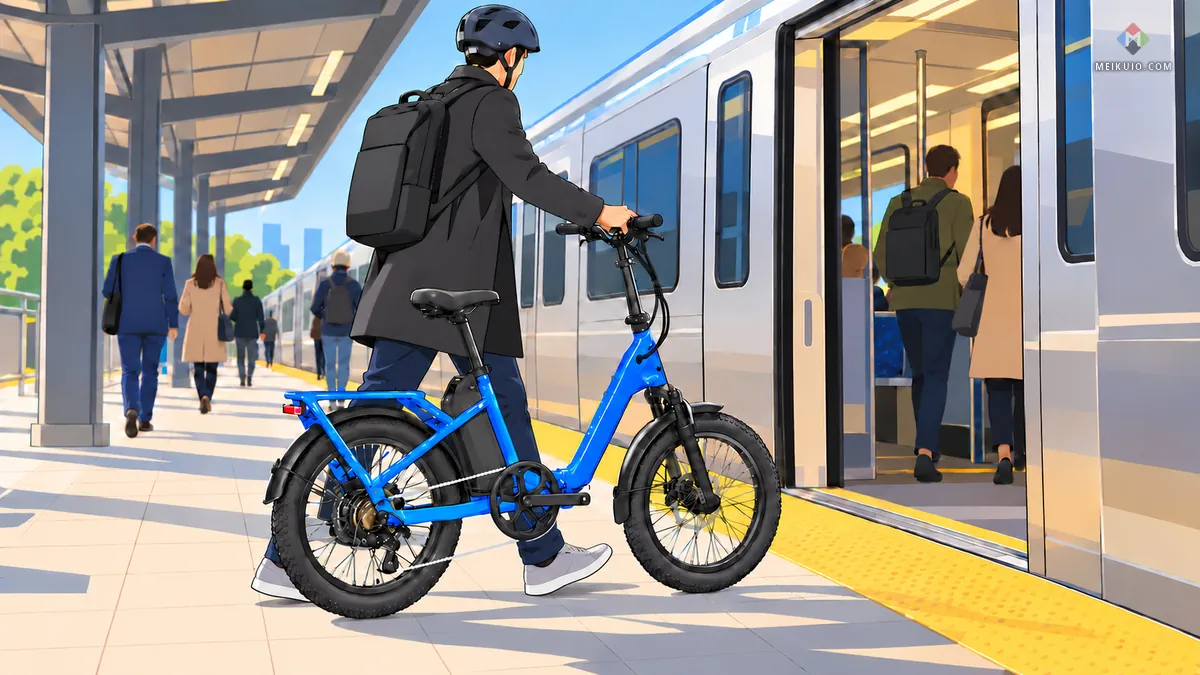
If you want a folder that rides more like a full-size bike, the Fold 1 Plus is the one I can match to a listing. UL file E525107, held by Velopower Inc., the company behind Velotric, names “Velotric Fold 1 Plus” among 23 model lines. That list covers nearly the whole current Velotric range, so the brand’s “most” is closer to “almost all.”
Velotric lists a 750W motor, up to 55 miles of range and hydraulic disc brakes. Electric Bike Review includes it among its three folding picks for 2026, next to the Lectric XP 4 and the Portola. The store showed $1,499.
The same UL listing also names the cheaper Fold 1 and Fold 1 Lite, which Velotric sold for $1,299 and $1,099 that day. That’s useful if your budget sits between the Portola 02 and the Fold 1 Plus, because you keep a named listing at a lower price. Compare the range figures before you choose. For a long daily commute I’d still pay for the Plus and its 55-mile rating.
Who it’s for: train-and-bike commuters who ride more than a few miles at each end. Who should skip it: anyone whose budget stops at $1,000. The Portola 02 is the cheaper folder.
5. Aventon Abound LR: best cargo e-bike

A cargo bike carries the most weight and the biggest battery, so the record matters more here. UL listing E541149, which covers the Level 4 REC, also names the Abound LR (as “abound LR”). Aventon lists a 750W motor and a 440-pound payload capacity, and OutdoorGearLab named it its best overall cargo bike. The store showed $1,899, down from $1,999.
The cargo bike the guides mention most is the Lectric XPedition2, on five of the seven guides whose full text I saved. It’s cheaper. I couldn’t find it in either directory, so it isn’t my pick. If you’re weighing the two, ask Lectric for the certificate number and look it up. Cargo bikes also come in a second shape, the front-loader with a box ahead of the rider, which bike shops mostly sell at higher prices.
Budget for the kid setup, because the bike doesn’t come with it. On the day I checked, Aventon’s store listed a passenger’s chair for the Abound at $139.99 and a handrail for the Abound LR at $150.99, so two seats and a rail add a few hundred dollars before helmets. The shorter Abound SR, at $1,799, sits in the same UL listing if you’d rather have a longtail that’s easier to store.
Who it’s for: parents replacing short car trips and anyone hauling groceries. Who should skip it: riders without ground-floor storage. A loaded longtail won’t fit in most elevators.
6. Velotric Tempo: best low-step e-bike you can still lift
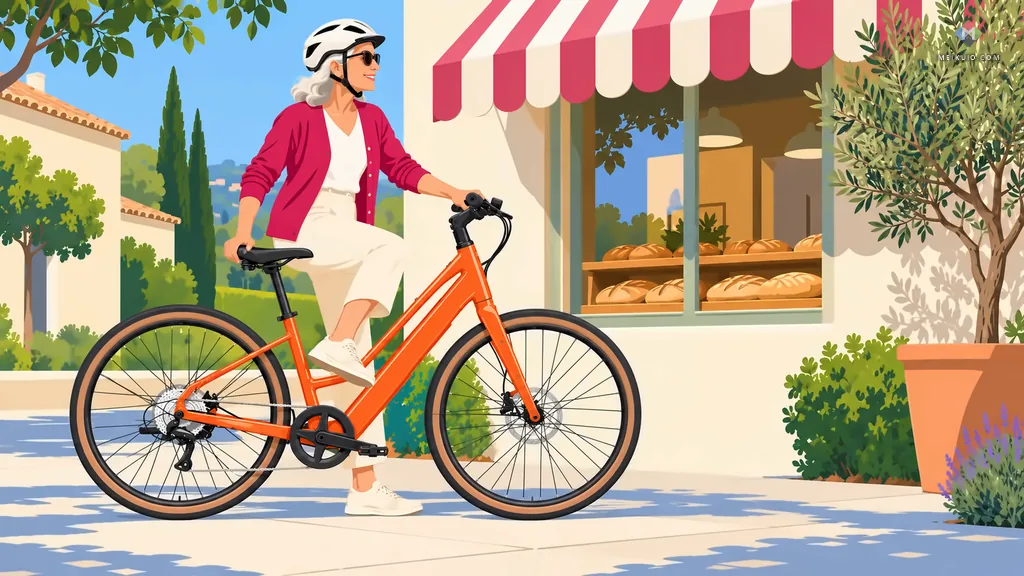
Many step-through e-bikes are heavy, and that’s the problem for older riders. The Tempo comes in a mid-step frame and weighs 34 pounds without its battery, according to Velotric. UL listing E525107 names “Velotric Tempo High-Step” and “Velotric Tempo Mid-Step.” Bicycling and Electric Bike Review both include it in their 2026 guides, and Bicycling adds a fair warning: heavier riders should test-ride it first, because a lower-powered motor can bog down on hills. The store showed $1,499.
Velotric sells the Tempo in two frame heights and two sizes, so shorter riders aren’t stuck with one geometry. If the Tempo’s price is a stretch, the T1 ST Plus, another light low-step model, was $1,399, down from $1,649, and it’s in the same UL listing.
If you’d rather buy from a shop with a mechanic, Specialized’s Turbo Como is the low-step alternative, and UL listing E533753 names the Como 3.0, 4.0 and 5.0. It costs more and you buy it through a dealer, which is exactly what some riders want.
Who it’s for: riders who want an easy step-over and a bike they can lift into a car, including anyone shopping for a parent who still wants to get around on their own. If that parent needs more help at home, our guide to care robots for the elderly covers what the records say there. Who should skip it: anyone who needs a throttle for every start, or a rear rack for heavy loads.
7. Velotric Nomad 2: best fat-tire e-bike
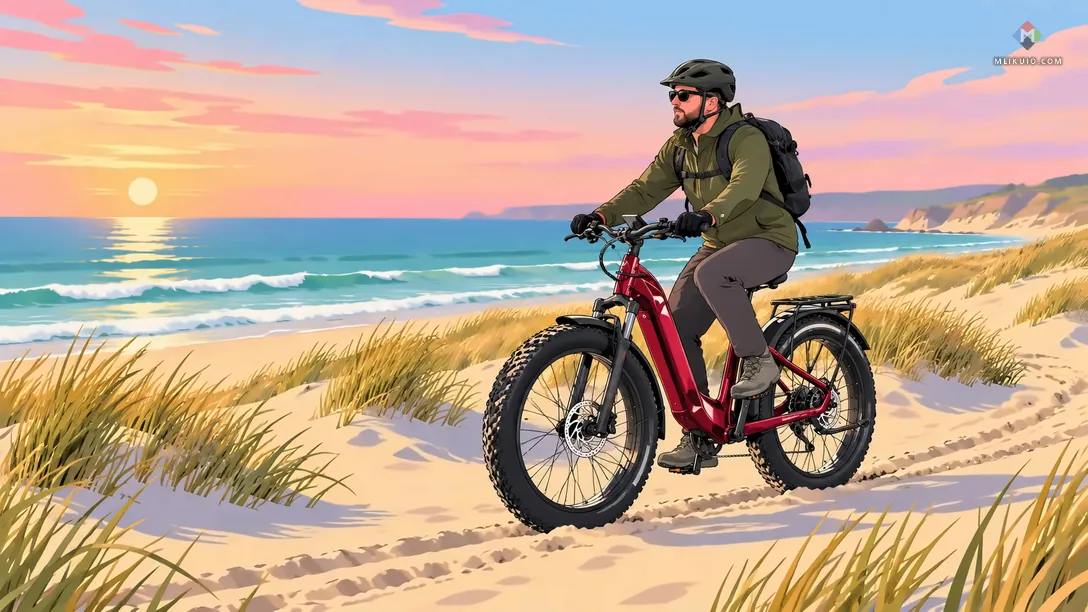
Uncertified marketplace bikes cluster in the fat-tire class, so a named listing counts for more here. UL listing E525107 names the “Velotric Nomad 2 High-Step” and “Velotric Nomad 2 Step-Thru.” Velotric lists a 750W motor with 90Nm of torque, 26-by-4-inch tires, a 100mm suspension fork, up to 65 miles of range and a 505-pound payload. The store showed $1,999.
Electric Bike Review picked its full-suspension sibling, the Nomad 2X, among its best fat bikes. OutdoorGearLab names the Aventon Aventure 3 its best e-bike for all-terrain and sand instead. That bike sits in Aventon’s UL listing too, but only under the generic name “AVENTURE,” so I couldn’t confirm which generation the listing covers.
If you want rear suspension too, the Nomad 2X adds it from $2,399, and UL’s listing names the Nomad 2X in both frame styles. For most gravel roads the front fork and the fat tires already soak up enough. I’d save the $400 unless you ride rough trails often.
Who it’s for: sand, snow, gravel roads and heavier riders. Who should skip it: anyone who has to lift it. Fat-tire bikes are the heaviest type here, and many trails restrict them.
8. Aventon Current ADV: best electric mountain bike

The Current ADV is a full-suspension trail bike, and Aventon’s UL listing E541149 names “Current” among its models. Aventon builds it around its Ultro X mid-drive motor, 140mm of rear travel, a 150mm fork and 29-inch wheels. Bicycling named the Current its best overall e-MTB, and RiderGuide named the Current ADV its best full-suspension electric mountain bike. The store showed $3,999.
UL’s listing says only “Current,” without a trim name, and Aventon also sells the Current EXP at $5,999 and the Current LTD at $7,999. Aventon posts a separate lab document for its Current models on its Safety Certified page, and I’d ask for the one that names the ADV before buying. Aventon says the bike carries a 4G connection, GPS tracking and an integrated alarm, which is reassuring on a bike this expensive.
One check before you buy: many trail networks allow only Class 1 pedal-assist bikes, so confirm the setting your local trails require. Who it’s for: trail riders who want help on the climbs. Who should skip it: anyone who mostly rides pavement. A commuter does that job for less than half the price.
What happens to your e-bike if the company goes bankrupt?
Your warranty can disappear with the company, and Rad Power Bikes shows how. Rad was the best-known direct-to-consumer e-bike brand in the US. On December 15, 2025, Rad Power Bikes Inc. filed for Chapter 11 in the US Bankruptcy Court for the Eastern District of Washington, case 25-02183. The brand changed owners on February 27, 2026.
The new owner, Rad Life Mobility, spells out what that means on its warranty page, last updated May 14, 2026: “RLM has no obligation to provide warranty or other service for Products purchased prior to December 15, 2025.” Claims on those bikes go through the bankruptcy case as a Proof of Claim, the form a creditor files with the court to be paid from what the old company left. Chapter 11 is the reorganization kind of bankruptcy, and here it ended in a sale. The new limited warranty covers bikes bought after May 15, 2026. If you bought between December 15, 2025 and May 15, 2026, neither date covers you cleanly, so ask Rad Life Mobility in writing.
Two documents, two answers
The court-approved sale terms say the buyer took on some warranty claims for bikes sold before closing, capped at the value of the bike or part. The warranty page says the new owner has no obligation for bikes bought before December 15, 2025. I’m not a lawyer and I won’t say which one wins for your bike. If you own an older Rad, keep your receipt and file the claim in case 25-02183 rather than waiting.
Rad isn’t alone. VanMoof’s Dutch companies went bankrupt in July 2023, and its US help pages now point owners to paid repairs rather than old warranties. Juiced Bikes filed for bankruptcy in 2024, as Electric Bike Review notes in its own guide. The lesson is the same one I found when a game studio shuts down and takes the servers with it: you own the hardware, but the support, the parts and sometimes the app that unlocks it belong to the company.
Two things protect you. Buy a bike that uses standard parts a local shop can replace, and check whether the battery is a common pack or a proprietary shape. A brand with dealers, like Aventon, Trek or Specialized, also gives you a shop to walk into if the website goes dark.
Class 1, 2 or 3: which e-bike class do you need?
Many riders want Class 2 for throttle starts or Class 3 for faster commutes, but your trails and paths decide. Class 1 bikes assist only while you pedal and cap at 20 mph. Class 2 bikes add a throttle and also cap at 20 mph. Class 3 bikes assist only while you pedal and cap at 28 mph. Many states use this three-class system, and many trail networks admit only Class 1.

The spec sheet hides one catch. Most direct-to-consumer bikes I looked at ship in one class and switch to another in the display or app. Ride1Up’s Portola 02 and Roadster V3 are both sold as “Class 1-3.” That’s convenient, and it’s legal as long as you ride in the class your road or trail allows. It also means the bike under you isn’t always the class on its label. The best electric bike for your commute is the one your paths allow. Check before you ride. The ticket is yours, not the brand’s.
If you’re buying for a teenager, check your state’s age rules for Class 3 and for throttles before you choose. Licensing, registration and helmet rules also differ by state, so read your DMV’s e-bike page before your first ride. Many states require a class sticker on the frame, so make sure the bike has one.
Hub motor or mid-drive: which is better on an e-bike?
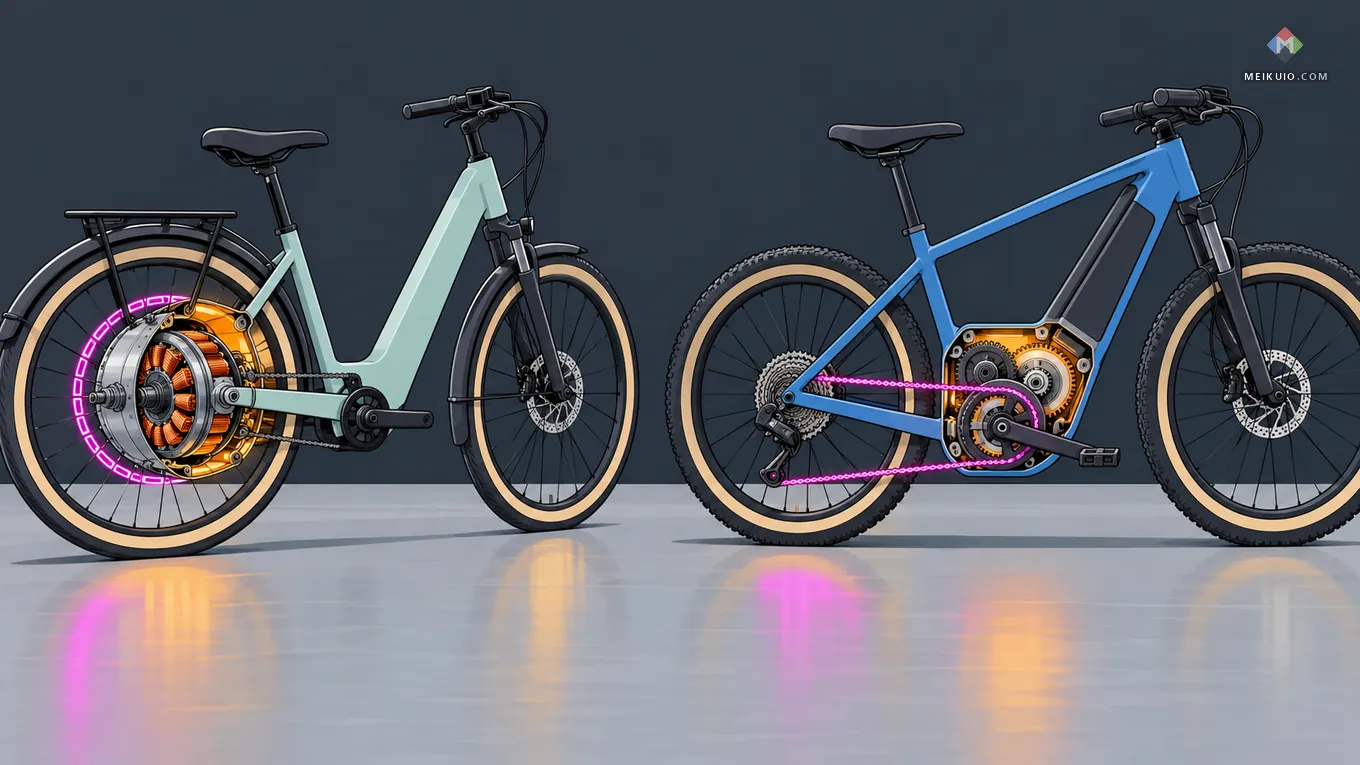
A hub motor is better for most commuters, and a mid-drive is better for hills and trails. A hub motor sits in the rear or front wheel and pushes the wheel directly. It’s cheaper, it’s easier on your chain, and with a throttle it can carry you home if the chain breaks. The Level 4 REC, Portola 02 and Roadster V3 all use one; the Current ADV uses a mid-drive.
A mid-drive sits at the pedals and drives the chain, so it uses the bike’s gears. That makes it climb better and feel more like your own legs, which is why the Current ADV and many trail bikes use one. The cost is more wear on the chain and cassette, and a higher price.
The sensor matters as much as the motor. A cadence sensor notices only that the pedals are turning, so the motor tends to switch on with a lurch. A torque sensor measures how hard you push and adds power in proportion, which feels smoother in traffic. The Portola 02 and Roadster V3 both use Ride1Up’s torque sensor, and that’s a big part of why the guides like them. In a hilly city, the best electric bike is usually a mid-drive. Everywhere else, buy the hub. Test-ride both if a shop lets you.
How much should you spend on an electric bike?
Plan on $1,200 to $2,000 for the best electric bike for daily use, and check the record at any price. Six of my eight picks fall in that band. Below $1,000, I’d consider the Portola 02 at $995 or its rack-free Lite version from $795, with the certificate caveat in its card. Trail bikes cost more: the Current ADV was $3,999.
The sticker price isn’t the whole cost. Budget for a helmet, a strong lock and lights if the bike lacks them. Expect to replace tires, brake pads and the chain sooner than on a regular bicycle, since an e-bike is heavier and faster. The biggest later expense is a replacement battery, so check that the maker sells one and what it costs before you buy. A bike whose battery you can’t replace in five years is a bike with a five-year lifespan.
Cheap marketplace bikes save money upfront and shift the risk to you. That’s the trade I’d refuse for anything that charges in my home. The battery is the real price tag. Plan for it.
Is it safe to charge an e-bike battery indoors or overnight?
Indoors, yes, with care. Overnight, no. The CPSC’s micromobility safety page says “Never charge them while sleeping or when you are not at home,” and tells owners to “unplug the device when done.” A certified battery charged with its own charger is safer than an uncertified one, but no lithium-ion battery is fire-proof. The incidents the CPSC counted came from fires, explosions and gas releases in homes as well as on the street. The CPSC asks owners to be present while a battery charges, so that’s where your habits matter.
- Use the charger that came with the bike. The CPSC’s proposed reverse-polarity test exists because incompatible chargers damage packs.
- Charge when you’re home and awake, on a hard floor, away from the door you’d use to get out.
- Stop using a battery that’s swollen, cracked, wet inside or hot after a short ride.
- Buy replacement batteries from the bike’s maker, not from a marketplace listing that fits “most” bikes.
Charging is the risky part. Treat it that way. Ask your landlord and your renter’s or homeowner’s insurer before you bring the bike inside. Some buildings now restrict e-bikes, and the first thing a manager will likely ask for is a certified listing. While you’re thinking about what stays charged at home, an emergency radio is the other battery worth keeping topped up.
Is an e-bike conversion kit a good idea?
Only if you already own a strong bicycle and know your way around brakes and wiring. A kit adds a motor and a battery to a frame, fork and brakes designed for a lighter, slower bicycle. Labs often certify the pieces separately, if at all, so you end up with a system nobody tested as a whole.
Regulators have noticed. The CPSC’s June 2026 proposal would cover “components sold in eBike electrical system conversion kits,” and California’s battery law treats a kit’s battery as a storage battery. A kit can still make sense for a rider with a good steel touring bike they don’t want to give up. For everyone else, a complete bike with a named listing is the simpler and safer buy. Most buyers should skip the kit.
Can you get a rebate or tax credit for an e-bike?
Sometimes, depending on where you live, but there’s no federal credit to count on. Members of Congress have proposed a federal e-bike tax credit more than once, and none of those bills has become law. State and city programs come and go. California’s E-Bike Incentive Project, which began in December 2022, “concluded in December 2025,” according to the state’s Air Resources Board. Denver’s city page says its 2026 rebates have all been claimed and new applicants go on a waiting list.
Check your state energy office and your electric utility before you buy, because many programs pay only for bikes bought after you’re approved. Read the eligibility list too. Some programs pay only for bikes on an approved list or with a safety certification, which turns the lab record from a safety question into a money question. Apply first. Buy second.
How to choose: five trade-offs
Every e-bike gives up something. These are the five trade-offs I’d settle before comparing models.
- Online direct versus a bike shop. Direct-to-consumer bikes cost less for the same parts, and they arrive in a box you assemble. A shop costs more and gives you someone to fix it. If you can’t adjust brakes yourself, pay for the shop.
- Hub motor with a throttle versus a mid-drive with a torque sensor. The hub motor is simpler and gets you home if the chain snaps. The mid-drive feels like a stronger version of your own legs and climbs better. Commuters on flat ground can save money with the hub.
- A named listing versus more power for less money. The cheapest high-power bikes on marketplaces rarely show a record. On private land, some riders accept that. At home in an apartment, I wouldn’t.
- A complete e-bike versus a conversion kit. The kit keeps a bike you love. The complete bike keeps a system someone tested as one.
- Heavy and capable versus light enough to carry. Many full-size e-bikes, my commuter pick included, weigh around 70 pounds, and cargo and fat-tire bikes do more at that weight. A light city bike goes up the stairs with you.
Warehouse clubs and big-box stores sell e-bikes too. UL listing E538551, held by a company called TruRide Tech, names the Venture cruiser from Jetson, a common big-box brand, by its model number, so a store brand can pass the same check. Run the three steps above on any bike, wherever it’s sold. If you ride in a group, a pair of radios keeps everyone in touch where phones fall short, and hunters heading out on a fat-tire bike may also want a trail camera that’s legal where they hunt. For more gear checked against the record, see our gadget guides.
Field notes
- The directories: UL Product iQ listed 54 companies under QGNS, its e-bike electrical system category, on October 30, 2026; TÜV Rheinland’s Certipedia shows certificates by holder.
- The guides: none of the nine guides I read in full for “best electric bike” ties a pick to a lab record, and none cites a CPSC warning.
- The gap: Rad’s UL listing names two models; Rad says the RadRunner Max was “Tested by ACT for compliance”; OutdoorGearLab marks it “Yes.”
- The federal rule: proposed June 24, 2026 (FR 2026-12749), comments closed August 24, no final rule by October 30; effective 180 days after a final rule.
- The warnings: Rad batteries RP-1304, RAD-S1304Y and HL-RP-S1304 (November 24, 2025); Ridstar fire (March 19, 2026) and wheel detachment (June 25, 2026).
- Sources: UL Solutions Product iQ; TÜV Rheinland Certipedia; Federal Register doc. 2026-12749; CPSC product safety warnings; NYC Department of Consumer and Worker Protection; Rad Life Mobility warranty page; maker product pages, October 30, 2026.
Frequently Asked Questions
What is the best electric bike for most people?
The Aventon Level 4 REC is my pick for most riders in 2026. It’s a 750W hub-motor commuter that Bicycling named its best overall e-bike, and UL’s directory lists it by name under file E541149. It cost $1,799 at Aventon’s store on October 30, 2026.
Is UL 2849 the same as UL 2271?
No. UL 2849 certifies an e-bike’s whole electrical system: battery, charger, motor, controller and wiring. UL 2271 covers the battery pack alone. New York City requires UL 2849 for e-bikes and UL 2271 for batteries, so a certified battery by itself doesn’t make the bike certified.
How do I check if an e-bike is UL certified?
Ask the seller for the lab’s name and the certificate or file number, then look it up in that lab’s directory. For UL, search Product iQ for the file number or the category QGNS. For TÜV Rheinland, search Certipedia. Make sure the listing names your exact model.
What e-bikes should you stay away from?
Stay away from any model on a CPSC warning, such as the Rad batteries named in November 2025 or Ridstar’s Q20 bikes in 2026. Be wary of bikes described only as “tested to” or “meets” UL standards, and of marketplace batteries sold to fit “most” bikes.
What is the difference between a Class 2 and Class 3 e-bike?
A Class 2 e-bike has a throttle and stops assisting at 20 mph. A Class 3 e-bike assists while you pedal, up to 28 mph. Some switchable bikes keep a 20 mph throttle in their Class 3 setting, so check how your state treats that before you ride.
What happens to my e-bike if the company goes bankrupt?
Your warranty may not survive. After Rad Power Bikes’ Chapter 11, its new owner said it has no obligation to service bikes bought before December 15, 2025, and pointed owners to the bankruptcy claims process. Bikes with standard parts and a local dealer are easier to keep running.
Is there a federal tax credit for electric bikes?
Not as of October 2026. Members of Congress have proposed a federal e-bike tax credit more than once, and none of those bills has become law. Some states, cities and utilities offer rebates, and many pay only for bikes bought after you’re approved, so apply before you buy.
Are Costco and big-box store e-bikes any good?
Some are, and you can check them the same way. UL listing E538551, held by TruRide Tech, names Jetson’s Venture, a common big-box model, by its model number. For any store bike, ask for the lab’s name and certificate number and confirm the listing names that exact model.
My Take
The guides I read checked the ride. None checked the record, and the record is where e-bikes hurt people. The word “certified” is cheap to print. A listing in UL’s or TÜV’s directory with your model’s name on it isn’t, and it took me minutes to look up, not days. If a brand can’t give you a lab and a number, that’s your answer.
If I were buying today, I’d get the Level 4 REC for a commute and the Abound LR if I had kids to carry. On a tight budget I’d still take the Portola 02, but only after Ride1Up sent me a certificate that names the 02. I’d skip any bike I couldn’t trace to a lab, however good the reviews, and I’d charge whatever I bought on a hard floor while I’m awake.