



The best solar generator for most homes in 2026 is the EcoFlow DELTA Pro 3 with its 400-watt panel ($3,299 on EcoFlow’s US store). It is one of two picks listed to the safety standard for systems that feed a house. I looked up 19 popular models in five safety-lab directories. Five had no listing I could find.
- Which solar generator should you buy?
- What is a solar generator?
- How I checked every solar generator on this list
- Check 1: a listing for the complete unit
- Check 2: the recall record
- Check 3: what the bundled panel puts back
- The best solar generators in 2026, by job
- 1. EcoFlow DELTA Pro 3: best solar generator for home backup
- 2. Anker SOLIX F3000: runner-up for home backup
- 3. Jackery HomePower 3000: best for running big appliances on cords
- 4. Bluetti Elite 300: best large portable
- 5. EcoFlow DELTA 3 Plus: best for a fridge and a CPAP
- 6. Anker SOLIX C1000 Gen 2: most output at 1 kWh
- 7. Jackery Explorer 1000 v2: quick refill from the box
- 8. EcoFlow RIVER 3 Plus: best small solar generator for camping
- Popular solar generators I couldn’t find a listing for
- Will a solar generator run your fridge, CPAP or router?
- How long does the solar panel really take to refill it?
- Best solar generator for home backup: connecting it to your house
- Have any solar generators been recalled?
- Solar generator vs gas generator: is a solar generator worth it?
- Can you still get the 30% tax credit on a solar generator?
- Can you take a solar generator on a plane?
- Frequently Asked Questions
- What is the best solar generator for home backup?
- Which solar generator is best rated by Consumer Reports?
- Are solar generators worth it for power outages?
- How long does a solar generator take to charge from solar?
- What size solar generator do I need for a refrigerator?
- Can a solar generator run a CPAP machine all night?
- Can I plug a solar generator into my house?
- Can I still get a tax credit for a solar generator?
- What does UL listed mean on a power station?
- My Take
Which solar generator should you buy?
Pick the job first, then the box. A solar generator is a battery with an inverter and a solar panel sold in the same bundle, and people buy it for jobs of very different sizes. Keeping a CPAP running through one night is a small job. Keeping a refrigerator cold for three days of a winter outage is a big one. Feeding a few circuits of your house through a transfer switch is a different job again, with its own paperwork. Here is the short version, by job:
- To back up part of your house through a panel or transfer switch, get the EcoFlow DELTA Pro 3 (4,096 Wh). The runner-up is the Anker SOLIX F3000 (3,072 Wh). Both are listed by SGS to UL 9540, the energy-storage standard.
- To run a fridge and a few outlets on extension cords for a couple of days, get the Jackery HomePower 3000 with two 200-watt panels ($2,149), or the Bluetti Elite 300 with a 350-watt panel ($1,649), which costs less but delivers 2,400 W of continuous output instead of 3,600 W.
- To keep a fridge and a CPAP alive overnight, get the EcoFlow DELTA 3 Plus with a 160-watt panel ($819). If you already own a panel, the Anker SOLIX C1000 Gen 2 ($549.99 on sale) has the same 1,024 Wh and more output, 2,000 W.
- To actually refill the battery from the panel in the box, get the Anker SOLIX C1000 Gen 2 with a 200-watt panel ($849.99) or the Jackery Explorer 1000 v2 with its 200-watt SolarSaga ($879 in black, sold out on November 5). On my numbers they’re the only bundles here that can refill in under a day, and only in Phoenix in June.
- To power a tent, a van or a desk through a short outage, get the EcoFlow RIVER 3 Plus (286 Wh).
For all eight, I found a listing for the complete unit in a certifier’s own directory, with a certificate or file you can look up yourself. That sounds like a low bar. It isn’t. Two of the most recommended solar generators on Google’s first page, the Bluetti Elite 200 V2 and the Goal Zero Yeti 1500, turned up no listing at all. Further down, I explain what that means, and what it doesn’t.
Every pick here has a listing you can look up. Two of the field’s favorites don’t.
Read the listing column before the price column. The price changes every week. The listing tells you whether an independent lab evaluated the exact model you’re buying and, for the two home-backup picks, whether the lab evaluated it for feeding your house. The refill column comes from my own calculation, explained below, using the panel each maker puts in its cheapest solar bundle.
What is a solar generator?
A solar generator is a portable battery power station sold with one or more solar panels. Nothing in the box generates power on its own. The battery stores energy, the inverter turns it into household AC, a charge controller takes power from the panel, and the panel only works while the sun is on it. It’s a battery kit. Goal Zero says as much in the title of its own collection page: “Portable Solar Generators: Power Stations + Solar Panels.”
Two numbers on the box do most of the work, and buyers mix them up. Watt-hours (Wh) is how much energy the battery holds. Watts (W) is how fast it can hand that energy out. A 1,000 Wh battery can, roughly, run a 100 W load for ten hours, or a 1,000 W load for one. The watt number tells you which appliances will start. The watt-hour number tells you how long they’ll run. When a reviewer says a unit “can run a fridge,” ask which of the two numbers they mean. Usually it’s watts, the wrong one.
More Read

Most guides skip a third number: the panel. The DELTA Pro 3 holds 4,096 Wh and EcoFlow’s bundle gives it a 400 W panel, which needs more than ten hours of perfect, full-rated sun to fill it. No winter day in the US delivers that. The panel is the part of the name that does the least work, and I put a number on it in the refill section.
How I checked every solar generator on this list
I didn’t buy these units, and I don’t claim a bench test. The big testing guides have run them, and where I use their measurements I name them. Instead, I ran the check almost nobody on Google’s first page runs. I looked each model up in the safety labs’ own directories, read the recall records, and worked out from the makers’ specifications how long the bundled panel takes to refill the battery. Three checks, all public, all repeatable by you. I ran the same kind of public-records check for beginner drones against the FCC’s list, and the hub for this series is the AI gadgets worth buying and the ones to skip.
Check 1: a listing for the complete unit
A listing means a nationally recognized testing laboratory evaluated a product to a published standard and keeps it in its directory. For portable power stations the standard is UL 2743, the Standard for Portable Power Packs, now in its third edition, published September 24, 2025. For a system meant to feed a building’s wiring, it’s UL 9540, the standard for energy storage systems. The word “UL” on a box leaves you guessing which lab tested which part, and to which standard. Sometimes it’s only the battery cells, sometimes the charger.
On October 27, 2026 I searched five directories by company name and by model number: Intertek’s ETL Directory of Listed Products, SGS North America’s certified products directory, TÜV Rheinland’s Certipedia, UL’s Product iQ and CSA Group’s product listing. I needed all five. The listings for these 19 models sit with three different labs, and the product pages almost never say which. Fourteen had a listing for the complete unit. Five had none I could find.
One trap I nearly fell into: Intertek’s old directory address no longer resolves, and an automated research pass I ran earlier concluded that only two of these models were listed. It had missed two whole labs. “Not found” is a statement about the directories I searched on one date. It never proves a product unsafe.
Check 2: the recall record
I read every recall notice for portable power stations that I could find on the U.S. Consumer Product Safety Commission’s site, and checked the full recall data export through October 15, 2026. None of the eight picks has a recall on record. EcoFlow and Goal Zero both have recent recalls of other models, and I give those in their own section.
Check 3: what the bundled panel puts back
For the refill numbers I used PVWatts, the federal solar calculator built by NREL, the lab now called the National Laboratory of the Rockies. I took its daily output for a correctly aimed panel at four US cities in December and June, then divided each battery’s capacity by what its bundled panel would produce in a day. That gives days, not the hours on the box. It assumes a clean panel facing south at 30 degrees, with no shade. Real life is usually worse.
The best solar generators in 2026, by job
Eight picks, ordered from the biggest job to the smallest. Each card gives the maker’s own numbers, the listing I found, and my refill estimate for the panel that comes in the box. Prices are from the makers’ US stores on November 5, 2026. Counting the panel, the Bluetti Elite 300 bundle costs the least per kilowatt-hour of battery, and the small RIVER 3 Plus costs the most even with no panel in its price.
1. EcoFlow DELTA Pro 3: best solar generator for home backup
The DELTA Pro 3 holds 4,096 Wh and puts out 4,000 W, at 120 or 240 volts. It takes up to 2,600 W of solar through two inputs, one of them a high-voltage port that accepts 30 to 150 volts. EcoFlow sells it with a single 400 W panel for $3,299, marked down from $3,999. That bundle showed as out of stock on November 5, while a version with two 220 W panels took pre-orders at $3,399.
It leads on paperwork. SGS North America lists the DELTA Pro 3 (model EFD521) twice: to UL 2743 as a portable power pack, and to UL 9540:2023 as a “Lithium ion AC ESS,” certificate SGSNA/24/GZ/00107. The second listing is the one that matters if you plan to connect it to your house. Only two picks on this list carry both.
The panel is the weak link. EcoFlow’s bundle page says the 400 W panel will “rapid-fuel within 13 hrs.” Those are hours of near-perfect sun, not days on a calendar. On PVWatts numbers, that panel refills an empty DELTA Pro 3 in about 1.8 days of June sun in Phoenix, 4.6 days of December sun in Chicago and 8 days of December sun in Seattle. For real home backup you’ll want more panels; the unit accepts more than six times what the bundle gives you.
One note from the fine print. EcoFlow’s battery claim is “4000 cycles to 80%,” and its footnote says that was tested at a 0.5C rate at 77°F, which makes it one of the few cycle claims here that states its conditions. If a device in your house keeps someone alive, ask its supplier for a backup plan rather than relying on any power station.
Who it’s for: a house that loses power more than once a year and wants a few circuits running through a transfer switch or EcoFlow’s own home panel. Who should skip it: anyone who needs to lift it. It’s built on wheels for a reason.
2. Anker SOLIX F3000: runner-up for home backup
The F3000 holds 3,072 Wh and puts out 3,600 W. Solar input tops out at 2,400 W across a high-voltage port (1,600 W) and a low-voltage one (800 W). Anker sells it with a 400 W bifacial panel. The bundle listed at $2,599.99 on November 5, and Anker’s page took $300 off with a code it applies automatically, for $2,299.99.
Anker titles the bundle “F3000 (UL9540 Certificated),” and this time the label holds up. SGS lists the F3000 (A1782) to UL 2743. It also lists an “Anker SOLIX Energy Storage System” to UL 9540:2023, certificate SGSNA/25/GZ/00231X, and that certificate’s model list includes the F3000’s own number, A1782. That gives it the same pair of listings as the DELTA Pro 3, for about a thousand fewer watt-hours and, while the code lasts, about $1,000 less.
Anker’s page promises a full solar recharge in under two hours “with optimal sunlight.” That only adds up at the unit’s 2,400 W solar maximum (3,072 Wh divided by 2,400 W is about 1.3 hours of full input). With the one 400 W panel in the bundle, my estimate is 1.4 days of Phoenix June sun and 3.5 days of Chicago December sun. Read the solar input number, then count the panels you actually own.
It expands to 24 kWh with two units and extra batteries, it switches to battery in 20 milliseconds when the grid drops, and Anker’s warranty table gives it 60 months. Who it’s for: the DELTA Pro 3 buyer who doesn’t need 240 volts from a single box and would rather start smaller. Who should skip it: anyone who wants to carry it up stairs.
3. Jackery HomePower 3000: best for running big appliances on cords
The HomePower 3000 holds 3,072 Wh, the same as the Anker, and Jackery’s spec table lists “3600W Max, 7200W surge peak.” It takes up to 1,000 W of solar. Jackery sells it with two 200 W SolarSaga panels for $2,149. That’s 3,600 W of output and 400 W of panels in one box, more of both than the Bluetti Elite 300 bundle below, which costs $500 less.
SGS lists it to UL 2743 under certificate SGSNA/25/SZ/00039, which names it alongside the Explorer 3000. I found no UL 9540 listing, and Jackery doesn’t claim one. That shapes how you use it: power your fridge and lamps with cords, or have an electrician fit a proper inlet and transfer switch.
With its two 200 W panels, I estimate 1.4 days to refill in Phoenix in June and 3.5 days in Chicago in December. The five-year warranty is three years plus two more, and only if you buy directly from Jackery and register it. Who it’s for: a renter or homeowner who wants about two days of fridge and lights without wiring anything into the house. Who should skip it: anyone who needs the UL 9540 listing.
4. Bluetti Elite 300: best large portable
The Elite 300 holds 3,014.4 Wh and puts out 2,400 W. Its “Power Lifting” mode runs resistive loads such as a kettle at up to 4,800 W, but motors and compressors still get the 2,400 W. Solar input is up to 1,200 W. Bluetti’s bundle with a 350 W panel cost $1,649 on November 5. Wired’s guide calls it “my favorite portable power station.”
Its listing took some finding. Bluetti’s product page names no lab. The Elite 300 is in Intertek’s ETL directory under Shenzhen PowerOak Newener, the company Bluetti’s own About page names as its operator, and under Bluetti Power Inc. of Las Vegas, both to ANSI/CAN/UL 2743. If you search the directory for “Bluetti” alone, you only get half the picture.
With the 350 W panel, I estimate 1.5 days of Phoenix June sun to refill it and 3.9 days in a Chicago December. Bluetti’s cycle claim is “6000+,” with no condition attached, so I can’t compare it with EcoFlow’s. And Bluetti contradicts itself. The product page says its 10 ms UPS “keeps security systems, aquariums, and workstations running,” while the manual’s note on its grid mode says, “Not for devices like data servers or workstations that require high-performance UPS.” I’d trust the manual. Who it’s for: an RV, a cabin or a house that wants a couple of days of a fridge from one box.
5. EcoFlow DELTA 3 Plus: best for a fridge and a CPAP
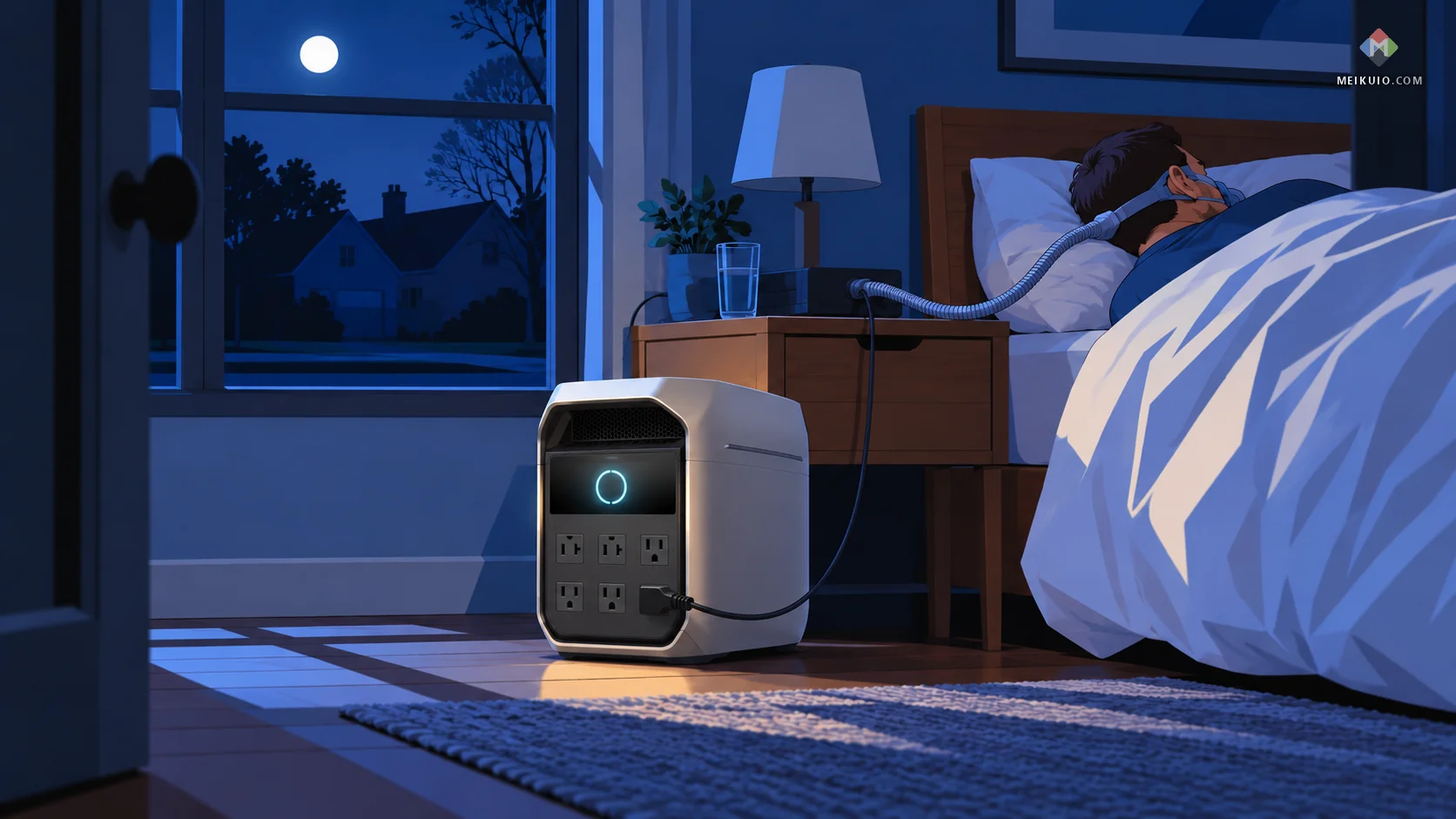
The DELTA 3 Plus holds 1,024 Wh and puts out 1,800 W, with a 3,600 W surge. Its strongest number is solar input: 500 W per port, 1,000 W in total, which is more than the other two 1 kWh picks in this guide accept. EcoFlow’s cheapest solar bundle pairs it with a 160 W panel at $819. On November 5 it was a pre-order, with shipping promised for late November.
SGS lists the DELTA 3 and DELTA 3 Plus (EF-DL-H10-3 and EF-DL-H10-4) to UL 2743 under certificate SGSNA/24/SZ/00350. EcoFlow’s own page mentions an SGS “5-star” charging rating instead, which is a different thing. Look for the listing, not the star.
Here the gap between the box and the bundle is widest. EcoFlow says the DELTA 3 Plus charges fully in 70 minutes “with 1000W MPPT,” a figure its footnote says comes from internal testing. With the 160 W panel EcoFlow actually bundles, I estimate 1.1 days of Phoenix June sun, 2.9 days in a Chicago December and 5 days in Seattle. The input can take six times that panel. Buy a second panel before you buy anything else.
It expands to 5 kWh with EcoFlow’s extra batteries, switches to battery in 10 ms, and carries a five-year warranty. Who it’s for: a household that needs the fridge, the router and one CPAP through one night. Who should skip it: anyone who wants it to cool more than a fridge.
6. Anker SOLIX C1000 Gen 2: most output at 1 kWh

The C1000 Gen 2 holds 1,024 Wh, like the DELTA 3 Plus, and puts out 2,000 W with a 3,000 W peak, the most continuous output of the three 1 kWh picks. Solar input is up to 600 W. Anker says it will “recharge fully in just 1.8 hours” on 600 W of solar, and its footnote is honest about what that takes: six 100 W panels, three 200 W panels, or a 400 W and a 200 W together. It cost $549.99 on Anker’s US store on November 5, down from $699.99, or $849.99 with a 200 W bifacial panel. Anker says shipping begins November 21.
SGS lists the C1000 Gen 2 (A1763 and A1765) to UL 2743, certificate SGSNA/25/SZ/00178. The original C1000 (A1761), which Anker now sells as the C1000X, is in Intertek’s ETL directory to the same standard. Either way, you’re buying a listed unit.
On my numbers, that single 200 W panel would take 0.9 days to refill it in Phoenix in June and 2.3 days in a Chicago December. Anker claims 4,000 cycles before the battery drops below 80 percent and gives it a five-year warranty. Who it’s for: someone who already owns a panel, or wants more output than the other 1 kWh picks. Who should skip it: anyone who needs one before that ship date.
7. Jackery Explorer 1000 v2: quick refill from the box
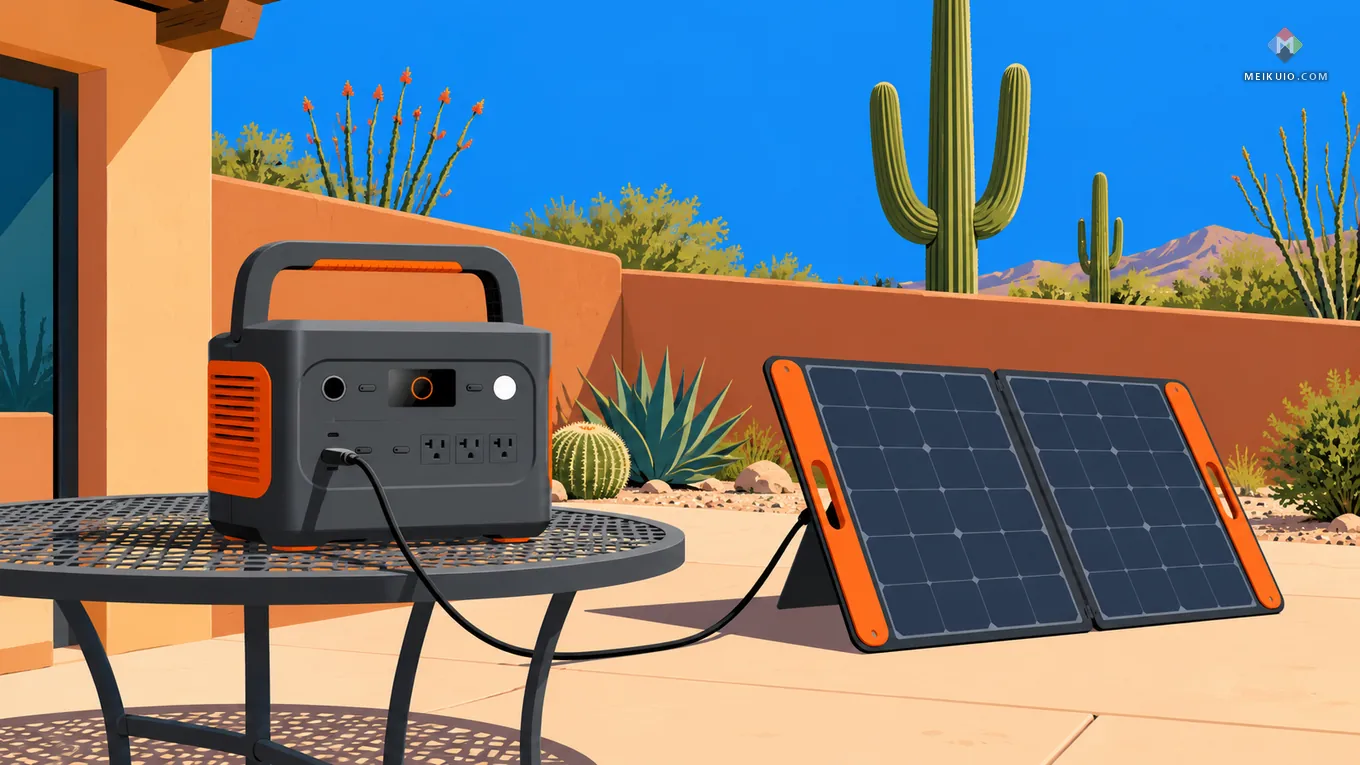
The Explorer 1000 v2 holds 1,070 Wh and puts out 1,500 W, with a 3,000 W surge. It takes up to 400 W of solar. Jackery sells it with one 200 W SolarSaga panel for $879 in black ($909 in white), though both showed as sold out on November 5. That ratio of panel to battery is one of the two best in my eight picks. In Phoenix in June I estimate 0.9 days to refill it from empty. In Houston in June, 1.2 days. In a Chicago December, 2.4.
SGS lists it (JE-1000D) to UL 2743, certificate SGSNA/24/SZ/00153. Jackery’s product page doesn’t name the lab, so this is a listing you’d only find in the directory.
Two cautions. Jackery says it will “Switch power in under 20 milliseconds” when the grid drops, which makes it a backup rather than a zero-gap UPS. And the warranty depends on which Jackery page you read: three years plus two on the product page and in the manual, two plus one in the warranty policy. Get it in writing when you buy. Who it’s for: a camper, a small apartment, or a single CPAP user who wants the panel in the box to matter.
8. EcoFlow RIVER 3 Plus: best small solar generator for camping

The RIVER 3 Plus holds 286 Wh and puts out 600 W from three outlets, with a 1,200 W surge. It takes up to 220 W of solar, and EcoFlow says that fills it “in as fast as 1.5 hr.” It cost $299 on EcoFlow’s US store on October 28, but its US product page returned a 404 on November 5, so check that it’s still on sale. EcoFlow didn’t list a priced solar bundle for it, so pick a panel close to that 220 W input.
SGS lists the RIVER 3 Plus (EF-RV-H02-1) to UL 2743, certificate SGSNA/24/SZ/00475. EcoFlow’s spec table lists “3000 cycles to 80% capacity” and noise under 30 dB, quiet enough for a bedroom. It expands to 858 Wh and has a five-year warranty.
That 286 Wh buys you about one night of a CPAP without its heater. One owner on Reddit, running a ResMed AirSense 10 from a Jackery 300 Plus of almost the same size, reported, “I get a fairly consistent 7 hours which is my usual sleep time when I use it. A couple times it has quit at just over 5 hours.” That’s the honest range for a box this size. Who it’s for: a tent, a van, a desk during a short outage. Who should skip it: anyone thinking about a fridge.
Popular solar generators I couldn’t find a listing for
Five models that show up in buying guides and shopping results turned up no complete-unit listing in any of the five directories on October 27, 2026. I searched each by company name and by every model number I could find in its manual. That doesn’t mean they’re unsafe or uncertified. A listing can sit under a model number I didn’t know, or with a lab I didn’t search, such as TÜV SÜD. It means you can’t confirm a listing from the outside, even where the maker’s page points at the standard.
- Bluetti Elite 200 V2. CNN Underscored names it “Best solar generator,” and it was the first product in Google’s AI answer for this search when I checked on October 26. Bluetti’s page and manual make no certification claim. Intertek’s directory lists the Elite 100 mini, 300, 320 and 400, but not the 200 V2. TÜV Rheinland has a 2026 Bluetti certificate to UL 2743 with no model designation, so nobody can tie it to a product.
- Goal Zero Yeti 1500 (6th gen). Its product page says it is “put through rigorous safety and performance testing to meet UL 2743 requirements.” Testing to a standard isn’t a listing, and I found no listing for it in any of the five directories. Goal Zero’s bigger Yeti PRO 4000 is on TÜV Rheinland’s list, so the company does use a lab. This model just isn’t on any list I could search.
- Bluetti AC180. Intertek lists the AC180P and the AC180T. The plain AC180, the one most guides recommend, isn’t there. Bluetti’s page says “UL Standard” with no number and no lab.
- Anker SOLIX C300. No listing in SGS or Intertek under its model number, A1722, and no claim on its page.
- Pecron F3000LFP. Pecron says its cells are “UL certified,” which covers the battery cells, not the power station. I found no listing for the unit.
If you already own one of these, nothing in this section says you should stop using it. I’d email the maker and ask for the lab’s name and your model’s certificate number. A company with a listing can send it in a minute. Then look it up yourself.
Look up a listing yourself in three steps
First, find the model number on the label or in the manual, not the marketing name. Second, search it in the directories of the labs that list power stations: Intertek’s ETL directory, SGS North America’s certified products, TÜV Rheinland’s Certipedia, UL Product iQ and CSA Group. Third, open the entry and check two things: that it names your model, and that the standard is UL 2743 for a portable unit, or UL 9540 if you plan to feed your house. A listing for the battery cells or the charger is not a listing for the power station.
Will a solar generator run your fridge, CPAP or router?
Yes, for a while, and you can work out how long before you buy. Don’t trust a guide that gives one runtime for “a fridge.” Every fridge is different, and the number you need is already printed on yours. In the US, a refrigerator’s yellow EnergyGuide label gives its estimated electricity use in kilowatt-hours a year.
Divide that yearly figure by 365 and you have the daily use. Say the label reads 600 kWh a year. That’s about 1.6 kWh a day. On that fridge, a 1,024 Wh DELTA 3 Plus lasts roughly 15 hours, the 3,072 Wh Jackery HomePower 3000 almost two days, and the 4,096 Wh DELTA Pro 3 about two and a half. Real runtimes come in lower, because the inverter takes its own cut, and higher on cold days when the compressor runs less. If the fridge is the main job, buy for days. Not hours.
A CPAP is a smaller job, and a more personal one. The machine’s power adapter lists its watts, or volts and amps, which you multiply. The heated humidifier is the big draw, and turning it off stretches a night’s battery a long way. One owner running a ResMed AirSense 10 from a 288 Wh Jackery, with the heat off, wrote that they usually get seven hours and sometimes “just over 5.” A 1 kWh unit like the DELTA 3 Plus or the Explorer 1000 v2 covers several nights of CPAP alone, or one night shared with a fridge. For the CPAP itself, and what its makers say about running on batteries, see how CPAP machines handle power and the rules behind them.
A router and a modem are the easiest job of all. Check the adapter labels and add them up; a small station keeps them running through most outages. That’s often the difference between an outage and working from home through one. If the cell network fails too, walkie-talkies keep a family in touch without any of it. For the storm warning itself, there’s a weather radio that wakes you. If you’re replacing the router anyway, this is how I checked routers against the FCC’s records, the same kind of lookup I ran here.
A space heater is the hardest job you can give a battery: it turns its label watts into heat for as long as it runs, so a 1,024 Wh unit feeding a 1,000 W heater is empty in about an hour. A window air conditioner is easier, but read its label the same way. Where a power station won’t help much: central air, an electric water heater, a well pump on a 240-volt circuit or an electric range. The two home-backup picks here can run some of those for a short time through a transfer switch. None of them can do it for days on solar alone. Don’t plan on it.
How long does the solar panel really take to refill it?
Longer than the box says, and in winter, days. Makers quote solar charging in hours, and those hours assume the panel is producing close to its full rating the whole time. EcoFlow’s 400 W bundle for the DELTA Pro 3 promises to “rapid-fuel within 13 hrs.” That’s 13 hours of near-perfect output, which no winter day in the US provides. So I asked a different question: how many days of real sun does the panel in each bundle need to refill an empty battery?
To answer it, I ran PVWatts, the federal solar calculator, for Phoenix, Houston, Chicago and Seattle, with a panel facing south at a 30-degree tilt and the calculator’s standard 14 percent of system losses. In December, a 1 kW panel in Chicago produces about 2.2 kWh a day. In Seattle, about 1.3. In June in Phoenix, about 5.7. Then I divided each battery by what its bundled panel would make in a day.
Makers count hours of perfect sun. Your panel lives in days.
The result is plain. In a Chicago December, the bundles in this guide need between 2.3 and 4.6 days of sun to refill. In a Seattle December, between 4 and 8. Only two kits, the C1000 Gen 2 and the Explorer 1000 v2, each with a 200 W panel, get under a day, and only in Phoenix in June. The worst case I ran wasn’t one of my picks: the Goal Zero Yeti 1500 with a 100 W Boulder panel needs nearly 12 days in a Seattle December.

Owners see the same gap in daylight. One EcoFlow owner with 220 W bifacial panels wrote, “Only getting like 170 ish from them.” That’s normal: panels are rated in lab conditions, and heat, angle, dust and haze all take their share. Jackery’s own SolarSaga page says its 200 W rating “is tested in an ideal laboratory.” The same arithmetic sits behind the much smaller panels built into gadgets such as solar trail cameras.
The fix is cheap. Buy panels for the input, not for the bundle. Every bundle here accepts at least twice the panel it ships with, and the DELTA Pro 3 more than six times. Two panels instead of one halves the days. Aim them at the sun twice a day and keep them clear of snow, leaves and your own shadow.
Best solar generator for home backup: connecting it to your house
If you plan to power circuits in your house rather than a few things on cords, the listing matters more than anywhere else in this guide. The scope of UL 2743, the portable power pack standard, excludes packs “having a function to supply power to a premise wiring system.” Those, it says, belong under UL 9540. In plain words: a power station listed only to UL 2743 was evaluated as a box you plug things into, not as part of your house’s wiring.
That’s why the DELTA Pro 3 and the Anker F3000 lead my home-backup picks. SGS lists both to UL 9540 as energy storage systems. EcoFlow’s DELTA Pro Ultra, a bigger system I didn’t include, carries the same listing. The Jackery HomePower 3000, despite the name, is listed to UL 2743 only.
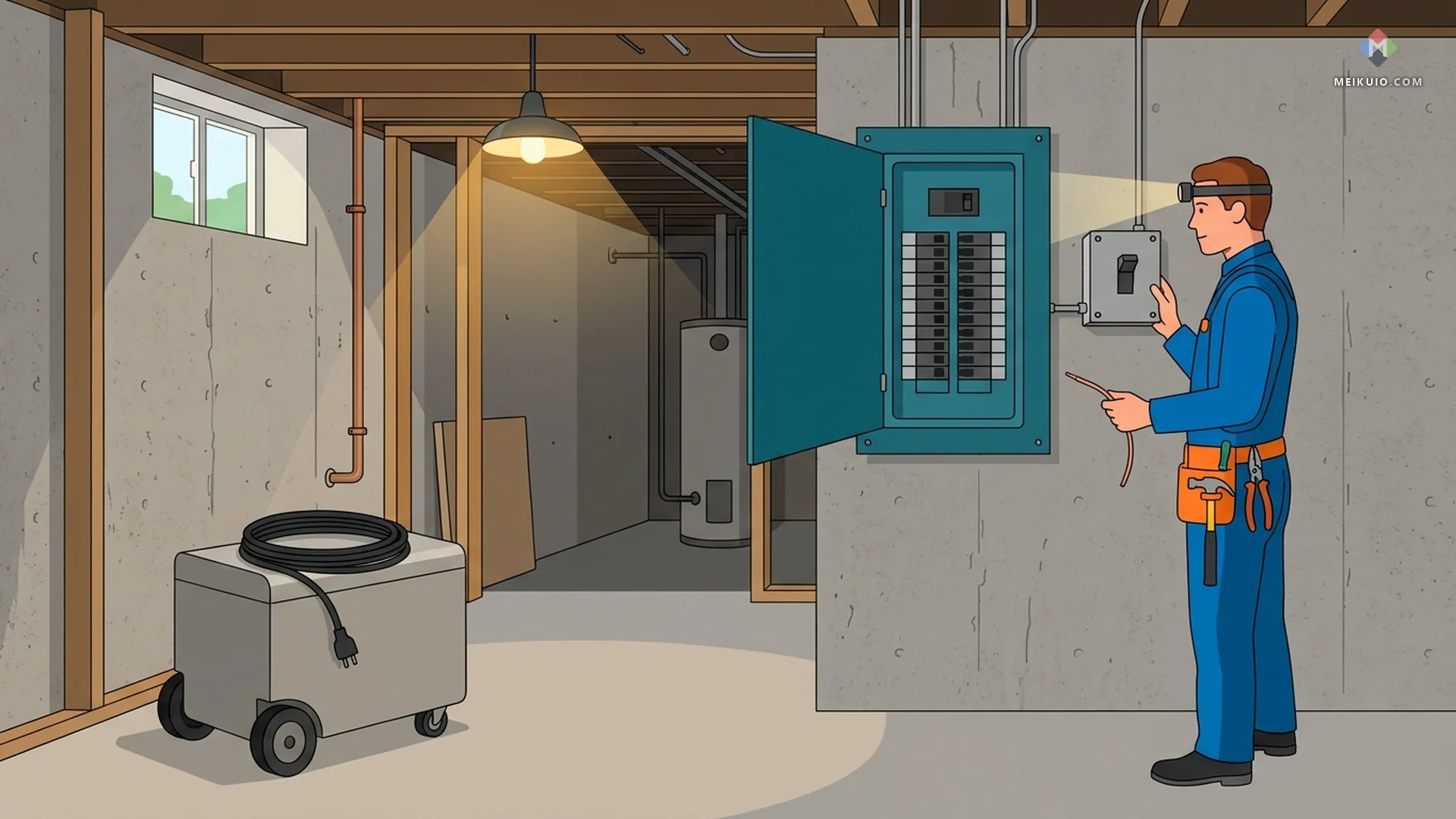
A listing alone doesn’t make the installation safe. The column UL Solutions writes for IAEI Magazine, the electrical inspectors’ journal, puts it bluntly: “Simply combining individual, independently certified products in the field does not result in a certified (Listed) system.” Your inspector looks at how the whole thing is put together. So should you.
The official guidance I read agrees on the basics. Never plug a generator of any kind into a wall outlet to backfeed the house; it can energize the utility’s lines and kill a line worker. Connect through a transfer switch or an approved inlet with an interlock, installed by a licensed electrician, with a permit where your state requires one. NFPA’s generator safety sheet and Oregon’s building codes division both say this. PG&E’s backup-power program spells out a detail that matters for any portable source feeding a house: it must have a floating neutral, not one bonded to ground.
I won’t give you wiring instructions. Get an electrician, show them the listing, and let them pick the switch. If that sounds like too much, the cord-and-plug route is fine. Run the fridge, the router and a lamp on extension cords from any pick here, and leave the panel alone.
Have any solar generators been recalled?
Yes, including a model from EcoFlow, one of the brands on my list, and one from Goal Zero. None of my eight picks has a recall on record. These are CPSC’s notices for portable power stations, in their own numbers.
- Goal Zero YETI 3000X, recall 26-712, August 20, 2026: about 46,200 units. The circuit board can overheat. Goal Zero reported four cases of the stations “catching fire, overheating and smoking” and no injuries. The fix is a free firmware update.
- EcoFlow Delta Max 2000, recall 26-010, October 9, 2025: about 25,030 units sold from July 2022 to May 2025. EcoFlow received six reports of the stations catching fire, “with property damage totaling over $850,000.” The remedy is a repair.
- Harbor Freight Predator 2000, recall 25-366, July 3, 2025: about 6,500 units. In Emergency Power Supply mode, the unit’s AC outlets have reversed wiring, a shock hazard. Harbor Freight replaces them.
- HALO 1000, recall 24-350, August 29, 2024: about 5,740 units. A 79-year-old man in Bradenton, Florida, died from smoke inhalation in a fire involving one, CPSC’s notice says, and the companies received four other reports of fires.
Two things stand out to me. The Delta Max 2000 was listed: it’s the only EcoFlow power station in Intertek’s UL 2743 directory, and it was still recalled. A listing is a starting point, not a guarantee. And the YETI 3000X fix came as a firmware update that owners have to install themselves. If you buy secondhand, check the model against CPSC’s site before you plug it in.
I found no power station recall for Bluetti, Jackery, Anker SOLIX or Pecron in CPSC’s records through mid-October 2026. That’s a fact about the records, not a safety rating. My guides to standing desks and whole-house water filters run the same kind of check, a product read against its standard and its recalls, and the logic carries over.
Solar generator vs gas generator: is a solar generator worth it?
A solar generator is worth it if your outages are short and your loads are small. A gas generator still wins on long outages and big loads. That’s the honest split. The refill numbers above are why.
A gas, propane or dual-fuel generator makes power for as long as you can feed it. A power station stores what you put in it, and in a cloudy December week the panel can’t put much back. On the other side, a power station is close to silent (EcoFlow rates the RIVER 3 Plus under 30 dB), needs no fuel run during a storm, and can sit in the bedroom next to a CPAP. A fuel generator belongs outside and away from windows, because its exhaust carries carbon monoxide.
My rule of thumb: if your power goes out a few times a year for a few hours, and what you need is the fridge, a CPAP, the router and the lights, a power station between 1 and 3 kWh covers it, and the panel is a bonus. If you lose power for days, need heat or a well pump, or live where winter sun is weak, plan on a fuel generator or a bigger home battery, and use a power station for the quiet hours at night. Plenty of households end up with both. That’s fine.
The cheap route is often the DIY one, which people on Reddit love to recommend. The top answer in the r/preppers thread that ranks on Google’s first page for this search is blunt about it: “DIY is probably not a good option for 80% of users.” I agree. A packaged unit with a listing is the safer bet for most homes.
Can you still get the 30% tax credit on a solar generator?
No, not for a purchase in 2026. The IRS says the Residential Clean Energy Credit “is not available for any property placed in service after December 31, 2025.” While it ran, battery storage had to hold at least 3 kWh, and the IRS instructions describe it as installed in connection with your home. The IRS’s own FAQ on the 2025 law change adds that paying early didn’t help: what counted was when installation was completed. The IRS pages on this credit don’t mention portable power stations at all.
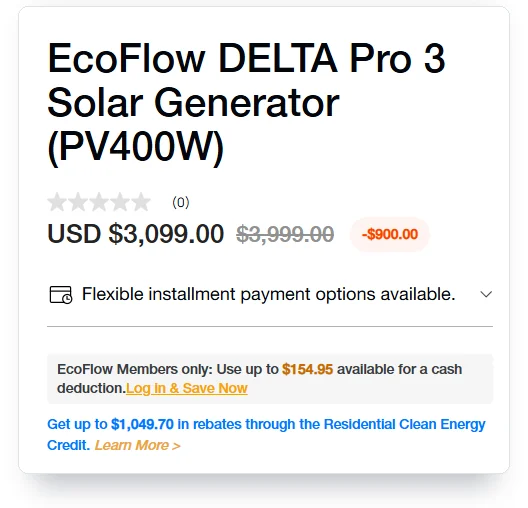
Some makers haven’t caught up. On October 27, 2026, EcoFlow’s US page for the DELTA Pro 3 solar generator bundle still read, “Get up to $1,049.70 in rebates through the Residential Clean Energy Credit,” and further down, “You Could Apply for 30% Tax Credit*, When You Install EcoFlow DELTA Pro 3 as a Home Power Solution.” The $1,049.70 is 30 percent of $3,499, which is neither the price on the page that day nor the crossed-out one.
Jackery’s tax-credit guide, updated August 19, 2026, contradicts itself on one page. Near the top it says the credit reduces your tax by “currently up to 30%” and that “Jackery offers a range of solar generators that qualify.” It tells HomePower 3000 buyers they “can receive a tax credit of up to $749.” Lower down, the same page says, “The 30% Residential Clean Energy Credit now expires on December 31, 2025.” Anker’s own tax-credit guide says the credit is gone. Believe the IRS.
Local programs are a different story, and worth a call to your utility. PG&E in California, for example, runs a generator and battery rebate for customers in its high fire-risk areas, but it excludes batteries bought as a bundle with solar panels and sets a minimum of 290 Wh. Check the rules before you buy the kit version.
Can you take a solar generator on a plane?
No, not any of the eight here. The FAA says lithium battery-powered “large power banks, power stations, and generators with a capacity of more than 160 watt hours (Wh) are not allowed on passenger aircraft.” The smallest pick, the RIVER 3 Plus, holds 286 Wh. That rules out carry-on and checked bags alike, so road trips only.
Field notes
- Listings: 14 of 19 solar generator models had a complete-unit listing in five lab directories on October 27, 2026, split across SGS, Intertek and TÜV Rheinland. Not found: Bluetti Elite 200 V2, Bluetti AC180, Anker SOLIX C300, Goal Zero Yeti 1500, Pecron F3000LFP.
- Home backup: UL 2743 excludes packs that supply a building’s wiring and sends them to UL 9540. EcoFlow DELTA Pro 3 and Anker SOLIX F3000 are listed by SGS to UL 9540:2023.
- Refill: with the panel in the bundle, 2.3 to 4.6 days of Chicago December sun and 4 to 8 days in Seattle; under one day only for the Anker SOLIX C1000 Gen 2 and Jackery Explorer 1000 v2 with 200 W panels in Phoenix in June (PVWatts, 30 degree tilt, 14 percent losses).
- Recalls: Goal Zero YETI 3000X (about 46,200 units, August 2026), EcoFlow Delta Max 2000 (about 25,030, October 2025), Harbor Freight Predator 2000 (about 6,500, July 2025), HALO 1000 (about 5,740, August 2024, one death). None of the eight picks.
- Tax credit: ended for property placed in service after December 31, 2025, per the IRS. EcoFlow’s DELTA Pro 3 bundle page still offered “up to $1,049.70” on October 27, 2026.
- Flying: the FAA bars power stations over 160 Wh from passenger aircraft. Every pick here is larger.
- Sources: Intertek ETL Directory of Listed Products; SGS North America certified products directory; TÜV Rheinland Certipedia; UL Product iQ; CSA Group; UL Standards & Engagement (UL 2743, 3rd ed.); U.S. Consumer Product Safety Commission recall notices 26-712, 26-010, 25-366, 24-350; IRS Residential Clean Energy Credit page; NLR PVWatts v8.5.0; FAA PackSafe; makers’ US product pages and manuals, read October 27, 2026.
Frequently Asked Questions
What is the best solar generator for home backup?
The EcoFlow DELTA Pro 3 is the best solar generator for home backup. It holds 4,096 Wh, puts out 4,000 W at 120 or 240 volts, and SGS lists it to UL 9540, the standard for systems that feed a house. The Anker SOLIX F3000 is the runner-up.
Which solar generator is best rated by Consumer Reports?
Consumer Reports keeps its power station ratings behind a paywall, so I can’t repeat them. What anyone can check for free is the safety listing. Look up the model number in Intertek’s, SGS’s or TÜV Rheinland’s directory and confirm the listing names your exact model.
Are solar generators worth it for power outages?
Yes, for short outages and small loads like a fridge, a CPAP, a router and lights. For multi-day winter outages, central air or well pumps, pair one with a fuel generator. In a Chicago December, the panels sold with these kits need 2.3 to 4.6 days to refill.
How long does a solar generator take to charge from solar?
Days, not hours, with the panel in the box. Makers quote hours of full-rated sun. Using PVWatts, I estimate 0.9 to 4.6 days for the bundles in this guide in Phoenix’s June and Chicago’s December sun, and up to 8 days in Seattle in winter.
What size solar generator do I need for a refrigerator?
Read the yearly kWh on your fridge’s yellow EnergyGuide label and divide by 365. A fridge rated at 600 kWh a year uses about 1.6 kWh a day, so a 3 kWh unit covers almost two days before inverter losses.
Can a solar generator run a CPAP machine all night?
Yes, if it holds a few hundred watt-hours and the humidifier heat is off. One owner reported about seven hours, sometimes just over five, from a 288 Wh Jackery running a ResMed AirSense 10. A 1 kWh unit covers several nights. Check your CPAP’s adapter label for its watts.
Can I plug a solar generator into my house?
Not into a wall outlet, ever. Backfeeding through an outlet can energize utility lines. Use a transfer switch or an inlet with an interlock installed by a licensed electrician, and prefer a unit listed to UL 9540, such as the DELTA Pro 3 or the Anker SOLIX F3000.
Can I still get a tax credit for a solar generator?
Not for 2026 purchases. The IRS says the Residential Clean Energy Credit is not available for property placed in service after December 31, 2025. Some maker pages, including EcoFlow’s DELTA Pro 3 bundle page on October 27, 2026, still advertise it.
What does UL listed mean on a power station?
It should mean a testing lab evaluated that exact model to a standard, usually UL 2743, and keeps it in its directory. Often the page only says the cells or the cable are certified. Ask for the lab’s name and the certificate number, then look it up.
My Take
The word “solar” sells these boxes, and it’s the part that does the least. Buy the battery and its listing first. Most of the big names have a listing for the complete unit, but you have to dig through three labs’ directories to find it, and the product page rarely names the lab. Two of the field’s favorites, the Bluetti Elite 200 V2 and the Goal Zero Yeti 1500, turned up in no directory I searched, yet the Yeti 1500’s page says it was tested “to meet UL 2743 requirements.” Tested to a standard and listed are not the same thing. Treat the page as a claim and the directory as the answer.
Here’s what I’d do in your place. For a house that loses power a few times a year, I’d buy the DELTA 3 Plus or the Explorer 1000 v2, put it by the fridge, and skip anything bigger. If outages run for days in a sunny state, I’d buy the DELTA Pro 3, add a second and third panel before anything else, and pay an electrician for a transfer switch rather than run cords through the house. If they run for days in a northern winter, I’d add a fuel generator for the daytime and keep the power station for quiet nights. I wouldn’t count on the panel in the box for winter, and I wouldn’t count on a tax credit that ended last year. Neither will show up.