





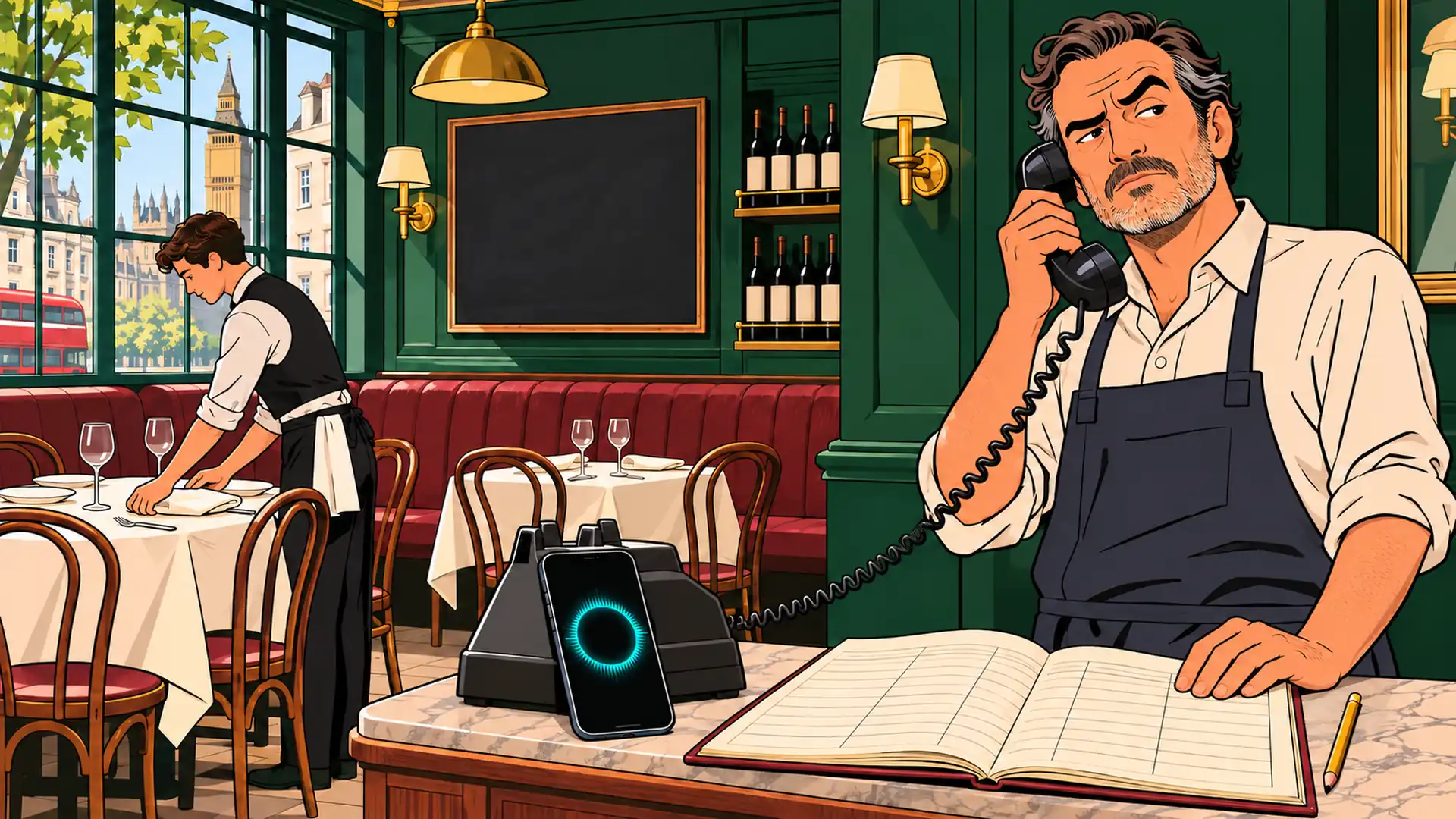
- Meta launched its Muse agent in the UK on November 24, and four days later London restaurateurs told The Guardian that AI bots were calling, emailing and booking tables.
- Meta's help page lists up to 10 phone calls a day on the $20 Power plan and 20 on the $100 Maximum plan; calling opened to paid US subscribers on November 12.
- Resy's 2024 data shows bots and brokers no-show four times as often as regular users and cancel late twice as often.
UK restaurant owners say AI agents are now phoning, emailing and booking tables for diners, days after Meta launched its Muse agent in Britain on November 24. Some are moving bookings back to a person on the phone.
Meta’s own billing page puts a number on the calling side. Its $20 Power plan for Muse comes with up to 10 phone calls a day. That’s 300 calls a month for one subscriber, or about 7 cents a call.
What happened
Meta made Muse available to anyone 18 and over in the UK on November 24, on iOS, Android, the web and WhatsApp. It’s free with a usage cap. Four days later, The Guardian published interviews with London restaurateurs who say bots are already reaching them by phone, email and booking apps.
Dave Strauss, co-owner of Bouchon Racine, answers his restaurant’s phone every day. He told The Guardian a recent caller sounded human but slightly off, so he asked if it was a bot. The reply: “Yes this is an AI booking process.” Strauss said, “I had an argument with the AI bot and told it to never call me again.” He’d drop online booking altogether if he could. A tip from our guide to spotting an AI voice on the line applies here too: ask directly, and listen to how the voice handles the question.
Jeremy King, who owns Simpson’s in the Strand, said his venues are going “more analogue” in response. “I am very happy to embrace new technology but ultimately if it conspires against us we will have to return to managing without,” he said.
Was the caller Meta’s Muse?
Nobody has said so. The Guardian doesn’t name the agent that called Bouchon Racine, and Meta hadn’t commented when the story ran. I read Meta’s UK launch post end to end, and it doesn’t mention phone calls once.
More Read

Calling exists in the US. Meta’s chief AI officer Alexandr Wang announced it on November 12 with a list of chores that included “dinner res? not your problem anymore,” and the rollout was “out now to paid subs in the US.” Meta’s subscription help page lists the daily call allowance by plan, and adds that benefits “may vary by region and account.” So whether a UK Muse user can phone a restaurant today isn’t confirmed.
Meta’s launch post does say Muse “asks before taking actions like sending an email or making a purchase on your behalf.” It also names OpenTable as a launch partner, which gives Muse an official route into tables that restaurants already sell online. For context on what $20 buys elsewhere, our AI pricing tracker lines up the paid tiers of the main assistants.
Why restaurants don’t trust bot bookings
They’ve seen this before, from the scalping side. Resy, the American booking platform, says “no-show rates for bots and brokers are four times that of the general population of Resy users.” Late cancellations, inside 24 hours of the booking, run at twice the normal rate. That data covers April to October 2024, so it predates Muse and measures scalper bots, not personal agents.
Resy has since banned bots, and sources there told The Guardian it keeps closing accounts that use them to grab tables at New York’s 4 Charles Prime Rib. New York State went further in December 2024, when it outlawed third-party services that arrange reservations without the restaurant’s permission. A personal agent booking one table for its owner is a different thing from a scalper. From behind the host stand, though, the two sound the same.
What to do if you let an AI agent book for you
Start with the agent’s settings. The UK’s data regulator, the ICO, published joint advice with the competition watchdog on launch day: “Check how much the agent can do without asking you,” and “Start with limited access.” Keep approval on for bookings, so nothing gets reserved in your name without a tap from you.
If the restaurant takes OpenTable, book through that connector instead of letting the agent ring the front desk. If it only takes calls, think about making the call yourself. At Jeremy King’s restaurants, a person on the phone is already the easiest way to a prime table, and a bot can cost you that edge. And if the agent does book, show up or cancel early. That no-show record is exactly what restaurants are reacting to.
Restaurants have tools too. One New York operator quoted by Resy, Double Chicken Please, added a $2.50 per-person booking fee, capped bookings at one per guest in a set period and checks IDs at the door. Asking every caller “are you an AI?” works as well. It got a straight answer at Bouchon Racine. Owners getting pitched AI automation tools to answer their own phones are seeing the same tech arrive from both ends.
Why it matters
Most of the AI agents actually running in production work inside software. Muse works in public, on other people’s phone lines and booking systems, and the people answering didn’t sign up for it. Paid AI plans already meter what you get, the way ChatGPT’s usage limits do. Muse meters something new: calls placed in your name. Ten a day per subscriber is a small number for one person and a large one for a busy London dining room in December.