


The best OTC hearing aids for most people in 2026 are the Jabra Enhance Select M3, listed under a self-fitting 510(k) cleared in June 2026. A 510(k) is the FDA’s premarket review. I checked every pick in the FDA’s own databases. Some were reviewed before sale. Others were only registered. The box rarely says which.
- Which OTC hearing aid should you buy?
- What counts as an OTC hearing aid?
- How I checked every pick
- Three routes to the shelf, and what the FDA actually reviewed
- Route one: registered and listed, no review
- Route two: self-fitting, reviewed
- Route three: software that turns other hardware into a hearing aid
- The best OTC hearing aids in 2026, pick by pick
- 1. Jabra Enhance Select M3: best for most people
- 2. Sennheiser All-Day Clear: best self-fitting aid from a big hearing aid maker
- 3. Ceretone Beacon: a budget self-fitting aid with a 510(k) on record
- 4. JLab HEAR OTC: best under $100, and it doubles as earbuds
- 5. AirPods Pro 3 with the Hearing Aid feature: best if you already have an iPhone
- 6. Nuance Audio glasses: best if you’d rather not wear anything in your ears
- 7. Galaxy Buds3 Pro or Buds4 Pro: the Android answer, once Samsung switches it on
- Popular picks, checked: where the words and the records disagree
- What other best-of lists leave out
- Can earbuds and glasses work as hearing aids now?
- What happens to Eargo, Lexie and Go Hearing aids now?
- Hearing aid or sound amplifier? How to tell on a listing
- When an OTC hearing aid is the wrong buy
- What OTC hearing aids cost, and who pays
- Accessories that help more than a better hearing aid
- Frequently Asked Questions
- What is the number one rated OTC hearing aid?
- Are over-the-counter hearing aids actually any good?
- Does Medicare pay for over-the-counter hearing aids?
- Can AirPods Pro work as a real hearing aid?
- What is the difference between a hearing aid and an amplifier?
- Do OTC hearing aids help with ringing in the ears?
- Can you buy a bone conduction hearing aid over the counter?
- What happens to my Eargo or Lexie hearing aids now?
- Do I need a hearing test before buying OTC hearing aids?
- How can I check if a hearing aid is FDA cleared?
- My Take
Which OTC hearing aid should you buy?
Start with how the aid gets tuned to your hearing, then pick the shape. Over-the-counter hearing aids split into four groups. Some run a hearing test in a phone app and set themselves from your results. Some give you a handful of preset sound programs and let you pick one by ear. Some are earbuds or glasses you may already own, with a hearing aid mode switched on in software. And a few send your settings to an audiologist who tunes them remotely.
Here are my seven picks, each with the FDA record I found for it. The FDA route column is the one the other best-of guides I read leave out.
- If you want the most help setting them up and don’t mind paying for it, get the Jabra Enhance Select M3.
- If you want a self-fitting aid built by one of the big hearing aid makers, look at the Sennheiser All-Day Clear, which Sonova manufactures.
- If you’re on a tight budget and still want a self-fitting aid, the Ceretone Beacon was $499 on sale ($600 regular) and has a 510(k) on record.
- If you want something simple under $100 that doubles as earbuds, get the JLab HEAR OTC, which uses four presets and no hearing test.
- If you already carry an iPhone, try the Hearing Aid feature on AirPods Pro 3 before you buy anything else.
- If you wear glasses all day and hate things in your ears, Nuance Audio puts the hearing aid in the frames.
- If you have a recent Galaxy phone and Galaxy Buds3 Pro or Buds4 Pro, watch for Samsung’s Hearing Aid Feature, which Samsung says reaches the US in Q4 2026.
Buying for a parent who doesn’t use apps? Among my picks, the JLab HEAR OTC is the one where the app is optional; JLab offers it for “Full Customizations.” Otherwise skip anything that needs a phone to set up, and buy from a store that takes returns at the counter. If one ear is clearly worse than the other, or the ringing is only on one side, don’t buy any of these yet. See a doctor first. The FDA’s own warning list says the same thing, and I quote it further down.
What counts as an OTC hearing aid?
An OTC hearing aid is a legal category, and the FDA wrote its definition. Under 21 CFR 800.30 it is “an air-conduction hearing aid that does not require implantation or other surgical intervention, and is intended for use by a person age 18 or older to compensate for perceived mild to moderate hearing impairment.” The FDA created the category in a final rule published August 17, 2022, effective October 17, 2022.
Three words in that definition do most of the work. “Perceived” means you judge your own loss; nobody has to test you first. “Mild to moderate” means the rule isn’t written for severe loss, and the FDA’s consumer page says OTC aids are “NOT for the treatment of severe or profound hearing loss.” “Air-conduction” means sound travels into the ear canal. A bone-conduction aid, which sends vibration through the skull, falls outside the OTC category: the bone-conduction regulation, 21 CFR 874.3302, sends its external processor to the prescription labeling rule.
More Read

The rule also sets hard limits. An OTC hearing aid may not exceed 111 dB SPL at any frequency, or 117 dB SPL when its input-controlled compression is switched on. Its deepest part has to stay at least 10 millimeters from the eardrum. It must have a volume control you can work yourself. And “Sale to or for a person younger than 18 years of age is prohibited.” There’s no separate cap on gain. In the rule’s own words: “We did not propose, and are not finalizing, a separate gain limit.”
The box has to tell you a few things too. It must carry the marks “OTC” and “hearing aid,” say whether you need a phone or other control device, and state the maker’s return policy. It doesn’t have to promise a warranty. The FDA’s consumer page puts that plainly: its OTC regulations “do not require manufacturers to provide a warranty.” Read the return terms before you open the box.
How I checked every pick
I didn’t put any of these in my ears. I bought nothing. I’m not an audiologist either, and nothing here replaces a hearing test. I pulled the FDA’s public records for every OTC hearing aid product code on October 28, 2026, and matched each pick to its entry. That meant 217 listing rows from the Establishment Registration and Device Listing database, plus every 510(k) clearance and De Novo grant filed under the self-fitting and hearing aid software codes. It’s the same kind of check I ran on CPAP machines, where the FDA classification decides what you can legally buy.
Then I opened the makers’ own US pages for most of them and copied what they say about the FDA, word for word; the notes in the route table name the pages I didn’t check. When the words and the record disagreed, I wrote both down. When I couldn’t find a record, I report exactly that: what I searched, in which database, on what date. A brand name with no match can still sit under a contract factory’s filing, and I say so where it matters.
Anything I say about sound or ranking comes from people who did wear them, and I name them: Wirecutter, the National Council on Aging (NCOA) and Hearing Tracker. Prices are from the makers’ US stores on the date shown in the table. Looking a device up in a federal register is a habit I picked up writing about Wi-Fi routers and the FCC, and it works the same way here.
Three routes to the shelf, and what the FDA actually reviewed
It’s easy to assume every hearing aid on a pharmacy shelf passed some FDA test. Some did. Many didn’t, and both kinds are legal. The FDA sorts OTC hearing aids into a few product codes, and the code decides whether anyone at the agency looked at the specific model before it went on sale. Here are the three routes I found, with the regulation’s own words for each.
Route one: registered and listed, no review
A plain air-conduction hearing aid falls under 21 CFR 874.3300. It’s Class I, and the regulation says it is “exempt from premarket notification procedures in subpart E of part 807 of this chapter, subject to the limitations in § 874.9.” A wireless one falls under 874.3305, which is Class II with its own safety controls, and it’s exempt too. In both cases the maker registers its factory with the FDA, lists the device, and starts selling. No 510(k), and no premarket review of the specific model. In the FDA’s databases these show up under product codes QUF and QUG. Plain and wireless OTC hearing aids reach the shelf after registration and listing, without FDA review of the model.
Route two: self-fitting, reviewed
A self-fitting hearing aid falls under 21 CFR 874.3325. The regulation defines it as a device whose technology “integrates user input with a self-fitting strategy and enables users to independently derive and customize their hearing aid fitting and settings.” It’s Class II, and its first special control reads: “Clinical data must evaluate the effectiveness of the self-fitting strategy.” Self-fitting OTC hearing aids need a 510(k), and their special controls require clinical data on the fitting method. Product code QUH. The first one the FDA ever authorized was the Bose Hearing Aid, granted through De Novo DEN180026 on October 5, 2018.
Route three: software that turns other hardware into a hearing aid
This is the newest one. The FDA granted Apple’s Hearing Aid Feature a De Novo, DEN230081, on September 12, 2024, and the agency’s classification database now lists “Air-Conduction Hearing Aid Software” under product code SCR. Apple’s grant created the code, and new software under it goes through a 510(k). By October 28, 2026 I counted five pieces of software under that code: Apple, Luxottica’s Nuance Audio, Tuned, Meta and Samsung. The software runs on earbuds, glasses or other hardware, most of it sold for other jobs first.
The split in the records is lopsided. On October 28, 2026, 78 companies listed devices under the plain OTC code and 82 under the wireless OTC code, against 21 under the self-fitting code and 5 under the software code. Companies list under more than one code, and one listing can cover a dozen models, so read those as companies, not products. Still, the reviewed routes are the small ones.
The FDA’s rule on registration is one sentence, 21 CFR 807.39: “Registration of a device establishment or assignment of a registration number does not in any way denote approval of the establishment or its products.” The FDA’s consumer page on OTC hearing aids goes further and warns that statements such as “FDA Registered” and “FDA Certified,” and an FDA logo on the package, “may be misleading.”
Registered is not reviewed. A 510(k) number is the thing to look for.
An app hearing test changes the route only if the test sets the aid. The FDA spelled this out in the 2022 rule. On presets, it wrote that “devices with a small number of presets, for example, three, are not ordinarily considered self-fitting when the user chooses the profile.” On app tests, it gave an example: if a maker “adds a user self-assessment test intending the test to enable the user to independently customize and derive the fitting and settings,” then “FDA would anticipate the manufacturer would need to submit a 510(k).” That’s the agency’s expectation, not an automatic rule, and the FDA decides case by case. Still, if an aid with only an exempt listing advertises an app hearing test, check the record before you buy. I found three popular brands where the seller’s words and the FDA’s records don’t line up, and I lay them out below.
One more thing the records show: the brand on the box and the company that got the clearance can be different firms. Ceretone’s Beacon page cites “Ceretone 510(k) clearance, K221052.” The FDA lists the applicant on K221052 as Huizhou Jinghao Medical Technology, a factory in China, and in the FDA’s listing records four other companies besides Ceretone’s parent list devices under that same number. That’s legal. It just means the name you know may not be the name the FDA knows.
The best OTC hearing aids in 2026, pick by pick
Each card below starts with the FDA record, then what the maker says, then how independent testers rated it where they did. Prices are what the makers’ US stores showed when I checked them on October 28, 2026; confirm before you buy, because sale prices change often.
1. Jabra Enhance Select M3: best for most people

The Select M3 pairs a self-fitting clearance with an audiology team you can reach seven days a week. In the FDA’s listing records, GN Hearing lists the Enhance Select M1, M2 and M3 together with the Select 550 under 510(k) K254108, a self-fitting OTC clearance decided June 25, 2026. That’s a recent record. It’s also the right one for what the aid does.
Jabra’s store describes the app this way: “Personalize your hearing aids with our FDA-cleared self-fitting test, control your hearing aid settings, and connect with Audiology Team 7 days a week.” The Hearing Review’s launch report from August 18, 2026 explains the mechanics: “Users listen and respond to tones through the app, which then automatically configures the hearing aids based on results.” The same report says that “the Jabra Enhance Select 50R, 300, and 700 will be discontinued,” so if you see those older models on other lists, they’re the previous generation.
NCOA named the Select M3 its Best Overall OTC hearing aid in its September 2026 review. The price is the catch. Jabra’s US store listed the M3 at $1,995 per pair, the M2 at $1,695 and the M1 at $1,195, each with a “Try for 100 days risk-free” offer. If the M3 price stings, the M1 sits under the same 510(k). Jabra’s own store draws the line between them: it calls the M1 “Budget hearing aids to hear better watching TV or in quieter places,” says the M2 “Excels in hearing several people in a crowd,” and credits the M3 with “unmatched speech clarity in any noisy environment.” All three list hands-free calls on Android and iOS.
Who it’s for: anyone who wants a real hearing test, a human to call and a long window to change their mind. Who should skip it: people who want to spend under $500, and anyone without a smartphone, since the self-fitting test runs in the app.
2. Sennheiser All-Day Clear: best self-fitting aid from a big hearing aid maker

The All-Day Clear carries the Sennheiser name, but the FDA record names someone else. The 510(k) is K230538, decided June 16, 2023, and the applicant is Sonova AG of Switzerland. The record covers two models, the All-Day Clear ADC1 and the All-Day Clear Slim ADCS1, under the self-fitting OTC code. Sennheiser’s own US FAQ agrees: the aids, “manufactured by Sonova, are FDA-clear over-the-counter (OTC) self-fitting hearing aids.”
That makes the brand-versus-maker question easy here. You’re buying a hearing aid company’s hardware under a headphone company’s badge, and the clearance matches the product name on the box. Hearing Tracker lists it as its “Best Rated OTC” pick in its 2026 guide to affordable hearing aids. Sennheiser’s US store listed it at $699.95, down from $899.95, with a “90-day risk-free trial.”
Who it’s for: someone who wants a self-fitting aid from an established hearing aid manufacturer and is comfortable setting it up in an app. Who should check first: anyone who wants an audiology team included in the price, the way Jabra sells it. The store lists a Hearing Support phone line for questions, but I didn’t check whether an audiologist answers it, so ask before you buy.
3. Ceretone Beacon: a budget self-fitting aid with a 510(k) on record
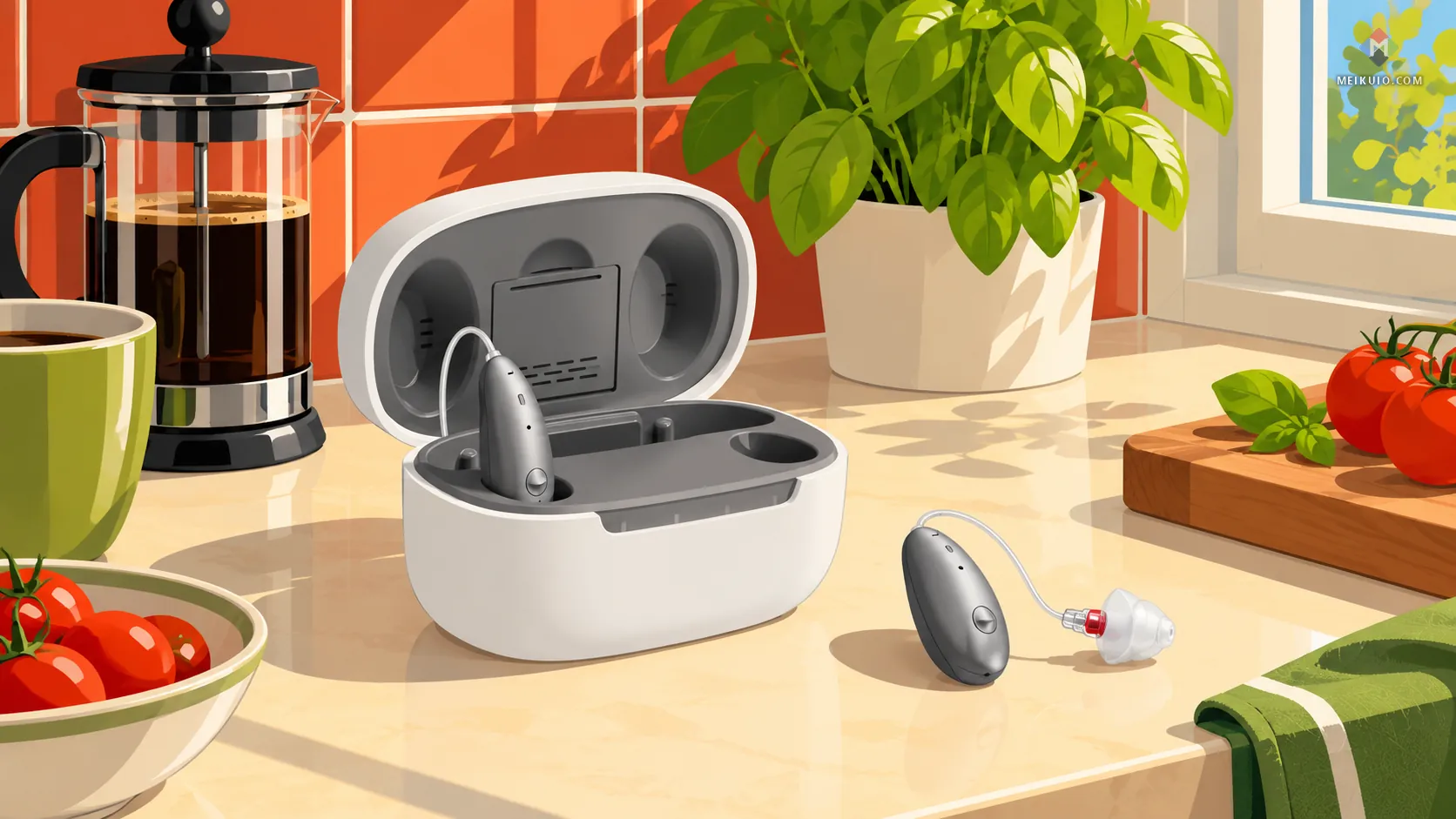
The Beacon is a budget pick sold under a self-fitting record. Ceretone’s product page sells it as the “Beacon (Behind Ear)” and cites “Ceretone 510(k) clearance, K221052, for self-fitting OTC hearing aid.” The FDA’s record for K221052, decided September 25, 2023, names a different applicant: Huizhou Jinghao Medical Technology, a manufacturer in China. Ceretone’s parent, Audicon, lists the Beacon and the Aura under that number.
That’s normal for this price tier, and it’s legal: the FDA cleared the factory’s device, and a brand can sell it. It does mean the same cleared device can turn up under other names. In the FDA’s listing records, four other companies besides Audicon list devices under K221052. The page showed the Beacon at $499 on sale against a $600 regular price, with streaming for calls and music and a “100-Day Risk-Free Trial.”
None of the six review pages I read put the Beacon in its picks, so there’s no independent sound test I can point you to. Who it’s for: a buyer who wants self-fitting for about $500 and is willing to rely on the FDA record more than on reviews. Who should skip it: anyone who wants tested sound quality before spending money.
4. JLab HEAR OTC: best under $100, and it doubles as earbuds

The HEAR OTC is a preset aid, and JLab doesn’t pretend otherwise. Its product page lists “4 PRESET HEARING MODES” (Loud, Restaurant, Conversation, Quiet), a “Hearing Aid Only or Wireless Earbud + Enhanced Hearing” dual mode, phone calls over Bluetooth 5.3, a 30-day return window and a two-year warranty, for $99.99. An optional JLab app adds more settings.
The FDA side matches the presets. JLab’s two listings in the registration database sit under the exempt codes for plain and wireless air-conduction aids, and neither carries a 510(k) number. That fits a preset device: the FDA wrote in 2022 that devices with a small number of presets, “for example, three,” are “not ordinarily considered self-fitting.” Four is close to that example, and the FDA decides case by case. Hearing Tracker calls it its “Best Preset Earbud Under $100.”
Who it’s for: someone with mild loss who wants help in restaurants and on calls, and a cheap way to find out whether OTC works for them. Who should skip it: anyone whose hearing is uneven across pitches, because four presets can’t match a hearing test. When I checked, the beige version showed as out of stock on JLab’s store.
5. AirPods Pro 3 with the Hearing Aid feature: best if you already have an iPhone

This is the pick that started the software route. The FDA granted Apple’s Hearing Aid Feature a De Novo, DEN230081, on September 12, 2024, and every later earbud and glasses clearance I found sits under the product code that grant created. Apple’s support page now lists two supported models: “AirPods Pro 2 and AirPods Pro 3 provide a clinical-grade Hearing Aid feature for perceived mild to moderate hearing loss.”
The fine print is the phone. To set it up, Apple says you need the AirPods “with the latest firmware” and “An iPhone or iPad running the latest software.” The feature can use a hearing test you take with the AirPods on your iPhone, and Apple says it “is intended for people 18 years or older with perceived mild to moderate hearing loss.” Android owners can’t use it. Apple’s US store listed AirPods Pro 3 at $249. Hearing Tracker names AirPods Pro 3 its pick for iPhone users.
Who it’s for: an iPhone owner with mild loss who mostly struggles in restaurants and meetings, and who’d rather wear earbuds than a hearing aid. Who should skip it: anyone without Apple hardware, and anyone who needs to hear all day long, since these are earbuds first and need their case to recharge.
6. Nuance Audio glasses: best if you’d rather not wear anything in your ears

Nuance Audio puts the hearing aid in the frames of a pair of glasses. The FDA cleared Luxottica’s Nuance Audio Hearing Aid Software on January 31, 2025, under 510(k) K243150, with Apple’s Hearing Aid Feature as the predicate. The 510(k) summary says it runs as two pieces: an app “on a compatible iOS or Android product” and firmware on “the Nuance Audio Glasses (smart glasses).”
The summary is also honest about how it fits you. Users pick one of “four preset options, which are generated from typical mild to moderate hearing loss configurations,” and the summary adds: “the output of an individual user’s hearing test is not used in the fitting of this device.” So it’s a reviewed device that uses presets. That’s a reasonable trade for people who already wear glasses and can’t stand domes in their ear canals. On Nuance’s US store, the Panthos frame listed at $699 with “Free returns within 30 days.”
Who it’s for: daily glasses wearers with mild loss who want no extra device to remember. Who should skip it: anyone with uneven loss who needs a fitting from a test, and anyone who doesn’t want their hearing aid tied to one pair of frames.
7. Galaxy Buds3 Pro or Buds4 Pro: the Android answer, once Samsung switches it on
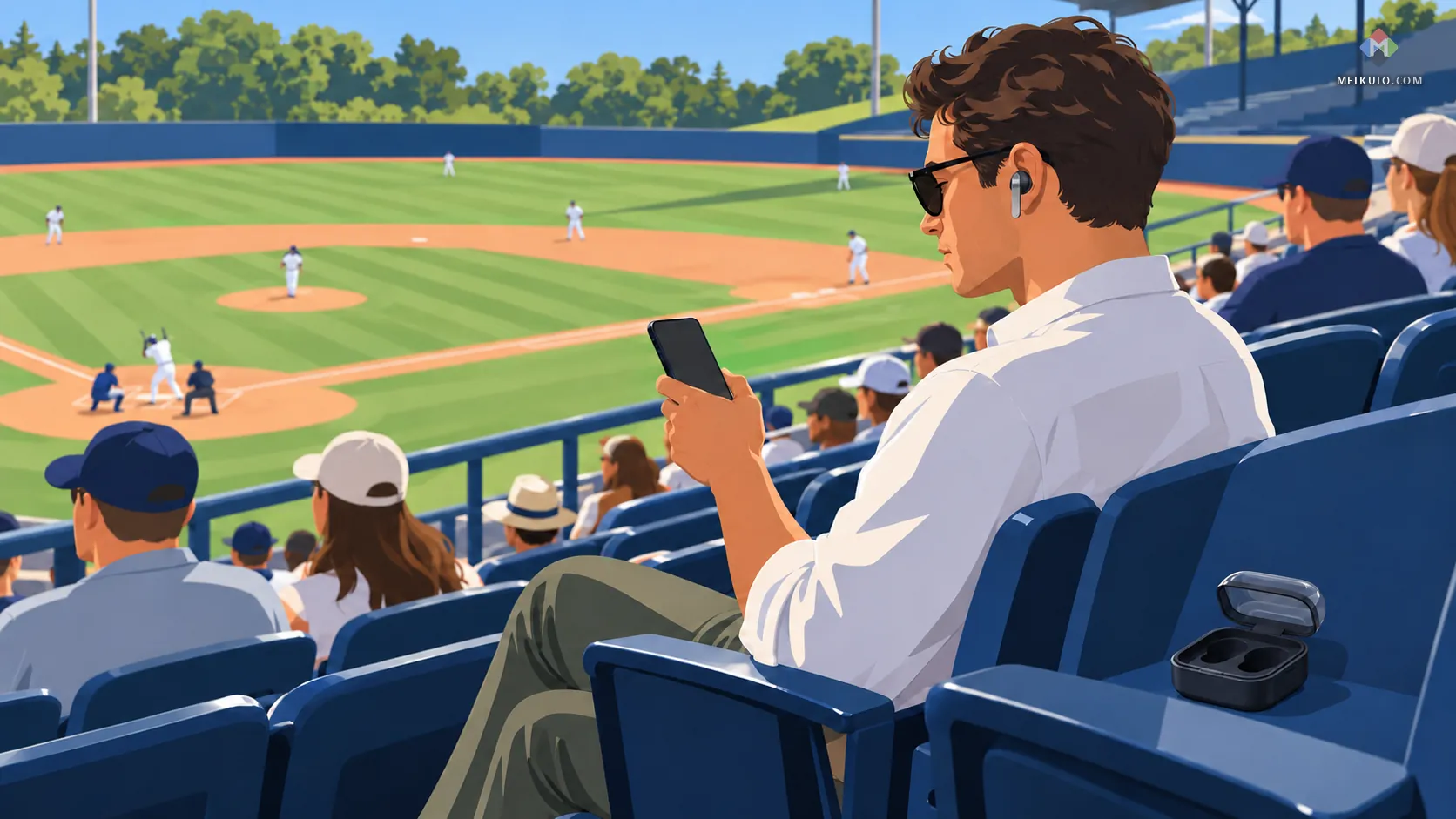
Samsung got its clearance this summer. The FDA cleared Samsung’s Hearing Aid Feature on July 31, 2026, under 510(k) K261187. Samsung’s US newsroom announced that the feature “has received U.S. Food and Drug Administration (FDA) clearance” and will reach “Galaxy Buds3 Pro and Galaxy Buds4 Pro in the U.S. and select approved markets in Q4, 2026.” A footnote adds: “Full support requires a compatible Galaxy device with One UI 9 or later.” Samsung doesn’t say what, if anything, works on other phones.
So it’s cleared, and it isn’t something every Android owner can use. You need one of two Galaxy earbuds and a recent Galaxy phone. Samsung also announced a hearing test feature for the same earbuds. If you own that hardware, check for the update before you spend money elsewhere. Samsung’s US store listed the Galaxy Buds4 Pro at $249.99.
Who it’s for: Galaxy phone owners with mild loss who already have, or want, Samsung’s Pro earbuds. Who should skip it: owners of other Android phones, at least until Samsung says what works on them, and anyone who needs help today rather than after an update.
Popular picks, checked: where the words and the records disagree
These three brands come up on other best-of lists: Elehear and Audien again and again, MDHearing in Wirecutter’s guide. I didn’t leave them out because they’re bad aids. I left them out because what the seller says about the FDA and what the FDA’s records show didn’t line up neatly, and I’d rather show you that than paper over it. Read this as a reason to ask questions, not as a finding that anyone broke a rule. That call belongs to the FDA.
Elehear Beyond Pro
NCOA made it its “Best for Tinnitus” pick, and Hearing Tracker’s affordable guide picks the Elehear Beyond. The Beyond Pro product page answers its own question this way: “Are Beyond Pro hearing aids FDA-cleared? Yes. Beyond Pro is an FDA-cleared OTC hearing aid.” The same page also says “FDA registered.” In the FDA’s records, ELEHEAR INC. lists its devices under two exempt codes, the OTC wireless code and its prescription twin, and neither listing carries a 510(k) number. I searched the FDA’s 510(k) data for Elehear as applicant and as device name and found no match. A contract manufacturer could hold a clearance under its own name. I couldn’t find one.
Audien
NCOA calls the Audien ION Pro 2 its “Best Affordable” pick. Audien’s FAQ answers the amplifier question with “NO. These are true FDA registered over the counter hearing aids, not to be confused with cheap amplifier alternatives.” I found no FDA listing under the Audien name. The names Atom, Atom Pro, Atom 2 and Atom Pro 2 do appear in an exempt listing filed by Xiamen Retone Hearing Technology, and an “ion Pro 2” name appears in another exempt listing from Xiamen Vienatone Medical Technology. That suggests contract factories in China. The listings show registration. They don’t show review.
MDHearing
MDHearing’s listings in the FDA’s registration database cover its NEO, VOLT and AIR lines under the plain exempt code, and a separate listing names the VOLT MAX, VOLT MAX 2, NEO XS PRO and the MDHearing App under the self-fitting OTC code, with the 510(k) number field left blank. The one MDHearing 510(k) I found is K220303, “MDHearingAid app, MDHearingAid Smart hearing aids,” decided August 4, 2022 under the older prescription self-fitting code. Whether that clearance covers today’s VOLT MAX is a question for MDHearing. The record doesn’t answer it.
What other best-of lists leave out
I read six of the best-of guides that rank for this search: Wirecutter, NCOA, US News, CNET, Hearing Health Matters and Hearing Tracker. None of them names the FDA route for each pick. Across all six, the term 510(k) shows up once, in CNET’s piece, which says that when the FDA made OTC hearing aids available, “it made them 510(K) exempt.” That’s true for plain and wireless aids. It isn’t true for self-fitting ones, and that’s the line between the aids the FDA reviewed and the ones it didn’t.
NCOA comes closest. Its guide tells readers that “registration” is not the same as “approved,” “authorized,” or “cleared,” and sends them to the FDA’s Registration and Listing database. That’s good advice. But the same guide adds that “every brand we recommend is registered with the FDA,” which is the low bar, not the high one. Its Best for Tinnitus pick is the Elehear aid, whose page says “FDA-cleared” and whose FDA listings say exempt.
Freshness is the other gap. Hearing Health Matters’ 2025 list still carries sections for Eargo, Lexie and Go Hearing, the three brands LXE is winding down. And none of the six guides mentions Samsung’s or Meta’s hearing features, both cleared by the FDA in July 2026. Sony’s CRE models, which the Hearing Health Matters list also still features, aren’t on my list: I couldn’t confirm they’re still sold in the US.
Can earbuds and glasses work as hearing aids now?
Yes, some of them can, and the FDA has records for each one. When the FDA finalized the OTC rule in 2022, it wrote: “To date, FDA has not classified a device that adapts the output of other hearing products, such as earbuds, to compensate for perceived mild to moderate hearing impairment.” By October 28, 2026, five pieces of hearing aid software held FDA clearance or authorization under the software code, and four of them run on earbuds or glasses.
- Apple’s Hearing Aid Feature on AirPods Pro 2 and AirPods Pro 3, De Novo DEN230081, September 12, 2024. Works now, with an iPhone or iPad.
- Luxottica’s Nuance Audio Hearing Aid Software in Nuance Audio glasses, 510(k) K243150, January 31, 2025. Works now, with an iOS or Android app.
- Samsung’s Hearing Aid Feature on Galaxy Buds3 Pro and Buds4 Pro, 510(k) K261187, July 31, 2026. Samsung says “Q4, 2026” for the US, with a Galaxy phone on One UI 9 or later.
- Meta’s “Hearing assist” for its AI glasses, 510(k) K254044, July 13, 2026. Meta’s Connect post on September 24, 2026 said: “Launching in the US later this year, hearing enhancement will be available to add to supported AI Glasses for $149.99 (HSA/FSA eligible*) or with a Meta One subscription.”
- A phone app from Tuned, Ltd. of Israel, 510(k) K251208, September 26, 2025.
The catch is usually the phone. Apple’s feature needs Apple hardware. Samsung’s needs a recent Galaxy phone. Meta’s isn’t switched on yet. Nuance’s summary names both iOS and Android. If you own the right pair already, these are an inexpensive way to find out whether amplification helps you, because you’ve already paid for the hardware (Meta’s software adds $149.99).
The rule protects you on one point here. Under 21 CFR 800.30, hearing aid software sold apart from the hardware has to show you, before first use or payment, its “Compatibility and minimum operating requirements” and any “fees or payments after first use or initial payment, including but not limited to any fees or payments relating to subscriptions, add-on features, or continued access to features or services.” Read that screen. It’s where a subscription would show up. For the rest of the gadgets I’ve covered in this series, see the best AI gadgets of 2026.
What happens to Eargo, Lexie and Go Hearing aids now?
LXE expects them to keep working on their last settings, but the Lexie and Eargo apps were scheduled to leave the stores and lose their cloud service in October 2026, and those dates have passed. LXE Hearing, the company behind Eargo, Lexie and Go Hearing, set October 8, 2026 for the Lexie app and October 22, 2026 for the Eargo app in a notice on its site. That’s why none of the three brands are on my list even though they used to fill other people’s. LXE wrote that “on July 15, 2026, LXE Hearing, Inc. and its four related U.S. companies each entered into a separate assignment for the benefit of creditors under California law and began winding down their U.S. operations.” Wirecutter has since pulled its Eargo pick and written that the company “has closed its doors.”
The dates are the part owners need. Per LXE: “The Lexie App will be removed from app stores and its cloud connectivity will be deactivated on October 8, 2026. The Eargo App will be removed from app stores and its cloud connectivity will be deactivated on October 22, 2026.” Warranty work ended earlier: “After September 15 : New warranty or repair requests will no longer be accepted.” The same notice says anyone owed money can file a Proof of Claim with the assignee until January 31, 2027.
As for the hearing aids themselves, LXE answers directly: “Your hearing aids are expected to continue functioning for hearing amplification and core daily use utilizing local on-device controls or your last saved local profiles.” So a self-fitting aid keeps the fitting it already has. What it loses is the ability to run the test again, change the profile in the app, or send the aid in for warranty or repair.
The FDA record outlived the company. The app didn’t.
The clearances are still in the FDA’s database: Eargo under K221698 (December 21, 2022; the clearance names the Eargo 5 and 6, and Eargo’s listing adds the 7, 8 and SE) and Lexie Lumen under K223137 (March 14, 2023). A clearance says the device was shown to work as designed when it was reviewed. It says nothing about whether the company will be around to support it. That’s the same lesson as what happens to the games you paid for when a studio shuts down, and it’s the reason I’d now weigh an app-dependent hearing aid by who makes it as much as by how it sounds. It’s also a reminder that buying software usually means buying a license, the problem I traced in who really owns your digital games.
If you own one of these aids, keep your receipt and serial number. When they fail, an audiologist can tell you whether it’s worth repairing or replacing them, and any new aid you buy should come from a company with its own support line.
Hearing aid or sound amplifier? How to tell on a listing
A sound amplifier is not a hearing aid, even when it’s sold on the same page. The FDA calls these personal sound amplification products, or PSAPs, and its guidance defines one as a product “intended for non-hearing impaired consumers to amplify sounds in certain environments, such as for hunting or other recreational activities.” The National Institute on Deafness and Other Communication Disorders (NIDCD) puts it more plainly: “PSAPs are for people without hearing loss,” and they “are not regulated as medical devices by the FDA.”
The guidance also lists the claims that turn an amplifier into a hearing aid in the FDA’s eyes, including marketing it “as a less expensive alternative to hearing aids” or to “consumers who may have hearing loss/impaired hearing and are not yet ready to buy hearing aids.” It adds that “PSAPs are not considered ‘over-the-counter’ alternatives or substitutes for a hearing aid.” If a $30 listing says it’s for hearing loss but the box lacks the “OTC” and “hearing aid” marks, treat that as a warning sign.
Then there’s the word “registered.” You’ll see “FDA registered” on hearing aid stores often, including on some of the most recommended brands. The rule says registration “does not in any way denote approval of the establishment or its products,” and the FDA’s consumer page says statements like “FDA Registered” and “FDA Certified” on a package “may be misleading.” Registration with the FDA does not mean the agency reviewed or approved the hearing aid you’re buying. A 510(k) or De Novo is a review.
How to check any hearing aid yourself
You can check any aid yourself in about five minutes. These are the same FDA device lists I read when I looked at which healthcare stocks actually sell medical AI.
- Look for a 510(k) or De Novo number on the box, the manual or the product page. It starts with K or DEN.
- Search that number in the FDA’s 510(k) Premarket Notification database or its De Novo database, both on accessdata.fda.gov. Check that the device name matches the product, and note the applicant; it may be a factory, not the brand.
- If there’s no number, search the brand and the model in the FDA’s Establishment Registration and Device Listing database. A listing under an exempt code means the aid was registered, not reviewed. If nothing turns up, the maker may list under a factory’s name, so ask the seller for the number. A device the FDA cleared or authorized has a 510(k) or De Novo number.
Registration isn’t a bad sign on its own. Plenty of decent preset aids are exempt by design. The problem is a seller who lets you think registration means review. I found the same gap between a claim and a record when I checked standing desks against the stability standard.
When an OTC hearing aid is the wrong buy
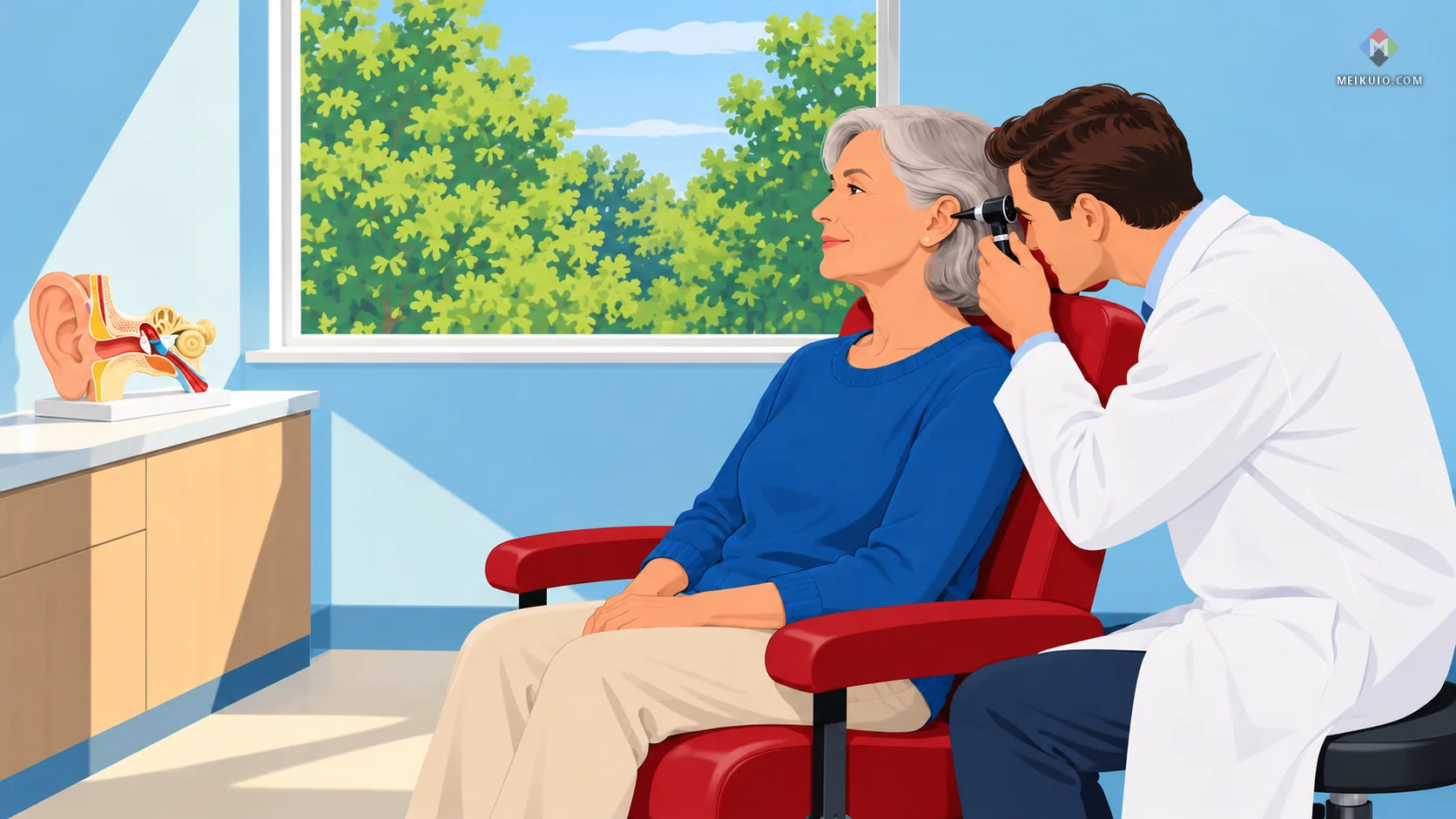
Some hearing problems need a doctor before they need a hearing aid. Every OTC box has to carry a “red flag” warning, and the FDA’s consumer page prints the version it expects. It tells you to see a doctor, “preferably an ear-nose-throat doctor (an ENT),” if any of these apply:
- “Your ear has a birth defect or an unusual shape.”
- “Your ear was injured or deformed in an accident.”
- “You saw blood, pus, or fluid coming out of your ear in the past 6 months”
- “Your ear feels painful or uncomfortable”
- “You have a lot of ear wax, or you think something could be in your ear”
- “You get really dizzy or have a feeling of spinning or swaying (called vertigo)”
- “Your hearing changed suddenly in the past 6 months”
- “Your hearing changes: it gets worse then gets better again”
- “You have worse hearing in one ear”
- “You hear ringing or buzzing in only one ear”
If you can’t hear speech even in a quiet room, or loud sounds seem faint, the same FDA page says an OTC aid “may not be your best choice without help from a professional.” OTC aids are built for perceived mild to moderate loss. Beyond that, the FDA points you to a professional. That isn’t a sales pitch for clinics. It’s what the rule says the product is for.
What OTC hearing aids cost, and who pays
Mostly you do. Original Medicare doesn’t pay for hearing aids, but IRS Publication 502 counts them as a medical expense. Medicare.gov is blunt about it: “Medicare doesn’t cover hearing aids or exams for fitting hearing aids.” Medicare Advantage plans are private plans and set their own hearing benefits, so open your plan’s Evidence of Coverage, search for “hearing aid,” and check whether over-the-counter devices count or only aids bought through the plan’s network.
Tax-advantaged accounts are friendlier. IRS Publication 502 says: “You can include in medical expenses the cost of a hearing aid and batteries, repairs, and maintenance needed to operate it.” That’s the basis for HSA and FSA spending on OTC aids. Meta goes further and says its glasses software “is eligible for HSA/FSA reimbursement,” with its own advice to “Check your plan to confirm eligibility.” Your plan may treat earbuds you also use for music differently, so ask its administrator before you buy.
The return window matters, because your brain needs time to get used to amplified sound. The rule requires the box to state the maker’s return policy, but not a warranty. Among my picks, Jabra offers “Try for 100 days risk-free” and JLab lists 30-day returns, and Sennheiser’s store shows a “90-day risk-free trial.” Ask the store, not just the maker, if you’re buying from a retailer. And budget for the small parts: domes (the soft tips that sit in your ear canal) and wax guards (tiny filters that keep earwax out of the speaker) wear out, and a cheap aid with no replacement parts is a disposable one.
If you’re buying for a parent who lives alone, pick the simplest setup they can manage without you in the room, buy where returns are easy, and put the return deadline in your own calendar. If hearing is only one of the worries, I’ve also looked at what care robots for older adults actually do.
Accessories that help more than a better hearing aid
For a lot of people, the problem isn’t conversation. It’s the television. A TV streamer sends the TV’s sound straight to compatible hearing aids, and some makers sell their own; Jabra, for one, sells a TV Streamer+ for its Enhance line. Check compatibility with the exact model before you buy, because these accessories are usually tied to one brand. A remote microphone you can hand to the person across a noisy table does the same job in restaurants. Neither replaces a hearing aid. For TV and restaurants, though, either one can help more than paying up for a pricier aid.
Field notes
- The rule: 21 CFR 800.30, effective October 17, 2022. Adults 18 and up, perceived mild to moderate loss, air conduction only, 111 dB SPL output cap (117 dB SPL with input-controlled compression), no warranty required.
- Three routes: plain and wireless aids are exempt and only registered and listed; self-fitting aids need a 510(k) under 874.3325; hearing aid software for earbuds and glasses needs a 510(k) or De Novo under product code SCR.
- Picks’ records: Jabra Enhance Select M1 to M3, K254108 (June 25, 2026); Sennheiser All-Day Clear, K230538 (Sonova, 2023); Ceretone Beacon, K221052 (Huizhou Jinghao, 2023); AirPods Pro, DEN230081 (2024); Nuance Audio, K243150 (2025); Galaxy Buds, K261187 (2026); JLab HEAR OTC, exempt listings only.
- Not yet live: Samsung says “Q4, 2026” for its Galaxy Buds feature; Meta says “later this year” for its glasses software.
- LXE (Eargo, Lexie, Go Hearing): assignment for the benefit of creditors July 15, 2026; Lexie app scheduled off October 8, Eargo app October 22; no new warranty requests after September 15; aids expected to keep working on their last saved profile.
- Who pays: Original Medicare doesn’t cover hearing aids; IRS Publication 502 counts hearing aids as a medical expense for HSA and FSA spending.
- Sources: eCFR (21 CFR 800.30, 807.39, 874.3300, 874.3305, 874.3325); Federal Register, 87 FR 50698; FDA 510(k), De Novo and Registration & Listing databases (pulled Oct 28, 2026); FDA, “OTC Hearing Aids: What You Should Know”; NIDCD; Medicare.gov; IRS Publication 502; LXE Hearing notice; makers’ US pages.
Frequently Asked Questions
What is the number one rated OTC hearing aid?
NCOA named the Jabra Enhance Select M3 its Best Overall OTC hearing aid in September 2026, and it’s my top pick too. It’s listed under a self-fitting 510(k), K254108, cleared June 25, 2026, and comes with an audiology team and a 100-day trial.
Are over-the-counter hearing aids actually any good?
Yes, for the people they’re made for: adults with perceived mild to moderate hearing loss. They must meet the FDA’s output and performance limits in 21 CFR 800.30. They aren’t meant for severe loss, and the FDA says one-sided loss or sudden changes need a doctor first.
Does Medicare pay for over-the-counter hearing aids?
No, Original Medicare doesn’t. Medicare.gov says: “Medicare doesn’t cover hearing aids or exams for fitting hearing aids.” Some Medicare Advantage plans include a hearing benefit, so check your plan’s Evidence of Coverage to see whether OTC devices count.
Can AirPods Pro work as a real hearing aid?
Yes. Apple’s Hearing Aid Feature on AirPods Pro 2 and AirPods Pro 3 received an FDA De Novo grant, DEN230081, on September 12, 2024. It needs an iPhone or iPad on current software and is meant for adults with perceived mild to moderate hearing loss.
What is the difference between a hearing aid and an amplifier?
A hearing aid compensates for hearing loss and is an FDA-regulated medical device. A personal sound amplifier is, in NIDCD’s words, “for people without hearing loss” and isn’t regulated as a medical device. If a cheap listing promises to fix hearing loss, check the box for “OTC” and “hearing aid.”
Do OTC hearing aids help with ringing in the ears?
OTC hearing aids are made for hearing loss; the FDA regulates the tinnitus masker as a separate device type. Ringing or buzzing in only one ear is on the FDA’s see-a-doctor list. I explain what the FDA calls a tinnitus masker in my sleep headphones guide.
Can you buy a bone conduction hearing aid over the counter?
No. The FDA’s OTC rule covers only air-conduction hearing aids, and the bone-conduction regulation, 21 CFR 874.3302, sends the external processor to the prescription labeling rule. A bone-conduction product sold for hearing loss without a prescription isn’t an OTC hearing aid.
What happens to my Eargo or Lexie hearing aids now?
LXE Hearing says they should keep working on their last saved profile. LXE scheduled the Lexie app’s cloud to switch off on October 8, 2026 and the Eargo app’s on October 22, and new warranty or repair requests stopped after September 15, 2026.
Do I need a hearing test before buying OTC hearing aids?
No. NIDCD says OTC aids are for adults “who believe they have mild to moderate hearing loss, even if they have not had a hearing exam.” A test still helps: self-fitting aids run one in their app, and an audiogram tells you whether OTC fits your loss.
How can I check if a hearing aid is FDA cleared?
Find its 510(k) or De Novo number, which starts with K or DEN, and search it in the FDA’s databases. If there’s no number, search the brand in the Registration and Listing database. A listing alone means registered, not reviewed.
My Take
The most useful thing on an OTC hearing aid box is a number, if the box prints one. A 510(k) or De Novo number tells you the FDA looked at that device. “FDA registered” tells you the company filled in a form. Both kinds of aid are legal, and plenty of registered preset aids are fine for mild loss, but when a seller blurs the two, the check is on you. Check. It takes five minutes. And this year added a second test: who will still be answering the phone in two years. Eargo and Lexie owners found out the hard way.
If this were my own hearing, I’d start with what I already own. With an iPhone, I’d turn on the Hearing Aid feature on AirPods Pro before spending a dollar elsewhere. If that wasn’t enough, I’d buy the Jabra Enhance Select M1 or M3 and use the 100 days. And if one ear were worse than the other, or the ringing were only on one side, I’d buy nothing and book a doctor’s appointment first.