






TÜV Rheinland certificate CU 72404020 says the Segway Max G30P meets UL 2272, the scooter fire-safety standard, and the certificate was still valid on November 20, 2026. Federal regulators recalled that same scooter in March 2025 because its fold can fail. The best electric scooter for most people is the NIU KQi 300X. I checked all eight picks the same way.
- Which electric scooter should you buy?
- Consumer Reports recommends no electric scooter. Should you buy one?
- How I checked these electric scooters
- Will an electric scooter catch fire? What UL 2272 covers
- Will an electric scooter fold under you? What the certificate leaves out
- How should you charge and store an electric scooter at home?
- The best electric scooters of 2026, checked one by one
- 1. NIU KQi 300X: best electric scooter for most people
- 2. Segway E3 Pro: best value electric scooter
- 3. NAVEE GT3 Pro: best budget electric scooter
- 4. NIU KQi Air: best lightweight electric scooter
- 5. Segway Max G3 Plus: best for long range and heavier riders
- 6. NAVEE ST3 Pro: best electric scooter for rough streets and hills
- 7. GOTRAX Flex Voyager: best electric scooter with a seat
- 8. Segway GT3 Pro: the fast one, with a warning
- What about the scooters other guides recommend?
- Tires, brakes, water and weight: what the spec sheet leaves out
- Where can you legally ride an electric scooter?
- Is an electric scooter safe for a teenager?
- Electric scooter or e-bike?
- Should you buy a scooter or use a rental?
- What happens to your electric scooter if the brand disappears?
- How to choose an electric scooter: five checks
- Frequently Asked Questions
- What is the best electric scooter for adults in 2026?
- Does UL 2272 certification mean an electric scooter is safe?
- Does Consumer Reports recommend any electric scooter?
- Can a UL certified electric scooter still fold while you ride?
- How do I check if an electric scooter is really UL certified?
- Do you need a license to ride an electric scooter?
- Can you ride an electric scooter in the rain?
- What is the best electric scooter for heavy riders?
- My Take
Which electric scooter should you buy?
Start with one line from Consumer Reports. In August 2026 it tested 13 electric scooters and wrote that it “does not currently recommend any electric scooters.” Its reason sits in the same article: “In the U.S., there is no safety standard specifically for adult e-scooters sold to consumers.” If you buy one anyway, CR tells you to choose a UL 2272-compliant model, and its engineer Bernie Deitrick adds a second rule: “It is safer to own a scooter that has a lower top speed.”
I took both rules literally. Seven of the eight picks have a certification I found in a testing lab’s own directory, and I flag the eighth in its card. All eight have no federal recall on the model, two independent ways to brake, and a top speed of 20 mph or less in its standard road mode, even where an app or an off-road mode unlocks more. The one exception to the speed rule gets its own warning. Then I sorted the picks by the job you need done, because a train commuter and a 250-pound rider on a hilly route need different machines. Job first. Scooter second.
The table shows what I found when I looked each scooter up on November 20, 2026. The prices were Black Friday prices that day, and they’ll move.
If you already know the job, start here:
- Commuting on city streets: NIU KQi 300X.
- The most scooter for about $500, with a two-year warranty: Segway E3 Pro.
- Suspension and tubeless tires for about $420: NAVEE GT3 Pro.
- Carrying it up stairs or onto a train: NIU KQi Air.
- A long commute, or a rider who weighs 250 pounds or more: Segway Max G3 Plus.
- Broken pavement and steep hills: NAVEE ST3 Pro.
- Sitting down for the whole ride: GOTRAX Flex Voyager.
- Raw speed, where the law allows it: Segway GT3 Pro.
Consumer Reports recommends no electric scooter. Should you buy one?
You can, if you buy with your eyes open. Consumer Reports’ verdict comes from two findings that sit side by side in its August 2026 report: it tested 13 scooters and liked none enough to recommend, and two of its own testers were injured during the testing. Then it gives buying advice anyway, because people keep buying scooters.
More Read
I read that as a warning about the category. CR’s two rules are the useful part. A UL 2272-compliant model lowers the fire risk, the problem CPSC investigates most often, though no certificate removes it. A lower top speed deals with the crash risk, and crashes with cars account for 140 of the 206 e-scooter deaths CPSC counted from 2017 to 2024. Neither rule touches the fold or the brakes, so I added two of my own: no recall on the model, and two independent brakes. Both cost nothing to check.
If the roads are fast or you can’t check the latch before every ride, an e-bike or a rental may be the better buy. If the ride is short and ends at a train, a scooter still makes sense. Pick a documented one and keep it slow.
How I checked these electric scooters
I didn’t ride these scooters for this guide. I read their records. For each pick I searched UL Solutions’ Product iQ directory and TÜV Rheinland’s Certipedia for a listing that names the model, pulled every recall of an adult electric scooter since October 2019 from the Consumer Product Safety Commission’s recall database, and read each maker’s product page word for word on November 20, 2026, plus the NIU, NAVEE and GOTRAX warranties.
For how the scooters ride, I lean on people who rode them, and I name them each time: Consumer Reports’ August 2026 test of 13 scooters, Car and Driver’s October 2026 guide and eRideHero’s rankings, last updated in March 2026. I also read in full seven of the guides that rank for “best electric scooter.” None of them shows a pick’s lab listing or checks its picks against CPSC’s recall database. That’s the gap. NBC Select comes closest: it filters its picks for UL 2272 and covers the Segway recall, but it tells readers to find the certification on “a label posted on the scooter box.”
A label can be printed by anyone. The record can’t, so the record is what I checked. It’s the same registry-first habit behind the drone guide, which starts from the federal registry, and the router guide, which starts from a device’s federal filing.
What “not found” means here
A missing listing isn’t proof that a scooter is uncertified. Labs list by the company that holds the certificate, which is often the factory and not the brand on the deck, and some makers use labs whose directories I couldn’t search. When I write “not found,” I mean I searched by name and the record didn’t show that model on November 20, 2026.
Will an electric scooter catch fire? What UL 2272 covers
UL 2272 is the US safety standard for the electrical system of personal e-mobility devices: the battery, the charger and the drive train, evaluated together for fire and electric shock. Its own scope says it covers “energy and electrical shock hazards” and “does not evaluate the performance or reliability of these devices.” In plain terms, UL 2272 tests a scooter’s battery, charger and drive train for fire and shock, not its frame or fold.
Fire is the right thing to worry about first. CPSC staff investigated 189 e-scooter incidents in depth through 2024, and fire was the problem in 88 of them. From 2017 to 2024 the agency counts 15 e-scooter deaths tied to 11 lithium-ion battery fires.
Fire showed up in 88 of the 189 e-scooter incidents CPSC staff investigated, more than any other problem.
So the certification matters. The hard part is checking it. “UL 2272 certified” on a box is a claim the seller makes. A listing in the lab’s directory with your model’s name on it is evidence you can look up in a few minutes, and none of the seven guides I read showed one for its picks.
On November 20, 2026, UL’s public Product iQ search listed 26 companies under FKIS, its category for e-mobility electrical systems. Most aren’t names you’d see on a scooter. GOTRAX models are listed under Zhejiang Taotao Vehicles, NAVEE’s under Spacewalker, and Hiboy’s under Shenzhen Freeman IT. NIU’s maker, Jiangsu niu Electric Technology, lists the KQi 300X, the KQi Air and 18 other models by name.
Segway isn’t in that UL category, and that’s not a red flag. Segway uses TÜV Rheinland, a German testing company, and TÜV’s Certipedia directory lists each Segway certificate with its model codes, which is how I matched the picks. Other makers name other labs on their pages, so find out which lab you’re dealing with before you search.
Transpro shows why the directory beats the box. In July 2025 CPSC recalled about 700 Transpro electric scooters that “can overheat and ignite.” The recall notice says they “were sold with unauthorized lithium-ion battery UL certification labels.” One fire caused at least $200,000 in property damage. The sticker was on the scooter. The certification wasn’t.
Check any scooter in three steps
- Find the lab’s name on the product page or in the manual. If the page says only “UL 2272 certified,” ask the seller which lab and which file or certificate number. Make sure it covers the scooter’s whole electrical system; a listing for the battery cells or the charger alone isn’t enough.
- Search that lab’s directory: Product iQ for UL, Certipedia for TÜV Rheinland. Both are free to search without an account. Search the factory’s name too, because the factory often holds the listing, and ask the seller who holds the certificate if you can’t find it.
- Match the model. The listing should name your scooter or the model code printed on its label.
One Reddit owner tried this on two marketplace brands and got nowhere: “I searched Boyeuda, Arwibon, and their listed model numbers. Zero results.” That’s what a missing record looks like from the buyer’s side.
Charging is the other half of fire safety, and the fine print says more than the spec sheet. GOTRAX’s warranty is void if “You charged the battery for more than 6 hours at a time,” which tells you what the maker thinks of leaving a scooter on the charger overnight. The same reading habit applies to any battery you keep at home, and how a battery certification listing reads for a power station follows the same logic.
Will an electric scooter fold under you? What the certificate leaves out
A UL 2272 certificate tells you nothing about whether the stem will hold. The standard’s scope says it “does not evaluate the physical hazards that may be associated with the use” of personal e-mobility devices. The folding latch, the stem, the fork and the deck sit outside it. No US standard covers them on a scooter you buy for yourself.
The clearest proof is one scooter. Certipedia shows TÜV Rheinland certificate CU 72404020 for the “KickScooter MAX,” naming the G30 and the G30P, and certificate CU 72404019 for the G30LP. TÜV issued both on March 1, 2024, to ANSI/CAN/UL 2272, and both showed as valid when I checked. On March 20, 2025, CPSC recalled all Max G30P and G30LP scooters, about 220,000 of them, because “the folding mechanism can fail” and the handlebars or stem can fold while you ride. Segway had received 68 reports of folding failures, including 20 injuries that ranged from bruises to broken bones.
The Segway Max G30P holds a valid UL 2272 certificate and a federal recall for its fold at the same time.
Read the two notices side by side. CPSC told owners to “immediately stop using the recalled scooters.” Segway’s own recall page says the scooter “remains fully functional and safe with proper maintenance,” and adds: “No returns or replacements are involved.” The remedy was a free maintenance kit with tools and instructions for checking and tightening the folding mechanism. One G30LP owner on Reddit described it this way: “all they sent me were tools to tighten it, not a whole new part.”
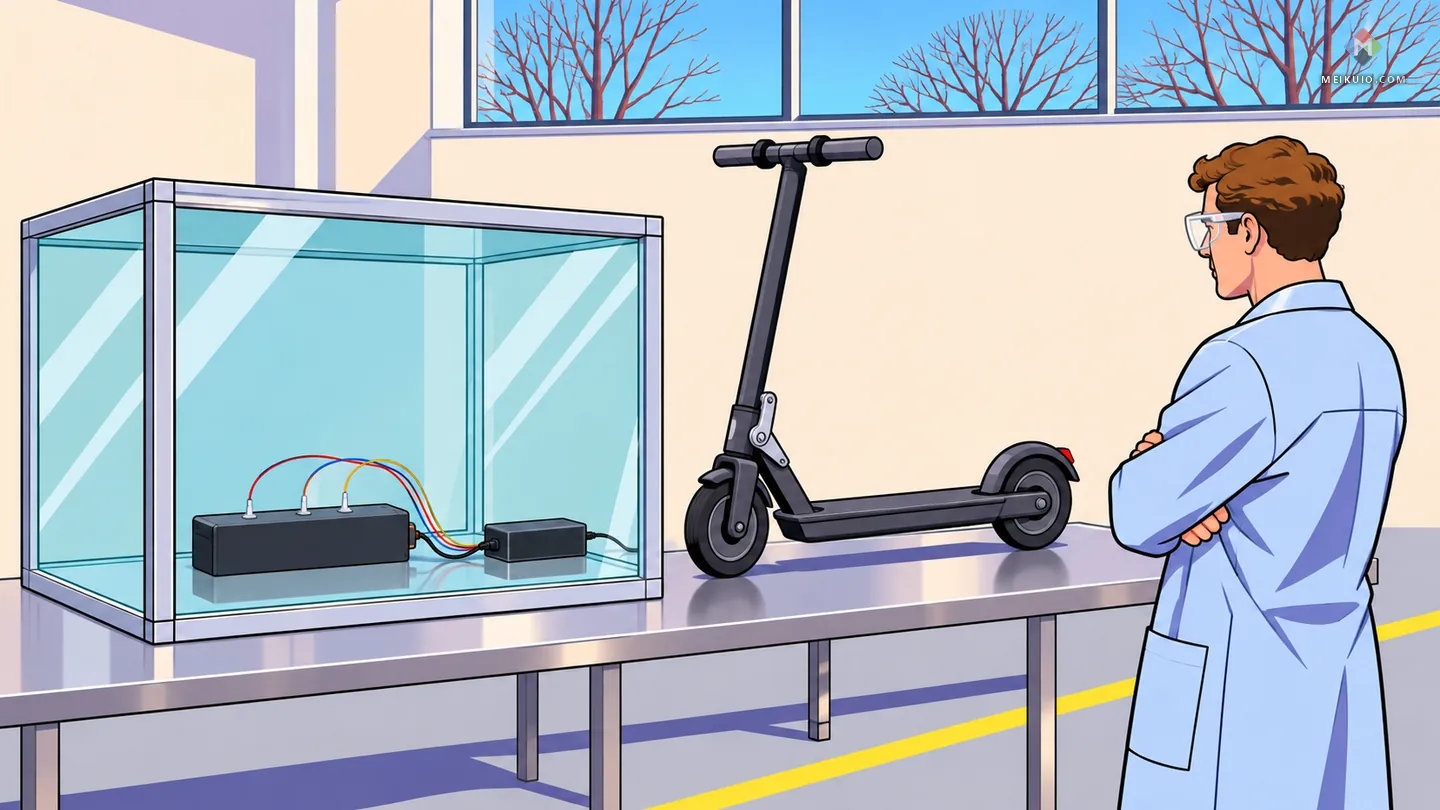
That scooter isn’t an outlier. Nine of the 11 CPSC recalls of adult electric scooters since October 2019 were for the structure or the brakes. I pulled every one through November 20, 2026, and the list reads like a parts diagram: the fold on the Max G30P and G30LP, a fork that can break, a stem weld that can crack, handlebar grips that can loosen, a bolt that can come loose, a downtube that can separate from the deck, a loose screw that lets the front tube fold, a brake caliper and a set of brakes. Those nine covered 251,240 of the 269,910 scooters recalled. Two were battery fires.
Fire still leads CPSC’s investigations at 88 of 189 cases. Brakes (40) and broken decks, handlebars, steering columns or front wheels (28) add up to 68, and the same two kinds of failure, structure and brakes, account for nine of the 11 recalls.
The US has a mechanical standard, but it isn’t written for you. ASTM F3679-26, updated in August 2026, sets requirements for “electric-powered scooters for rent or lease by multiple users but not individually owned units.” SGS, a testing company that reviewed the standard, lists folding mechanisms, latches and stem strength among its requirements. The only US mechanical standard for e-scooters, ASTM F3679-26, covers rental fleets, not scooters you own.
Owners describe the same failure classes in their own words. An Apollo City Pro owner in Switzerland wrote that “after a ascend to the sidewalk my stem broke fully.” I couldn’t tell from the post whether that scooter was one of the recalled units. An Apollo Explore owner says “the pin which holds the handlebars in position as you drive has snapped in half,” and that it happened twice. Apollo has recalled two of its own models, the Phantom in 2023 for a bolt that can come loose and the City in 2025 for a stem weld that can crack.
Copy the recall kit. Check the folding latch and its bolts before you ride, tighten what the manual tells you to tighten, and stop riding the moment the stem wobbles. If you want to see what a federal recall looks like when it lands on a device you rely on, read how the CPAP recall changed which machines I’d recommend.
How should you charge and store an electric scooter at home?
Charge it where you can see it, and unplug it when it’s full. CPSC’s investigators found that 51 of the 88 scooter fires they looked into started while the scooter was charging or just after, and 16 more started with the scooter sitting idle and unplugged. A scooter in a hallway is a battery in a hallway.
The makers’ own terms point the same way. GOTRAX voids its battery warranty for charging longer than six hours at a time or with an unapproved charger. NAVEE’s battery terms exclude damage from “use of non-standard chargers.” Use the charger that came in the box, and replace it only with the maker’s part. No marketplace chargers.
Your landlord may decide before any law does. Some buildings ban scooters inside, certified or not, so ask before you buy a scooter you plan to keep in an apartment. If the building allows it, keep it away from the door you’d use to get out, and charge it only while someone’s home and awake.
The best electric scooters of 2026, checked one by one
Each card starts with the record I found, then what the maker claims, then what independent testers say. Prices are what the makers’ US stores showed on November 20, 2026, in the middle of Black Friday sales, so check before you buy. None of the eight models has a CPSC recall.
1. NIU KQi 300X: best electric scooter for most people
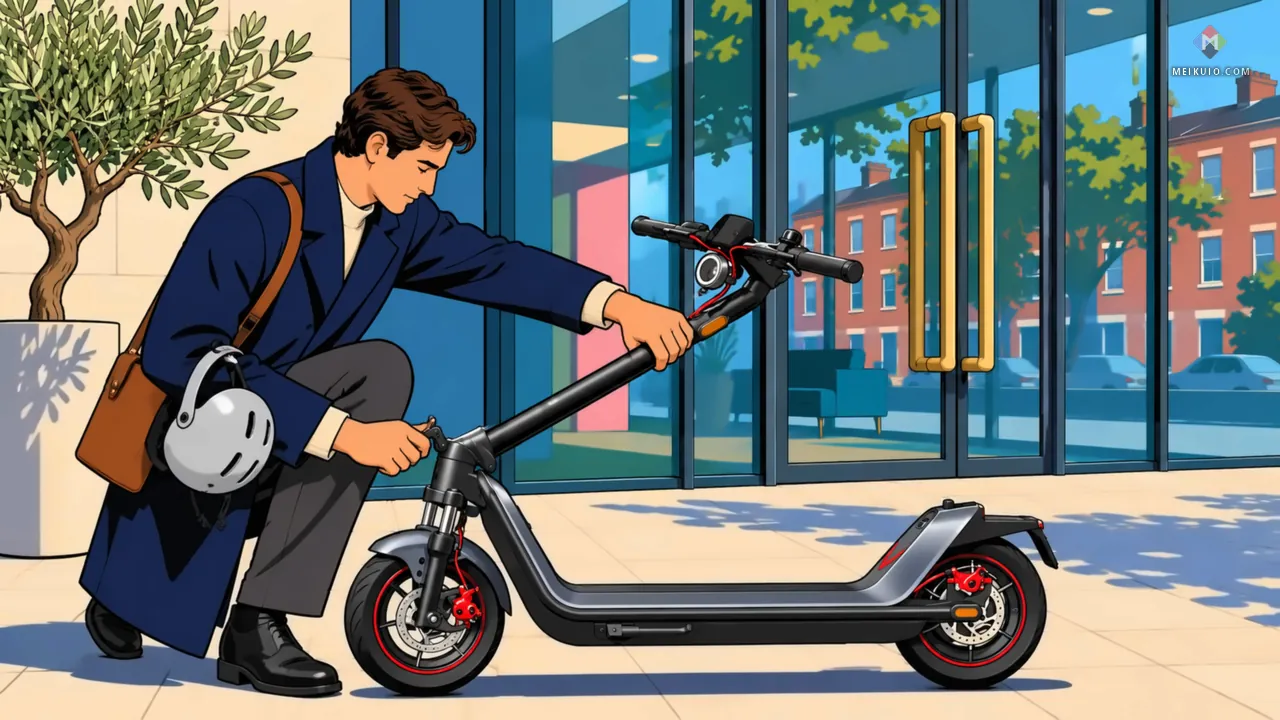
The KQi 300X is the scooter I’d hand to a first-time commuter. UL’s listing for Jiangsu niu Electric Technology, file FKIS.E521921, names it, and CPSC’s database has no recall on any NIU scooter.
NIU lists 20 mph on the road, with a 23.6 mph off-road mode, 37.3 miles of range, 10.5-inch self-healing tubeless tires, dual-action disc brakes plus regenerative braking (the motor helps slow the wheel), an IP55 water rating and a 265-pound rider limit. It weighs 48.7 pounds. eRideHero lists it as its “Best balanced commuter” and singles out the hinge: “Best folding mechanism I’ve tested.” For a buyer who just read the G30 story, that line matters more than the range figure. NIU’s store showed $699 that day, down from $1,299. Against the $499.99 E3 Pro, about $200 more buys disc brakes at both wheels, bigger tires and that hinge.
Two things in the fine print. NIU’s warranty lists “water damage” and “riding over obstacles” among its exclusions, so treat IP55 as splash protection and keep the scooter out of the rain. And 48.7 pounds is a lot to carry up three flights.
Who it’s for: commuters on pavement who want one scooter that does everything competently. Who should skip it: anyone who carries a scooter up stairs every day.
2. Segway E3 Pro: best value electric scooter

Segway’s page says the E3 Pro was “Tested and certified by TÜV Rheinland for UL 2272 Standard,” and Certipedia backs that up. Certificate CU 72500747, issued March 24, 2025, to the 2024 edition of UL 2272, names the E3 Pro by its model code, 051902U. No recall touches the E3 line.
It’s $499.99, down from $699.99, for a scooter rated at 20 mph and 34 miles, with an 800-watt peak motor, 10-inch tubeless tires, dual elastomer suspension, a front drum brake plus an electronic rear brake, IPX5 water resistance and a 265-pound limit. It weighs about 39.2 pounds. eRideHero calls it the “Most Reliable Budget Scooter” it ranks, and Car and Driver includes it in its October 2026 list.
Read the range figure for what it is. Segway measured 34 miles at 9 mph with a 165-pound rider, so a heavier rider at full speed will get noticeably less. Segway’s store lists a two-year limited warranty, double the one year GOTRAX lists for its seated Flex Voyager.
Who it’s for: riders who want an established brand and a documented certificate at a budget price. Who should skip it: anyone who wants disc brakes at both wheels.
3. NAVEE GT3 Pro: best budget electric scooter

NAVEE’s scooters are listed in UL’s directory under Spacewalker Pte. Ltd., file FKIS.E543916, and the listing names the “GT3 Pro-U,” the US version. NAVEE’s product page doesn’t name a lab anywhere in the text I read, which is why searching the factory name pays off.
At $419.99, down from $649.99, it brings a 1,000-watt peak motor, 20 mph, 37.3 miles at 9 mph, front fork and rear cylinder suspension, 10-inch tubeless tires, a front drum plus an electronic rear brake, IPX5 and a 265-pound limit. Net weight is 48.5 pounds. eRideHero names it “Best overall (budget)” and says its hardware “at this price point still feels like a pricing error.”
NAVEE’s warranty is more specific than most. It gives 24 months on the frame and 12 months on the battery, and its battery terms exclude damage from “water ingress, impacts, or drops.”
Who it’s for: a first scooter on a tight budget, ridden on mixed streets. Who should skip it: riders who need something light; at 48.5 pounds it weighs about the same as the KQi 300X.
4. NIU KQi Air: best lightweight electric scooter

Thanks to a carbon fiber frame, the KQi Air weighs 26.2 pounds with its battery, and it’s on the same UL listing as the KQi 300X, file FKIS.E521921.
NIU rates it at 20 mph and up to 31 miles, with 9.5-inch tubeless tires, a front disc brake plus regenerative braking, IP55 and a 265-pound limit. It has no suspension, which is part of how it stays light. eRideHero lists it as “Best ultralight” and, on its own range test, credits it with the “best range-to-weight ratio I’ve ever tested (0.92 miles/lb).” It was $809.10, down from $1,499.
This is also the scooter in the warranty story I’d want every buyer to read. A KQi Air owner on Reddit says NIU blamed water for a failure and wanted $691 to repair it, but the owner insists: “No rain rides, always stored indoors or under a waterproof cover.” I can’t settle that dispute from here. I can tell you NIU’s warranty excludes “Water damage to electrical parts” regardless of the IP rating on the box.
Who it’s for: train commuters and anyone with stairs between the street and the door. Who should skip it: riders who face rain most days.
5. Segway Max G3 Plus: best for long range and heavier riders

This pick comes with an asterisk, and I’d rather show it than hide it. The Max G3 Plus is the only pick whose lab record I couldn’t find. I searched TÜV’s Certipedia by name and went through all 40 of Ninebot’s US and Canadian certificates on November 20, 2026, and none names the Plus or its model code, 051602U. Its predecessor, the Max G3 (051601U), sits on TÜV certificate CU 72408123, but Segway’s store now marks the G3 “Discontinued.”
Segway lists the Plus with a 717 Wh battery (watt-hours, a measure of capacity), a 286-pound payload, 11-inch self-sealing tubeless tires, double-action disc brakes front and rear, hydraulic suspension at both ends, IPX6, a slope rating of about 30% (30 feet of rise over 100 feet) and up to 56 miles in its slowest mode at 9.3 mph. It weighs about 56 pounds. Segway listed it at $999.99, down from $1,499.99. Car and Driver names it its “Best Overall” scooter, and eRideHero gave the older Max G3 its “Best ride quality.”
Speed is the catch. The Plus rides at 20 mph in Sport mode and 28 mph in Sport+. Consumer Reports’ engineer called the Max G3’s 28 mph dangerous, and Segway won’t ship the Plus to New York State because its top speed exceeds 20 mph, so New York readers need another pick. Ride it at 20 or slower.
Before you pay, ask Segway for the certificate number that names the Plus, and look it up. If the number checks out, this is the scooter I’d pick for a heavier rider. If it doesn’t, nothing else on this list carries more than 265 pounds at street speed.
Who it’s for: heavier riders and long commutes, once Segway shows you the certificate. Who should skip it: anyone in a walk-up, anyone in New York State, and anyone tempted by the 28 mph mode.
6. NAVEE ST3 Pro: best electric scooter for rough streets and hills

The ST3 Pro sits on the same UL listing as NAVEE’s GT3 Pro, file FKIS.E543916, as the “ST3 Pro-U.”
NAVEE lists 46.6 miles at 9 mph, a 28% climbing grade (28 feet of rise over 100 feet), its Damping Arm suspension, 10-inch self-sealing tires, a front drum, a rear disc and an electronic rear brake, IPX5 and a 265-pound limit. Net weight is 55.8 pounds. The spec block says 20 mph, but the same page advertises “Unlock 24.9 mph.” I’d plan around 20. It was $599.99, down from $949.99.
eRideHero lists it as “Best value commuter” and names the downside in one line: “At 55 lbs, it’s not a scooter you want to carry.” Three brakes and a suspended ride for $600 is a strong deal. Fifty-six pounds is the price.
Who it’s for: hilly towns and cracked pavement. Who should skip it: anyone who has to lift it more than a curb’s height.
7. GOTRAX Flex Voyager: best electric scooter with a seat

GOTRAX’s page says “UL 2272 certified” without naming the lab. UL’s directory fills the gap: the listing for Zhejiang Taotao Vehicles, file FKIS.E497683, names the “Flex Voyager” among dozens of GOTRAX models.
The Flex Voyager tops out at 15.5 mph with up to 17 miles of range from a 350-watt motor. It has a padded seat, rear suspension, 14-inch air-filled tires, dual drum brakes plus regenerative braking, a rear basket rated for 50 pounds of cargo, IPX4, a 264-pound rider limit and a one-year warranty, for $299, down from $399. GOTRAX recommends it for ages 13 and up. It’s the slowest pick here, and by CR’s rule that’s a point in its favor. The same page sells a faster Flex Ultra variant, 20 mph and 25 miles from 500 watts, for $549, and UL’s listing names that one too. Popular Mechanics picks the Flex Ultra as its “Best Storage and Comfort” scooter.
In California a seat doesn’t change the rules. The state’s Vehicle Code defines a motorized scooter as a two-wheeled device with “either a floorboard that is designed to be stood upon when riding or a seat and footrests in place of the floorboard.” The same 15 mph cap and under-18 helmet rule apply. A seated scooter also isn’t a mobility scooter: the FDA classifies a motorized three-wheeled vehicle for people with limited mobility as a Class II medical device, and reading an FDA device record works the same way for those.
GOTRAX sells parts directly, which matters more on a cheap scooter than on a pricey one. The Flex page links a seat, suspension, motor, tires and brakes, and a battery for the Flex Ultra was $149.99. The warranty excludes “Exposure to liquid, chemicals, moisture, sand, or dirt,” and doesn’t cover tires or brake pads.
Who it’s for: riders who’d rather sit, including older riders who still want to get around on their own. Who should skip it: anyone who needs a medical mobility scooter.
8. Segway GT3 Pro: the fast one, with a warning
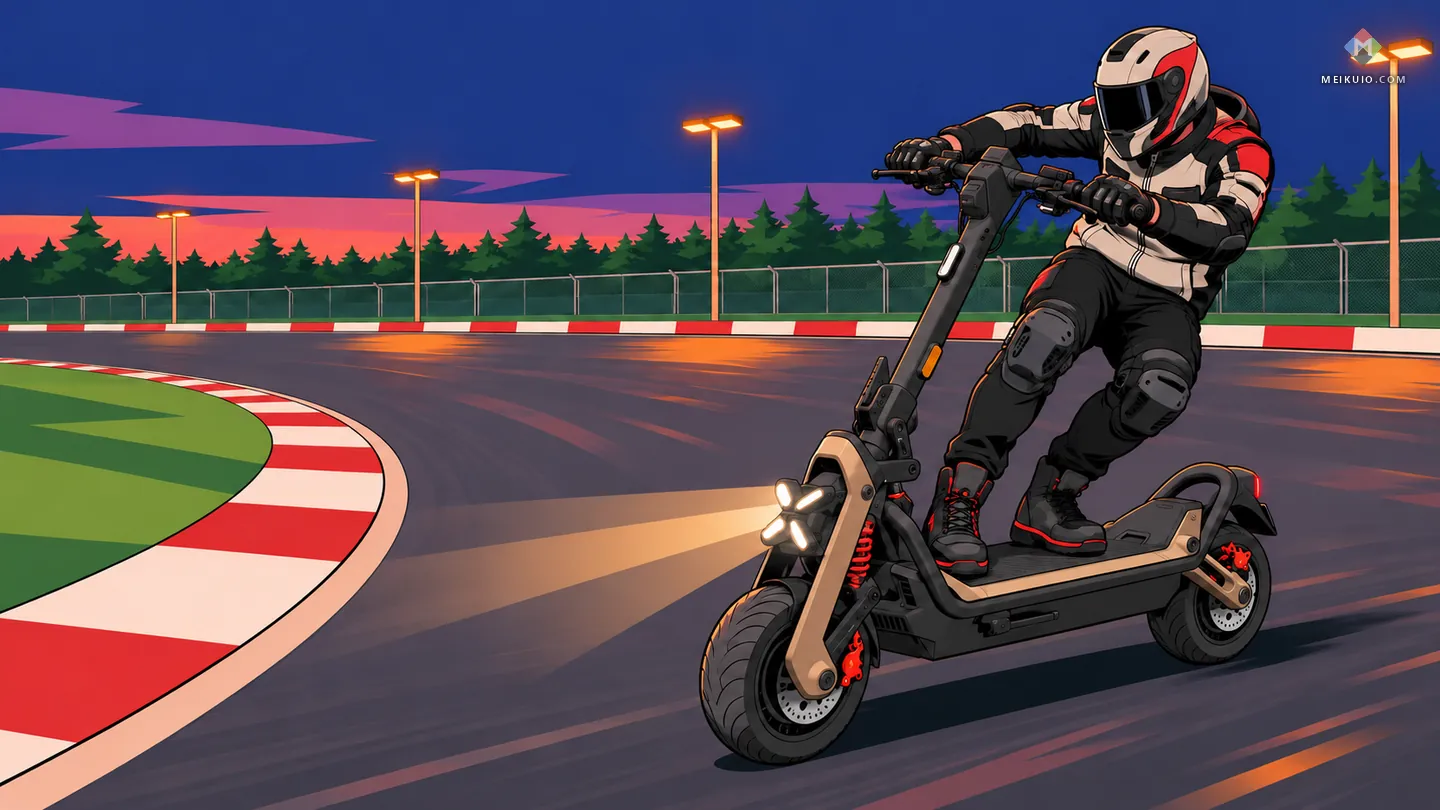
I include one fast scooter because people buy them, and I’d rather you buy a documented one. TÜV certificate CU 72500334, issued to the 2024 edition of UL 2272, names the Segway GT3 Pro’s model code, 060202G.
Segway lists 50 mph, two 1,700-watt motors, a 2,160 Wh battery, 11-inch self-sealing tires, hydraulic suspension, disc brakes front and rear, IPX6, up to 86 miles in its eco mode and a 330-pound payload. It weighs 117.1 pounds. It was $2,374.99, down from $2,699.99, and Car and Driver includes it in its October 2026 picks.
Now the warning. Of hyper scooters, its name for the fastest class, Consumer Reports writes: “we don’t recommend that they ever be used.” California limits scooter riding to 15 mph. Segway won’t ship the GT3 Pro to New York State, and it recommends riders aged 18 to 60. Fifty miles an hour on 11-inch wheels is motorcycle speed.
Who it’s for: experienced riders on private land or wherever the law allows it. Who should skip it: almost everyone else, including every teenager.
What about the scooters other guides recommend?
Most of them pass the record check. For a few, I couldn’t find a record. The scooters that show up in three or more of the guides I read are the Segway E3 Pro and the Segway GT3 Pro (both picks here), Segway’s Max family and the GOTRAX G4. Kaabo’s big dual-motor models turn up in the speed rankings.
The Segway Max G2 is the “Best Overall” pick in Popular Mechanics’ November 2026 update, and TÜV’s directory has certificates that name it. It’s the Max model that came after the recalled G30 and before the G3. I’d look at the Max G3 Plus first, for its 286-pound payload and disc brakes at both wheels, but of the two, only the G2 has a certificate I could find.
The GOTRAX G4 appears in the lists from NBC Select, Rider Guide and Electroheads. GOTRAX’s page says “UL 2272 certified” without naming a lab, and UL’s Taotao listing names the G4, so it passes too. Hiboy’s S2 scooters sit on UL’s listing for Shenzhen Freeman IT.
Apollo is the brand I’d check hardest. It isn’t in UL’s FKIS category, which proves nothing by itself, but CPSC has recalled two of its scooters since 2023, so I’d ask Apollo for its lab and certificate number before buying. Kaabo’s fastest models aren’t in FKIS either, and they belong in the same hyper-scooter class Consumer Reports says not to ride at all.
Tires, brakes, water and weight: what the spec sheet leaves out
An IP rating is a code for how well a case kept out dust and water in a lab test. The first digit is dust and the second is water, so IP55 was rated for both, while the X in IPX5 means no dust rating was given. A higher second digit means it resisted more water. It isn’t a promise to pay. NIU’s and GOTRAX’s warranties exclude water damage outright, and NAVEE’s battery terms exclude “water ingress.” Those are the three warranties I read for these picks.
Brakes come next. A drum brake sits sealed inside the wheel hub, a disc brake squeezes a metal rotor, and regenerative or electronic braking uses the motor itself to slow the wheel. CPSC’s investigators found brake problems in 40 of 189 incidents, and two of the 11 recalls were brakes. Every pick here has at least two independent ways to stop, usually a mechanical brake plus an electronic one, and the KQi 300X, the Max G3 Plus and the Segway GT3 Pro carry discs at both wheels. California also sets a floor: a scooter’s brake must be able to make a braked wheel skid on dry, level, clean pavement.
Tires decide comfort more than any spec. Seven of the eight picks run tubeless or self-sealing tires that shrug off small punctures, and the Flex Voyager rides on 14-inch air-filled bike-style tires. Larger wheels roll over cracks that catch small ones.
Weight limits on these picks run from 264 to 330 pounds. Segway calls the limit payload and the others call it rider weight; to be safe, count your bag inside it. I didn’t find a test method behind any of those numbers on the product pages I read. Treat the limit as the maker’s promise, and stay under it with your bag included. A 250-pound rider on a 265-pound scooter has 15 pounds left for everything else. Near that weight, with hills on the route, I’d look at the Max G3 Plus: its payload is 286 pounds, and Segway rates it for a slope of about 30%, as long as Segway can show you its certificate. The ST3 Pro climbs well, but its 265-pound limit leaves a 250-pound rider too little room.
Makers measure range gently. Segway’s E3 Pro figure assumes a 165-pound rider at 9 mph, and NAVEE quotes its numbers at 9 mph too. Ride heavier or faster and expect less.
Where can you legally ride an electric scooter?
It depends on your state and your city. California, New York State and New York City show how far apart the rules sit.
California’s Vehicle Code section 21235 sets the rules for motorized scooters: no riding on sidewalks, a driver’s license or instruction permit, a helmet for every rider under 18, and no riding on roads posted above 25 mph unless you’re in a Class II bike lane or a Class IV separated bikeway, though local authorities can allow roads up to 35. Section 22411 caps scooter riding at 15 mph on public roads. That limits how fast you ride, not how fast the scooter can go, so ride a 20 mph scooter under 15 there. Section 407.5 adds a sheet of fine print every manufacturer must include, in capital letters: “YOUR INSURANCE POLICIES MAY NOT PROVIDE COVERAGE FOR ACCIDENTS INVOLVING THE USE OF THIS SCOOTER.”
California also made certification a condition of sale. Since January 1, 2026, Health and Safety Code section 26302 bars selling or leasing a powered mobility device “unless the battery for the powered mobility device has been tested by an accredited testing laboratory for compliance with ANSI/CAN/UL 2272,” and the lab’s mark and the standard have to be permanently affixed.
New York State leaves much of it to local governments, which can set speed limits and helmet rules or ban scooters outright under Vehicle and Traffic Law section 1281. New York City requires certification for what’s sold there: “Powered mobility devices, such as e-scooters, hoverboards, segways, e-skateboards, and e-uniwheels, must be certified to UL standard 2272,” says the city’s Department of Consumer and Worker Protection. Segway’s pages for its faster models say they’re “not available for shipping to NY State” because their top speed exceeds 20 mph.

Trains have their own patchwork. BART, the San Francisco Bay Area’s rail system, prohibits motorized scooters “unless they can be folded and carried,” and a folded scooter has to stay folded. Your building can be stricter than any law. A Cambridge renter on Reddit whose building banned scooters wrote: “my scooter is UL certified! It is the Segway MAX G3. Still banned.”
Before you buy for a commute, check three places: your state’s vehicle code, your city’s scooter page and your transit agency’s rules for bikes and scooters.
Is an electric scooter safe for a teenager?
It can be, with a slow scooter and firm rules, and the rules start with the maker’s own age limits. Segway recommends the GT3 Pro only for riders 18 to 60, and it listed the discontinued Max G3 for riders 16 to 55. California requires a helmet for every scooter rider under 18 and a driver’s license or permit for every rider.
The injury data argues for low speed and a helmet. In CPSC’s 2024 special study of 173 e-scooter injury cases, 18% of riders wore a helmet, 32% were carrying something, 54% were hurt on paved roads and 32% on sidewalks. Of 206 e-scooter deaths from 2017 to 2024, 140 involved a motor vehicle. Cars are the bigger threat. Emergency rooms saw an estimated 380,000 e-scooter injuries over those eight years, 79,300 of them in 2024.
For a teenager I’d buy a scooter that tops out at 20 mph or less as it ships, start them in its slowest riding mode, and skip anything that unlocks more speed in an app or an off-road mode. That rules out the Max G3 Plus, the ST3 Pro and the KQi 300X for a teen. Of the eight picks, the Flex Voyager is the one its maker rates for ages 13 and up, and its 15.5 mph top speed is a hair over California’s 15 mph riding limit, so the rider still has to hold it under 15. California also requires a driver’s license or instruction permit for every scooter rider on the street, so a 13+ rating doesn’t make a teen without a permit street-legal there. Check the DMV’s age rules first. If you want a smaller scooter from a listed maker, NIU’s UL listing also names a KQi Youth model. Wear the helmet, whatever your state says.
Electric scooter or e-bike?
Pick a scooter if you need to carry it: onto a train, into an office, up to an apartment. Pick an e-bike if you never need to lift it and the roads are rough every day. Carrying decides. A scooter’s small wheels and narrow deck make it light and easy to fold, which is the whole point, and they’re also why a pothole hurts more. The ST3 Pro and the Max G3 Plus can handle hills and long rides, but a bike’s big wheels take bad pavement with less effort. An e-bike has its own electrical standard, UL 2849, which covers its whole electrical system the way UL 2272 does for a scooter, and the same advice holds: find the listing.
Should you buy a scooter or use a rental?
Rent first if you ride a few times a month. Rental scooters are the only ones in the US with a mechanical standard written for them, ASTM F3679-26, and the fleet operator handles the maintenance. Don’t read that as a safety guarantee: in CPSC’s 2024 study, 35% of the injured riders were on rentals, and 14 of the 206 e-scooter deaths from 2017 to 2024 involved rental scooters.
Buy if you ride most days. Owning usually costs less than paying by the minute at that pace, and you can inspect your own scooter. Do the math. Check your city’s rental prices against the price of the scooter you want, and count a replacement battery, $149.99 for GOTRAX’s Flex Ultra, on the owner’s side.
What happens to your electric scooter if the brand disappears?
The scooter keeps working. The warranty, the app and the parts may not. Bird, the rental company that also sold scooters to consumers, filed for Chapter 11 bankruptcy on December 20, 2023, in the Southern District of Florida. Owners of a scooter whose speed modes live in an app depend on that app outliving the company. Plan for that.
Repair shops can be another dead end. A bike mechanic on Reddit summed up the shop’s policy: “We will fix wheelchairs unicycles and recumbents but no scooters.” So check that the maker sells parts before you buy. GOTRAX lists batteries, motors, tires and brakes for its scooters on its own store, which is one reason a budget brand made this list.
You keep the hardware, but when the company behind a product shuts down, the support goes with it. A speed limit set in software is a small reminder that the app can decide what you own.
How to choose an electric scooter: five checks
- Find the record. Get the lab’s name and the certificate or file number, and confirm your model appears in the lab’s directory.
- Search the recalls. Look up the brand and the model in CPSC’s recall list, and register the scooter with the maker so a recall notice reaches you.
- Count the brakes. You want two independent systems, and in California one of them must be able to skid a wheel.
- Choose the speed you’ll actually ride. Buy 20 mph or less in the standard road mode, with a slower mode for the first weeks, and ride under 15 mph in California.
- Read the warranty’s exclusions before the IP rating: water, obstacles, charging rules and wear parts.
Where you’ll leave the scooter matters as much as which one you buy. If it waits outside a café or a station, a GPS tracker for the scooter costs far less than a replacement. For more gear checked against its records, see our gadget guides.
Field notes
- The certificate: TÜV Rheinland CU 72404020 (G30, G30P) and CU 72404019 (G30LP), issued March 1, 2024, valid on November 20, 2026; the same models were recalled by CPSC on March 20, 2025 (about 220,000 units, folding mechanism).
- The recalls: 11 CPSC recalls of adult electric scooters from October 2019 to November 20, 2026; nine for structure or brakes, covering 251,240 of 269,910 units; two for battery fires.
- The investigations: 189 e-scooter incidents investigated by CPSC staff through 2024; fire in 88 (51 while or just after charging), brakes in 40, broken decks, handlebars, steering columns or front wheels in 28.
- The directory: 26 companies listed in UL Product iQ category FKIS on November 20, 2026; the holder is often the factory, such as Zhejiang Taotao for GOTRAX and Spacewalker for NAVEE.
- The standards: UL 2272 “does not evaluate the physical hazards” of use; ASTM F3679-26 covers rental scooters only; Consumer Reports recommends no e-scooter (August 2026).
- Sources: CPSC recall database and staff report “Micromobility Products-Related Deaths, Injuries, and Hazard Patterns: 2017–2024” (April 2026); UL Solutions Product iQ; TÜV Rheinland Certipedia; UL Standards & Engagement, UL 2272; ASTM F3679-26; Consumer Reports; California Vehicle Code and Health and Safety Code; NYC DCWP; maker product and warranty pages, November 20, 2026.
Frequently Asked Questions
What is the best electric scooter for adults in 2026?
The NIU KQi 300X is my pick for most adults. It’s a 20 mph commuter with dual-action disc brakes and a 265-pound limit, and UL’s directory names it under file FKIS.E521921. It cost $699 at NIU’s store on November 20, 2026.
Does UL 2272 certification mean an electric scooter is safe?
It means the battery, charger and drive train passed fire and electric shock tests. UL 2272 doesn’t evaluate the frame, stem or folding latch, so CPSC can still recall a certified scooter for a mechanical failure, as it did the Segway Max G30P in 2025.
Does Consumer Reports recommend any electric scooter?
No. In August 2026 Consumer Reports tested 13 electric scooters and recommended none, noting that no US safety standard covers adult e-scooters sold to consumers. It advises buyers to pick a UL 2272-compliant model with a lower top speed.
Can a UL certified electric scooter still fold while you ride?
Yes. Segway’s Max G30P and G30LP hold valid TÜV certificates to UL 2272, yet CPSC recalled about 220,000 of them in March 2025 because the folding mechanism can fail. Check the latch and its bolts before every ride.
How do I check if an electric scooter is really UL certified?
Ask for the lab’s name and the certificate or file number, then search that lab’s directory: Product iQ for UL, Certipedia for TÜV Rheinland. Search the factory’s name too, and confirm the listing names your exact model or model code.
Do you need a license to ride an electric scooter?
In some states, yes. California requires a driver’s license or instruction permit for motorized scooters, plus a helmet for riders under 18. New York lets each city or town set its own rules, so check your state’s vehicle code and your city’s page.
Can you ride an electric scooter in the rain?
I wouldn’t. NIU and GOTRAX exclude water damage in their warranties, and NAVEE’s battery terms exclude water ingress, even on models rated IP55 or IPX5. An IP rating describes a lab test. The warranty decides who pays for a wet controller.
What is the best electric scooter for heavy riders?
Segway’s Max G3 Plus lists a 286-pound payload, disc brakes at both wheels and 11-inch tires. I couldn’t find its TÜV certificate, so ask Segway for the number first. Ride it at 20 mph. Most other picks here stop at 265 pounds.
My Take
The guides I read rank the scooters on the ride. None of them showed a pick’s lab listing or checked its picks against the recall database, and the record is where the injuries show up. A fire certificate is worth having, and it took me minutes to find one for seven of my eight picks. It answers only one question out of three. The fold and the brakes answer to nobody on a scooter you own, and nine of the last 11 recalls were exactly those.
If I were buying today, I’d get the KQi 300X for a commute and the KQi Air if I had stairs. I’d buy a Max G3 Plus only after Segway showed me its certificate, and I’d ride it at 20 mph. I’d check the latch before every ride, keep it out of the rain whatever the IP rating says, and unplug it before bed. And if a seller couldn’t give me a lab and a number, I’d walk away.