

Do you own digital games you paid for? No. Steam, PlayStation, Nintendo and Xbox each say in their own terms that you bought a license, and each keeps the right to end it. I read all four agreements, plus GOG’s, on October 20, 2026. The differences show up the day something goes wrong.
- What does “buying” a digital game actually get you?
- Do you own your Steam games?
- What Valve can do to your account
- The checkout notice and California’s law
- Delisted is not deleted
- Family sharing has a household rule
- PlayStation: “you buy a personal license … but do not own the product”
- Nintendo: licenses, game-key cards and a console that can be made “unusable”
- Xbox: what the Microsoft Services Agreement lets Microsoft remove
- GOG: still a license, but the installer stays on your drive
- Is a disc or cartridge still ownership?
- What happens to a game you bought when the servers shut down?
- What happens to your library if your account is banned?
- Can you resell, gift or leave digital games to someone?
- Refunds compared: which store gives your money back?
- Are the rules changing? California, Congress and Europe
- How to protect a digital library you already paid for
- Frequently Asked Questions
- Do you actually own the games you buy on Steam?
- Did Sony say you don’t own digital games?
- Do you keep digital games forever?
- Do I lose all my games if my account is banned?
- Can Nintendo really brick my Switch?
- Can you resell digital games in the US?
- Can I leave my Steam library to my kids in a will?
- Do physical games still need the internet?
- Is GOG real ownership of a game?
- Does California’s law mean I own my games now?
- My Take
The question got loud this month. Sony said in July that it will stop making discs for all new games on PlayStation in January 2028, and on October 16, PlayStation’s creator Ken Kutaragi told Video Games Chronicle that physical discs “have become a metaphor for ‘owning’ games.” A day earlier, Rep. Ritchie Torres said he will introduce a bill to turn a game purchase into ownership. And in a federal court in San Francisco, Sony’s lawyers have argued that no reasonable buyer believes a digital game is theirs.
So I went to the documents. Each store’s terms, its refund page, its shutdown notices, and the court papers. Below is what they say, in their own words, and what happened to real buyers when the stores used those words.
What does “buying” a digital game actually get you?
A license is permission to use something on conditions the seller writes. You pay, you play, and the seller keeps the right to change or end the deal. Read that last part twice. All five stores below sell a license to play a game, not a copy you own; what differs between them is what survives when access ends. So the honest answer to whether you own digital games is that you own a permission, not a product.
Here is the core sentence from each agreement on whether you own digital games you buy there, the version I read, and the powers each store keeps.
Games aren’t special here. The same logic now covers paid software in a car, where the license stays with the vehicle and the buyer can’t move it. A GPS tracker works only as long as its network and its company do. What matters for a gamer is the fine print around the license: who can end it, how much warning you get, and what you keep afterward. That’s where the stores split. Three events decide what you actually lose: a delisting pulls one game from sale, a store closure shuts a whole console’s store, and a server shutdown stops whatever the game needs servers for.
More Read

Do you own your Steam games?
No. Valve’s Steam Subscriber Agreement, last updated on September 10, 2026, says it in two sentences: “The Content and Services are licensed, not sold. Your license confers no title or ownership in the Content and Services.” The next sentence sets the conditions. To use what you bought, “you must have a Steam Account and you may be required to be running the Steam client and maintaining a connection to the Internet.”
The license has its ending built in. It “ends upon termination of (a) this Agreement or (b) a Subscription that includes the license.” In Valve’s vocabulary, each game you buy is a Subscription, and “Each Subscription allows you to access particular Content and Services.”
What Valve can do to your account
Section 9.C lets Valve “restrict or cancel your Account or any particular Subscription(s) at any time” in two cases: Valve stops providing that game to every subscriber in your position, or you break the agreement. If Valve cancels for a violation, “no refund, including of any Subscription fees or of any unused funds in your Steam Wallet, will be granted.” Section 4.D adds the line that matters on a bad morning: “You acknowledge that Valve is not required to provide you notice before terminating your Subscription(s) and/or Account.”
You can’t hand a game to someone else either. “Subscriptions are not transferable,” and even after you give up a game, its original key won’t register to another account.
One clause runs the other way. Steam’s agreement sends US disputes to state or federal court in King County, Washington. The current text has no arbitration clause, the kind that moves disputes from a courtroom to a private arbitrator, and no class-action waiver, the clause that bars you from joining a group lawsuit. PlayStation’s and Microsoft’s agreements both have an arbitration clause and a class-action waiver.
The checkout notice and California’s law
In October 2024, players noticed a new line under Steam’s checkout button. Gizmodo and Tom’s Hardware quoted it as: “A purchase of a digital product grants a license for the product on Steam.” About two and a half weeks earlier, on September 24, 2024, California’s governor had signed AB 2426, a law that limits the words “buy” and “purchase” for digital goods unless the seller discloses a license. Google’s AI Overview now says the notice “follows” that law. Valve hasn’t said so. The timing fits; the reason is an inference.
Delisted is not deleted
When a game leaves the Steam store, buyers usually keep it. A delisting only stops sales; section 9.C covers the rarer case where Valve stops providing the game itself. Forza Horizon 4 left Steam and the Microsoft Store on December 15, 2024, and its developer said the game keeps working “as normal, including its offline, online, and multiplayer features” for people who already own it. The risk sits elsewhere: in games that need a second account or a publisher’s servers. After Ubisoft shut down The Crew’s servers (more on that below), PC Gamer reported in April 2024 that Steam still let owners download it, but at launch it asked for a game key instead of starting.
Family sharing has a household rule
Steam Families lets relatives play each other’s libraries, inside limits. Valve’s guide says joining can fail if “Your account activity does not show that you are part of the same household as the existing members,” and that each family slot “has a cooldown of one year” after someone leaves. Valve grants sharing as a feature and can change the rules.
PlayStation: “you buy a personal license … but do not own the product”
Do you own digital games on PS5? Sony answers that one itself. Its PlayStation Terms of Service, last revised in April 2026, have the clearest sentence of the four big stores. Section 8.4: “When you order or purchase a product from PlayStation Store, you buy a personal license to use that product for private, non-commercial use. That license is not transferable unless your local applicable laws say it must be. This means you can use a product in the ways described in the license, but do not own the product.”
Section 10.1 goes further and redefines the store’s own vocabulary: the terms “own,” “purchase” and “buy,” as Sony uses them, do “not mean or imply any transfer of ownership.” The word on the button is not the deal.
Three more clauses decide what happens to your library. Section 8.16 puts the risk on you: “You are solely responsible if you do not choose to download or access the product before it is removed or your license expires,” and “We are not obligated to provide you with replacement copies for any reason.” In plain terms, no guaranteed re-download. Section 13: “For any Content that uses online servers, we make no commitment to continue to make those servers available.” And section 12.2, which starts with “With or without notice,” lets Sony “indefinitely restrict, suspend or discontinue your access to” certain content if it believes you broke the terms, or to protect “other SIE interests.” Section 12.3 ends the discussion: “Account termination is irreversible.”
One carve-out matters. If Sony suspends a console, section 12.5 says you can’t use it to “access any content purchased from the PlayStation Store,” but “You will still be able to play any disc games that run on your console, if they do not need to connect to our Services to run.” On a suspended PlayStation, the disc works. The download doesn’t.
Did Sony say you don’t own digital games?
Yes, in court. In June 2026, four players sued in Heycock v. Sony, arguing that the PlayStation Store’s “Buy Now” and “Confirm Purchase” buttons break California’s disclosure law. Sony’s motion to compel arbitration or dismiss, filed August 21, 2026, answers: “In the digital age, it is not plausible to allege that reasonable consumers believed they were obtaining “ownership” of a digital game.”
Its example is two of the plaintiffs. Jason Mendoza bought Resident Evil Requiem on February 14, 2026, and Edward Heycock bought the same game on February 25 for $69.99. If buying had made Mendoza the owner of the game, the motion argues, Heycock couldn’t have bought it. That treats ownership as owning the game itself. The plaintiffs mean something smaller: buyers, they say, are led to believe a purchase “confers an unrestricted ownership interest” in their copy. They want damages and a court order. The motion also notes that “Plaintiffs do not allege that they have lost access to any game they bought.”
Sony’s motion asks the judge to send the case to private arbitration under PlayStation’s terms, or to throw it out. A hearing is set for October 29, 2026 before Judge Vince Chhabria in federal court in San Francisco. No ruling yet.
Sony’s own lawyers argue that believing you own a digital game is not plausible.
When Sony almost pulled bought content
It nearly happened in 2023, with TV shows rather than games. Sony told buyers that, “due to our content licensing arrangements,” purchased Discovery episodes would leave their libraries on December 31, 2023. On December 21, Sony posted that, “Due to updated licensing arrangements, the Discovery content removal planned for December 31, 2023 is no longer occurring.” Video licenses aren’t game licenses, but the mechanism was the same: a deal between two companies expired, and the buyer’s library moved.
So far, store closures have treated buyers better than that. Sony announced on July 1, 2026 that PlayStation Store on PS3 and PS Vita “will close in July 2027” in the US and most countries. New purchases end there. Sony says players “will still be able to download previously purchased content after the closing date for the foreseeable future.” That phrase isn’t a promise of forever.
Nintendo: licenses, game-key cards and a console that can be made “unusable”
Nintendo owners ask the same question with a twist: do you own digital games on a Switch 2 if you bought them on a card? Start with what a Switch 2 owner holds in their hand. A game-key card looks like a cartridge, but Nintendo’s support page says key cards “don’t contain the full game data.” The card is “your ‘key’ to downloading the full game to your system via the internet.” You need the internet “when you launch the game for the first time,” and after that the card “must be inserted into the system in order to play the game.” The plastic is a key. The game lives on Nintendo’s servers until you download it.
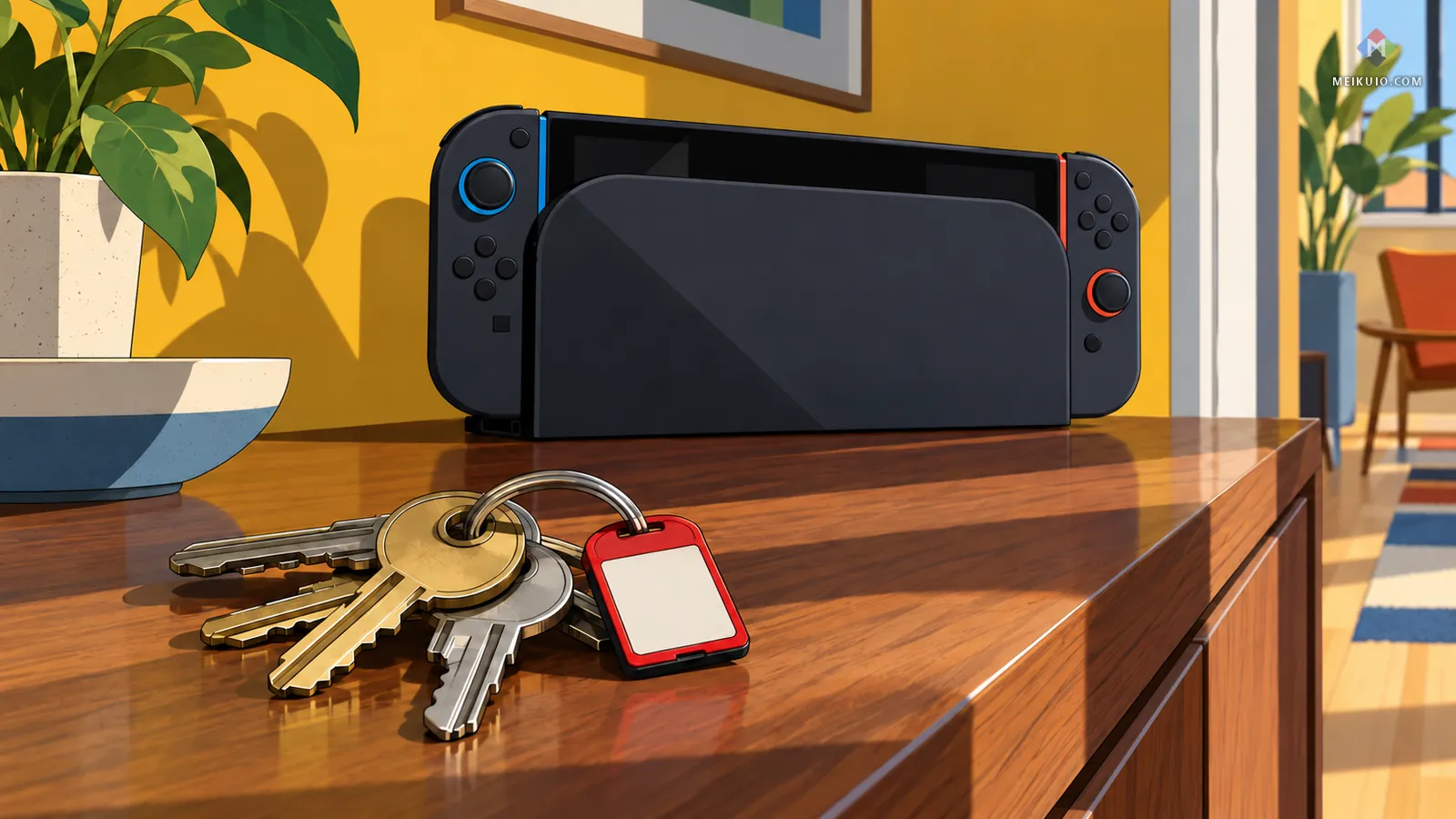
Digital purchases sit in virtual game cards. You can move them between two linked consoles, and Nintendo lets you lend one to a family-group member: it “can be lent to a family member for 14 days.” You can’t move a purchase to someone else’s account. Nintendo’s answer is one sentence: “It’s not possible to transfer digital purchases from one Nintendo Account to another.”
The terms say the rest. Nintendo’s Purchase and Subscription Terms, last updated in August 2026: “Some Products, such as software and digital content, are licensed, not sold, to you pursuant to the limited license in Section 2 of the Nintendo Account User Agreement, and your license to use these Products will immediately terminate if you violate such agreement.”
That Account User Agreement, effective May 2025, holds the line that made headlines. For listed breaches (copying, circumventing protections, running unauthorized copies), “Nintendo may render the Nintendo Account Services and/or the applicable Nintendo device permanently unusable in whole or in part.” It can also suspend services “in our sole discretion and without prior notice to you.” Refunds are short to describe. Payments through a Nintendo Account “are final and non-refundable,” except as Nintendo authorizes or the law requires.
What a Nintendo ban actually left
CNET’s Sean Buckley wrote up his own case in January 2021. A disputed $100 Fortnite charge led to a ban about six months later. Downloads and online play stopped, and so did the eShop. His finding: “Physical game cards and previously downloaded games are playable, but that’s about it.” After escalation, the account came back, library included. One case isn’t a policy, but it shows the order of loss: the store and online play go first, local games last.
Nintendo has already closed two stores. Purchases on the 3DS and Wii U eShop ended at 5:00 PM Pacific on March 27, 2023, and online play for that software ended at 5:00 PM Pacific on April 8, 2024. Nintendo says redownloads remain possible “for the foreseeable future.”
Xbox: what the Microsoft Services Agreement lets Microsoft remove
Do you own digital games on Xbox? No, and the document that says so isn’t even an Xbox document. Xbox purchases run under the Microsoft Services Agreement, the same document that covers Outlook and OneDrive. The version effective September 30, 2026 says in section 8.b: “The software is licensed, not sold.” Section 14.j covers games, films and books as “Digital Goods,” and ends with this: “Microsoft or the owners of the Digital Goods may, from time to time, remove Digital Goods from the Services without notice.”
Section 7.c closes the gap a buyer might hope for: “Except to the extent required by applicable law, we have no obligation to provide a re-download or replacement of any material, Digital Goods … or applications previously purchased.” If Microsoft closes your account, “you may lose access to products you’ve acquired,” and closure “may result in forfeiture of content licenses.” That leaves Microsoft a lot of room.
Two account rules catch people out. The agreement asks you to sign in “at least once in a two-year period” to keep the account active. Microsoft’s activity policy carves out buyers: if you’ve bought or used “a current Microsoft product or service, your Microsoft account will remain active and Microsoft will not close your account due to inactivity.” A purchase of a current product keeps the account open. The second rule is about moving abroad. Microsoft’s usage rules list “you change your country or region” among the reasons you can lose access to Digital Goods.
Microsoft’s store closure went the way buyers would want. On July 29, 2024, Xbox stopped selling through the Xbox 360 Store and said “you will still be able to play and re-download previously purchased content.” The 360 library survived. For the corporate side of Xbox, here’s who owns Microsoft and its gaming studios.
GOG: still a license, but the installer stays on your drive
GOG is the store people point to when they say you can own a digital game. Its own User Agreement, effective March 9, 2026, doesn’t say that. GOG gives “the personal right (known legally as a ‘license’)” to use its content, and “We can stop or suspend this license in some situations.” That is still a license. Section 3.3: “Your GOG account and GOG content are personal to you and cannot be shared with, sold, gifted or transferred to anyone else.”
The difference is technical. GOG sells games with offline installers and no DRM, the copy-protection layer that checks your account before a game starts. Once you’ve downloaded the installer, it runs without asking anyone. When Steam’s checkout notice appeared, GOG answered with a mock banner of its own: “A purchase of a digital product on GOG grants you its Offline Installers, which cannot be taken away from you.” California’s law treats that model differently, too. AB 2426 exempts goods made available “for permanent offline download to an external storage source to be used without a connection to the internet.”
Two limits. An installer you never downloaded is only as safe as your GOG account. And a game whose features run on a publisher’s servers loses them when the servers go, installer or not. GOG’s refund window is the most generous of the five: “up to 30 days after purchase, even if it was downloaded, launched, and played.”
Is a disc or cartridge still ownership?
Partly. If you want to own your games in the old sense, a disc is still the closest you’ll get, with conditions. US copyright law’s first-sale rule lets the owner of a physical copy sell or give it away. That is why used games exist. But the rule covers the copy, not the game, and only a copy the buyer owns. In Vernor v. Autodesk (2010), the Ninth Circuit held that a software user “is a licensee rather than an owner of a copy” when the copyright owner specifies a license, significantly restricts transfer and imposes notable use restrictions. That case was about copies of AutoCAD software, not game discs, and used games are still bought and sold openly. The bigger problem is what’s on them.
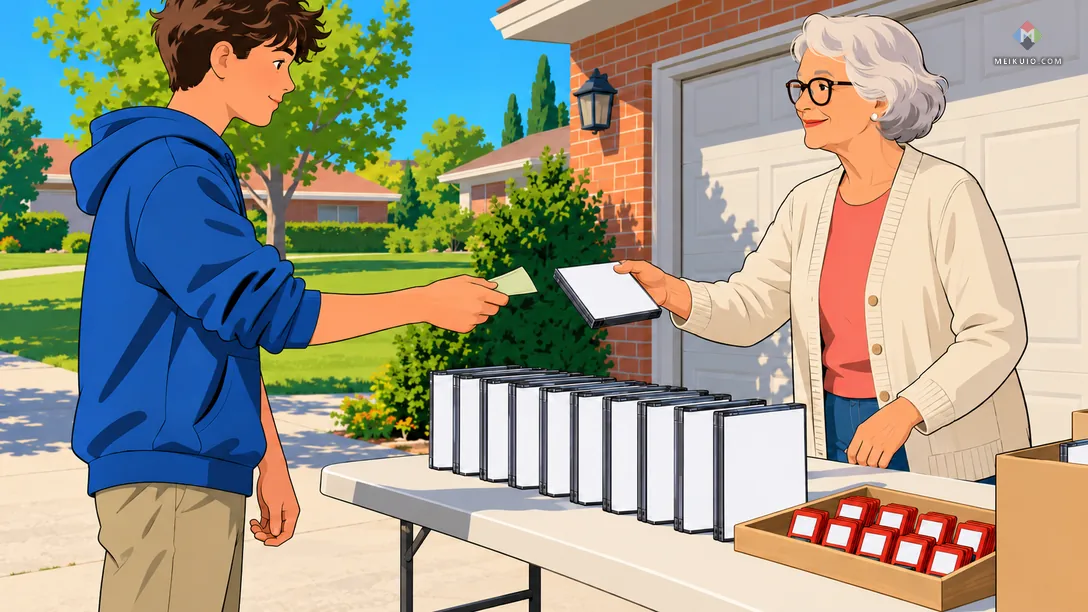
Many discs now carry part of a game. When Call of Duty: Modern Warfare II shipped, players found the disc held 72MB. One wrote: “Heads up to those of you who were hoping to reduce your download size by getting physical. It ain’t happening.” Switch 2 key cards, above, are the same idea with Nintendo’s name on it.
When a disc still protects you
A disc or cartridge that holds the full game and runs without a sign-in is the closest thing to owning a game: you can keep it or resell it, and it plays on a console Sony has suspended. It still needs a working console, and Nintendo’s terms let it disable a device for listed breaches. A disc that needs a day-one download (a patch or the rest of the game, fetched the first time you play), or a Switch 2 game-key card, works only while the publisher’s or Nintendo’s servers deliver the data. An online-only game on any disc stops when its servers stop. Read the box for a download-required notice before you pay for physical.
For PlayStation buyers the choice is closing. Sony said on July 1, 2026 that “physical game disc production for all new games releasing on PlayStation consoles will be discontinued starting January 2028.” The cutoff spares games already out on disc, or released on disc before then. Sony’s own investor report shows how far the shift to downloads has gone.
Across the whole fiscal year that ended in March 2026, downloads made up 78% of the PS4 and PS5 full games Sony counted. That’s units worldwide, not revenue. Kutaragi was blunt about keeping discs going: “I don’t think it’s economically reasonable. Maybe it’s a mentality issue.”
What happens to a game you bought when the servers shut down?
Three different things count as losing a game, and they end differently. A delisting takes a game off the store; buyers usually keep it. A store closure stops new purchases; Nintendo and Microsoft kept old purchases downloadable after closing theirs, and Sony promises the same for PS3 and Vita. A server shutdown is the one that can take a game away: whatever needs the servers stops, and an online-only game stops completely. That’s the day the gap between owning and licensing digital games stops being a legal footnote.
A delisting takes a game off the shelf. A server shutdown can take it out of your hands.
The Crew is the case everyone cites. Ubisoft’s notice said the game “will remain playable until March 31st, 2024 … After this date, the servers will be shut down, which means that the game will not be accessible anymore.” On April 12, PC Gamer reported that owners’ Ubisoft libraries showed “You no longer have access to this game.” Buyers sued. A proposed settlement in Cassell v. Ubisoft, in Sacramento County Superior Court, sets up a $2,000,000 fund, and each class member picks “a Cash Option of $7 or a Credit Option of $15.” Ubisoft denies wrongdoing. The final approval hearing is November 13, 2026.
Refunds at shutdown are the exception. I sorted 23 shutdowns, delistings and store closures where I could read the official notice; the chart below shows how they ended. The full refund programs were Concord, which Sony took offline beginning September 6, 2024 with “a full refund,” and Google’s Stadia, which refunded “all game and add-on content purchases made through the Stadia store” before closing on January 18, 2023. MultiVersus was the only one of the 23 to add an offline mode. Most notices announced no compensation at all.
The next one already has a date. NBA 2K25 “will no longer be available for purchase as of October 30, 2026” and will be “discontinued as of December 31, 2026.” 2K says owners “will still be able to redownload and play offline modes,” but MyCAREER, MyTEAM and every online mode end. Rep. Torres used this exact game as his example.
What happens to your library if your account is banned?
A ban cuts the store, downloads and online play first. Then it depends. Whether anything still runs comes down to the platform and to where the game’s files live. All four big stores keep the right to act without warning: Steam’s “not required to provide you notice,” PlayStation’s “With or without notice,” Nintendo’s “without prior notice to you,” and Microsoft’s right to remove Digital Goods “without notice.”
On Steam, it depends on the ban. Valve’s anti-cheat ban, called VAC, is narrow: Valve says “VAC banned accounts can still play single-player games, local LAN games, and multiplayer on non VAC-secured game servers.” It’s also final; “VAC bans are permanent, non-negotiable, and cannot be removed by Steam Support.” A full account termination is the bigger loss. Steam’s license “ends upon termination of (a) this Agreement,” and playing your games needs a Steam Account.
The worst cases start somewhere ordinary. In a 2021 Reddit post titled “Playstation Account of 10+ Years has been permanently banned due to chargebacks,” the owner said someone hacked the account and spent 236 dollars on games; after the money came back, Sony locked the account, and “the only way to get my account back is to buy it back by paying them the money that was refunded.” Sony’s suspension page has a separate category for account debt: “This will be lifted once you have paid off the balance.” A chargeback, where your bank reverses the payment, looks like fraud to the store, even when you’re the victim. Call the store first.
If it happens to you, the order of moves is the same on every platform:
- Find the notice. Sony says it “usually” emails the reason and length of a suspension to your sign-in address; check spam.
- Use the store’s own support and appeal route before your bank. A chargeback can turn a hacked account into an account debt.
- If a stranger caused it, say so with dates, and secure the email account first.
- Escalate if the first answer is a template. CNET’s Nintendo case was resolved at a higher support tier.
- Don’t uninstall anything while you wait. Local games and discs may be all that still works.
Most stories about being banned for nothing begin with a stolen password. If you’ve had a breach before, see whether identity theft protection is worth paying for.
Can you resell, gift or leave digital games to someone?
Resell: no, on any of the five stores. Each agreement bars transfer, and no US court has ordered a store to allow resale. In Capitol Records v. ReDigi, decided December 12, 2018, the Second Circuit ruled against a service that resold digital music files, because the transfer made new copies that first-sale law doesn’t cover. France came closest: a consumer group fought Valve’s resale ban for years, and the country’s top civil court, the Cour de cassation, rejected its appeal on October 23, 2024, leaving the ban in place.
Gift: only a game you buy as a gift and nobody has redeemed yet. Steam sells games as gifts, and you can even refund an unredeemed gift “within the standard 14-day/two-hour refund period.” Once it lands in an account, it stays there.
Handing your kids your login doesn’t fix it. Steam’s agreement says “You may not reveal, share or otherwise allow others to use your password or Account except as otherwise specifically authorized by Valve.” The allowed routes are the sharing features the stores built, such as Steam Families and Nintendo’s 14-day family lending, both covered above.
Leave to your family: not by the terms. When a user asked Steam support, the reply quoted by Ars Technica in May 2024 read: “your Steam account cannot be transferred via a will.” GOG told Ars it would act on “a copy of a court order that specifically entitles someone to your GOG personal account.” Microsoft’s page for families of someone who died says a subpoena or court order “does not guarantee that we will be able to assist you.” PlayStation’s and Nintendo’s terms make the license and the account non-transferable and say nothing about death. I’m reading documents here, not giving legal advice; for an estate, a lawyer should look at the specific accounts.
Refunds compared: which store gives your money back?
Refunds are where the five stores differ most, and where the timing trap sits. On PlayStation, the 14-day window closes the moment a download starts, and automatic downloads can start one, and close the window, before you notice.
Steam’s rule is the simplest. Xbox is the vaguest: a typical 14-day window, requests possible for 90 days, and no definition of a “significant amount of play time.” Nintendo is the strictest. Its default answer is no. GOG is the most generous, and the only one of the five with no playtime limit inside its 30 days.
Are the rules changing? California, Congress and Europe
Slowly, and mostly on paper. One law is in force. Everything else is a lawsuit, an announcement or a memo.
California’s AB 2426, signed September 24, 2024, doesn’t give you ownership. It makes a seller who uses “buy” or “purchase” disclose, among other things, “That the purchaser is receiving a license to access the digital good.” The Heycock case rests on this law. The license itself stays the same. The Federal Trade Commission put it plainly in an April 2024 consumer alert: “what you really got when you clicked “buy” is often merely a license to access the content.”
Rep. Ritchie Torres “announced he will introduce the Power To The Players Act” on October 15, 2026. His release says it would direct the Federal Trade Commission to write rules under which “buying a video game would give the consumer ownership of the game rather than a license to play it,” and online games would need an offline mode “before the servers supporting them are shut down.” His line: “It is a rental disguised as a sale.” The Verge’s headline says the bill was “introduced in Congress”; his own office’s page says he will introduce it.
In Pennsylvania, state Sen. John Kane circulated a Protect Our Games Act memo on September 18, 2026. It asks for 60 days’ notice before a game stops working, then an offline mode, a patch, or a refund that “cannot fall below 25% of the initial sale price of the game.” Europe went the other way. The Stop Destroying Videogames initiative collected 1,294,188 statements of support, and on June 16, 2026 the European Commission said it “cannot propose a legal obligation to keep video games playable after they stop being provided commercially.” It will work on an industry code of conduct instead.
How to protect a digital library you already paid for
You can’t own your digital games on any of these stores, GOG included. You can make losing them much less likely.
- Lock the account down. Turn on two-step sign-in everywhere, and switch to a passkey where the store offers one.
- Check whether your store email has already leaked; here’s how to check if your email was in a breach.
- Never charge back a game store. Ask the store for a refund first, even after a hack.
- Download GOG installers now and keep them on a drive you own.
- If you play PS3 or Vita games, download what you bought before the store closes in July 2027.
- Buy discs and cartridges with the full game on them for the games you want in 20 years, and read the box for a download-required notice.
- Read the server notice before you buy an online-only game, and price it as a rental.
- Moving abroad? Check your store’s country rules first; Microsoft lists a country change as a way to lose access to Digital Goods.
Field notes
- The agreements: five read on October 20, 2026 to answer whether you own digital games you buy; Steam (Sep 10, 2026), PlayStation (April 2026), Nintendo (Aug 2026 and May 2025), Microsoft (effective Sep 30, 2026), GOG (Mar 9, 2026); all five call the sale a license.
- Sony in court: Heycock v. Sony, filed June 18, 2026; Sony’s August 21 motion calls belief in “ownership” not plausible; hearing October 29, 2026.
- Shutdown outcomes: 23 official notices counted; 2 full refund programs, 1 offline mode added, 3 removals or closures called off, 17 with no compensation announced.
- Refunds: Steam two weeks and under two hours; PlayStation 14 days, only until the download starts; Nintendo final sale; Xbox typically 14 days; GOG 30 days even after play.
- Discs: Sony ends disc production for new games from January 2028; 78% of PS4 and PS5 full games were sold digitally in its fiscal year to March 2026.
- Dated events: NBA 2K25 leaves stores October 30, 2026; The Crew settlement hearing November 13, 2026; PS3 and Vita store closes July 2027.
- Sources: the five store agreements and refund pages; Heycock v. Sony docket (N.D. Cal. 3:26-cv-06016); Sony investor reports; Cassell v. Ubisoft settlement site; California AB 2426; FTC consumer alert (April 2024); European Commission reply (June 16, 2026).
Frequently Asked Questions
Do you actually own the games you buy on Steam?
No. You don’t own digital games on Steam in the legal sense. Steam’s agreement says “The Content and Services are licensed, not sold.” You get a license tied to your Steam account, which Valve can end for a breach without notice, and the agreement doesn’t promise you’ll keep access.
Did Sony say you don’t own digital games?
Yes. Its terms say you “do not own the product,” and in an August 2026 court filing Sony argued that believing you own a digital game is not plausible. The case, Heycock v. Sony, has a hearing on October 29, 2026.
Do you keep digital games forever?
Not guaranteed, because you don’t own digital games outright. Nintendo and Microsoft kept old purchases downloadable after closing their stores, and delisted games usually stay in libraries, but a server shutdown can end a game, as The Crew showed in 2024.
Do I lose all my games if my account is banned?
It depends on the ban. A Steam VAC ban still allows single-player and LAN play; a full account termination ends your license. On a suspended PlayStation, disc games that don’t need its services keep running. Appeal before you write the library off.
Can Nintendo really brick my Switch?
Its US account agreement allows it for listed breaches, such as circumventing protections or using unauthorized copies: Nintendo “may render the Nintendo Account Services and/or the applicable Nintendo device permanently unusable in whole or in part.” Ordinary use isn’t on that list.
Can you resell digital games in the US?
No. Every major store’s terms bar transfers, and the first-sale rule covers physical copies, not files. A federal appeals court ruled against a digital music resale service in 2018 because the transfer made new copies.
Can I leave my Steam library to my kids in a will?
Not under Steam’s terms. A support reply quoted by Ars Technica said “your Steam account cannot be transferred via a will.” GOG says it would act on a court order naming the account, which is the closest any store comes.
Do physical games still need the internet?
Some do. A disc with the full game runs offline, but many ship with partial data and need a download, and Switch 2 game-key cards “don’t contain the full game data.” Look for a download-required notice on the box.
Is GOG real ownership of a game?
Not legally. You don’t own digital games on GOG either; its agreement calls it “the personal right (known legally as a ‘license’).” The practical difference is the offline installer: once downloaded, it runs without an account check, and GOG can’t switch it off.
Does California’s law mean I own my games now?
No. AB 2426 makes sellers who use “buy” disclose that you’re getting a license. It changes the labels at checkout, not what you receive. It’s the basis of the current Heycock lawsuit against Sony.
My Take
You don’t own your digital games, and the stores have stopped pretending otherwise. Every agreement I read says license, and Sony now says it in court. The risk that matters is the game that needs a server, and the account you can lose in one disputed charge. Nintendo’s and Microsoft’s store closures left downloads alone.
Here’s what I’d do. Buy the games I care about on a disc or cartridge that holds the whole game, or on GOG with the installer saved. Treat anything online-only as a rental and pay rental prices for it. Lock every store account, with a passkey where it’s offered, and never charge one back. And I’d watch October 29: if the Heycock case survives Sony’s motion, the word “Buy” on that button may have to change.