

The Tesla Roadster page carries one line most coverage of the October 15 reveal skipped. Under the Rocket version, the one Tesla says “can fly,” it reads: “Note: Not approved for public road use.” Only that invite-only version flies. The Performance version, which Tesla labels “Road ready,” takes a $50,000 reservation, and Tesla has published no price for any version.
- What did Tesla show on October 15?
- What are the three Tesla Roadster versions?
- Can the Tesla Roadster really fly?
- Is the Tesla Roadster street legal?
- Who decides whether the Roadster can use US roads?
- Is the Thrust version a track-only car?
- Does the FAA treat the flying Roadster as an aircraft?
- How much is the Tesla Roadster?
- Is the Tesla Roadster deposit refundable?
- What does a Roadster reservation cost outside the US?
- Tesla Roadster specs: what Tesla said, and who reported it
- When is the Tesla Roadster coming out?
- What happens to 2017 Roadster reservations?
- Should you reserve a Tesla Roadster?
- Frequently Asked Questions
- Can the new Tesla Roadster actually fly?
- How much does the new Tesla Roadster cost?
- Is the Tesla Roadster reservation deposit fully refundable?
- Is the Tesla Roadster street legal in the US?
- When will the Tesla Roadster be released to buyers?
- How fast is the Tesla Roadster from 0 to 60?
- What is the Tesla Roadster’s range and top speed?
- What happened to 2017 Tesla Roadster reservations?
- Can you reserve a Tesla Roadster outside the US?
- My Take
I read the documents that sell this car instead of the coverage around it. On October 16 I opened Tesla’s reservation page and selected each version, stopping before the payment form. I read the Roadster Reservation Agreement it links to, clause by clause, and set it beside the 2021 and 2017 versions that still sit on Tesla’s servers. I checked the Roadster page in 59 of Tesla’s country and language versions outside the US, watched Tesla’s full 23-minute event video and pulled the federal rules that decide what counts as a car and what counts as an aircraft. I paid nothing. I drove nothing.
What did Tesla show on October 15?
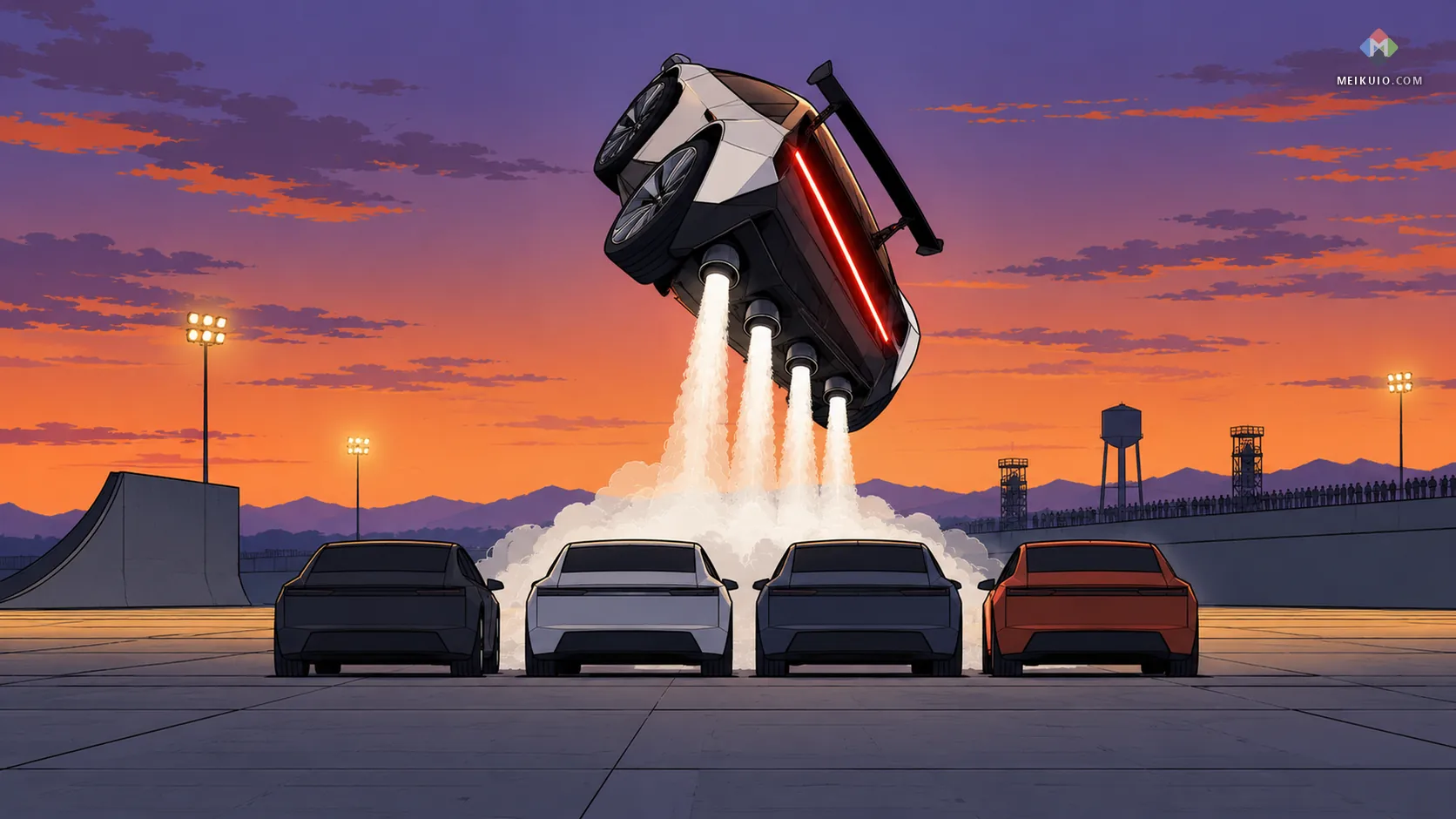
Tesla revealed the second-generation Tesla Roadster on the evening of October 15, 2026, at SpaceX’s rocket test and development center in McGregor, Texas, where design chief Franz von Holzhausen opened the show. The car drove up a curved wall until it hung upside down, let go, fired its thrusters and landed on its wheels. Later it rose over a row of parked Teslas and flipped. Nobody was driving it.
“Success is not certain, but excitement is.”
As the livestream started, Elon Musk posted on X.
Musk confirmed that nobody was driving. The demo car, he told the crowd, “is technically autonomous for this demo to make sure we don’t kill anyone.” When the car came back from a stunt with a figure in the seat, a voice on stage added: “just to be clear that is not a real human.” It was a Starman dummy, the character SpaceX strapped into Musk’s first-generation Roadster when it launched that car on a Falcon Heavy rocket in 2018.
The car that flew on October 15 had nobody inside it.
The ramp run produced the most specific height numbers so far, and none of them came from a Tesla document. A reporter for Paul Tan, a Malaysian car-news site, read the on-screen telemetry: on the curved wall, the car reached a pitch of 170 degrees, nearly upside down, about 21 metres off the ground, with a downforce readout of 4,700 kg. When the thrusters braked the drop, the G-force readout jumped to 3.3 G at about 6.5 metres off the ground. Tesla Oracle, a Tesla news site, read the same counters as roughly 68 feet and 3.2 G. The two readings agree, since 21 metres is about 69 feet. Those numbers describe the ramp stunt. I found no measured height for the hop over the parked cars, and no Tesla document gives a flight height, distance or time.
The second stunt sent the car over a lineup of Tesla vehicles that MotorTrend and TechCrunch listed as a Semi, a Model 3, a Cybercab, a Cybertruck and a Model Y. The Cybercab is the steering-wheel-free car behind Tesla’s robotaxi plans, and it was parked as a prop. Sawyer Merritt, a Tesla investor who watched in person, posted on X: “That was the most insane product demo I’ve ever seen,” Reuters reported.
More Read

Then came the acceleration runs. Car and Driver reported the first run to 60 mph at “a claimed one second” and a second at “a claimed 0.8 second.” The stage timer read 0.81. Just before that, a speaker explained: “We didn’t have a whole lot of room out on the pad, so we had to cut it short.” Hours later Tesla posted “0-60 mph in 0.81 seconds,” then a second number: “0.67 seconds (w/ rollout subtracted).” Rollout is the first foot of travel that US magazines often drop from 0-60 times, so 0.81 is the stricter figure. Musk said the production car “will actually do better than that.” That’s a promise about a car Tesla says it will start building in 2028.
So far the evidence is a dummy in the seat, a pad too short for a full run and Tesla’s own timer.
What are the three Tesla Roadster versions?
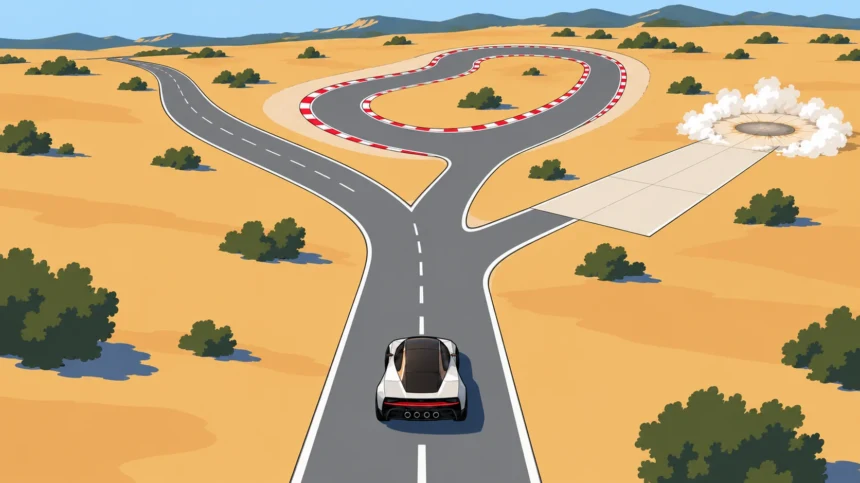
The second-generation Tesla Roadster is an electric sports car that Tesla first showed in 2017 and now plans to start building in 2028. Tesla sells it as three versions and labels them itself. On the US page, Performance is “Road ready with seating for two.” Thrust is “Race ready with seating for two.” Rocket is “Air ready with seating for one.” Tesla calls Thrust and Rocket “Augments,” and the reservation page stacks them like a ladder: Thrust “Includes Performance active aero and a multi-mode suction system, plus acceleration thrusters,” and Rocket “Includes Performance and Thrust, plus a full flight system.”
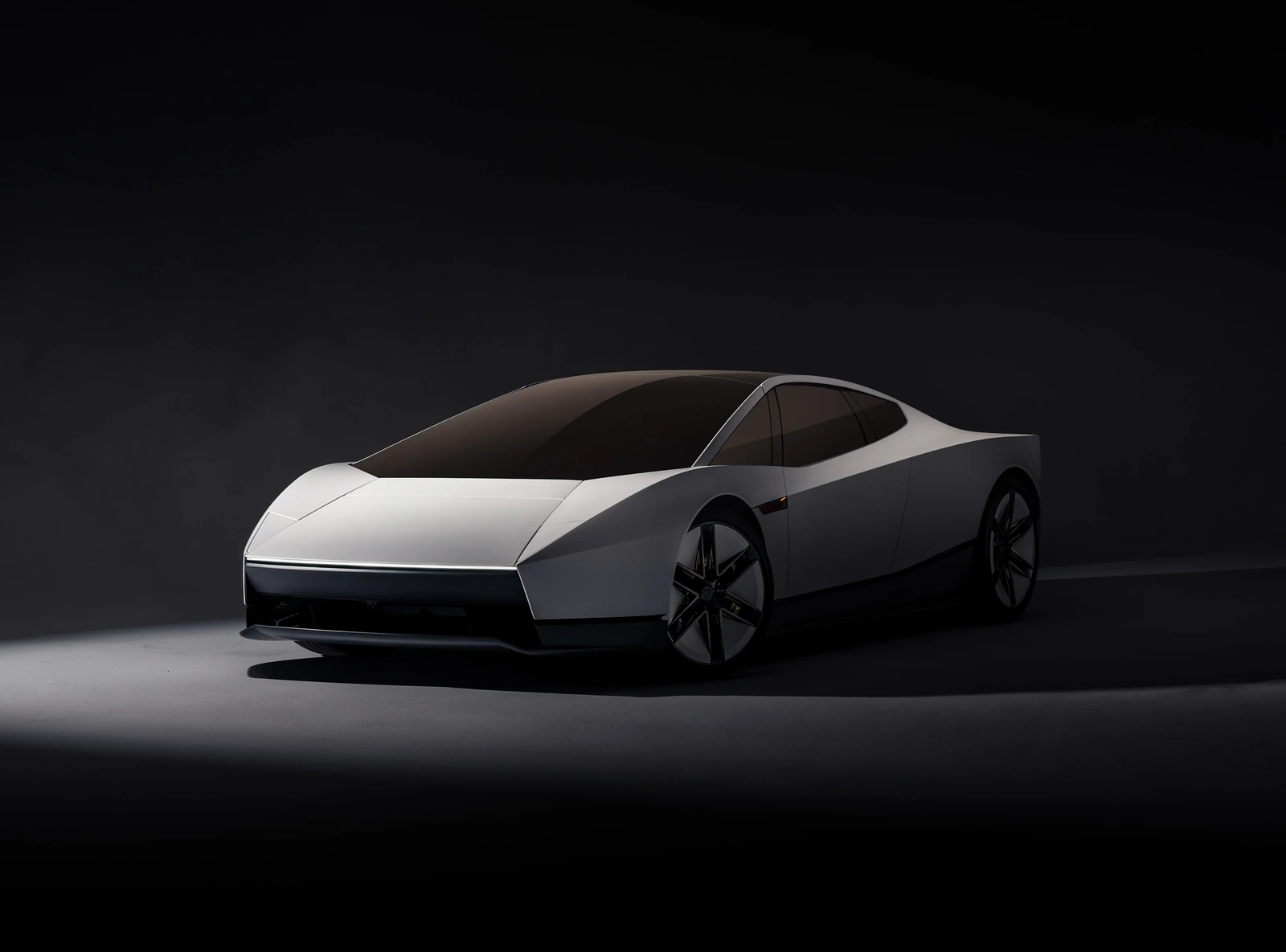
Read the cards closely and the ladder gets sharper. Performance gets “active aerodynamics and a multi-mode suction system.” Thrust adds “cold-gas thrusters in the rear of the vehicle that propel Roadster from 0-60 in under 1 second.” Rocket adds thrusters “around the perimeter of the vehicle” for “forward and upward acceleration as well as lateral rotational movement,” and its card ends: “So yes, it can fly.” The next line on the page is “Note: Not approved for public road use.” It sits directly under the Rocket card.
Two footnotes do more work than the cards. Footnote 1, “Available with the Rocket trim only, which is not available in all regions,” hangs on the paragraph that says the suction system can “hold the vehicle upside down, even when stationary,” and on the thruster paragraph that ends “This helps stabilize the vehicle in flight.” On Tesla’s own page, then, the upside-down trick is a Rocket feature. A second footnote says the page’s features and specifications “are reflective of our Thrust augment only.” The two footnotes pull against each other: one says the page describes Thrust, the other marks two of its features as Rocket only.
The per-version numbers came later, in a Tesla post on X: 0-60 mph in under 1.6 seconds for Performance, under 0.9 for Thrust and under 0.59 for Rocket, a range of over 300 miles, and “Top speed up to >230mph (Rocket).” That last line ties the top speed to Rocket, and on stage a speaker said the car can go over 230 miles per hour. The other two versions get no top speed at all.
One translation shows how Tesla thinks about the top version. The Portuguese page calls Rocket’s extra hardware “sistema de aceleração máxima,” a maximum-acceleration system, where the English reservation page says “full flight system.”
Three versions. One flies. That one can’t use the road.
Can the Tesla Roadster really fly?
Yes, for seconds, and only the Rocket version, the one Tesla sells by invitation and marks as not approved for public roads. On stage Musk said it has “main thrusters in the rear. So it can basically fly like a rocket,” and that “it could do rolls.” Thrust carries rear thrusters too, but its card sells them for 0-60. Only Rocket’s card says “it can fly.”
How long can the Tesla Roadster fly? Tesla hasn’t published a flight time or a height. Here is what “fly” meant on October 15. The car climbed a curved wall and let go at the top. Its thrusters slowed the fall and set it down. In the second stunt it lifted over a line of parked cars and flipped. Tesla Oracle put the flip at about three seconds. The only height numbers, about 21 metres, came from on-screen counters during the wall stunt, not from free flight.
How do the Roadster’s cold-gas thrusters work?
A cold-gas thruster is a nozzle that releases gas stored under very high pressure. Nothing burns. The push comes from the gas leaving fast, the way a balloon shoots across a room when you let it go. Tesla’s version stores air, not rocket fuel.
Lars Moravy, Tesla’s vice president of vehicle engineering, laid out the hardware on stage. The air sits in carbon-overwrapped pressure vessels, the composite tanks SpaceX uses on its rockets: “There’s two of them in the car. They are a total of 600 L. There’s about 250 kilos of air.” He added that “we have 10 nozzles.” Tesla also said on stage that “the car can recharge its air tank,” so an owner wouldn’t buy propellant. A Tesla post on X describes more than two: “Every usable void in the car is packed with Carbon Fiber Overwrapped Pressure Vessels (COPVs).” Nothing Tesla has published squares that with Moravy’s count.
Musk floated all of this in 2018. On Twitter he promised a “SpaceX option package” with “~10 small rocket thrusters arranged seamlessly around car,” and in a follow-up quoted by Fortune he wrote that the gas “would be ultra high pressure air in a SpaceX rocket COPV bottle.” Eight years later, the nozzle count and the gas match.
Tesla didn’t give the tank pressure. MotorTrend read “up to 10,000 psi” off a display at the event. Moravy’s own numbers point lower. A standard property model for air puts 250 kg in 600 litres at 25 °C at about 450 bar, roughly 6,500 psi. At 10,000 psi the same tanks would hold about 315 kg.
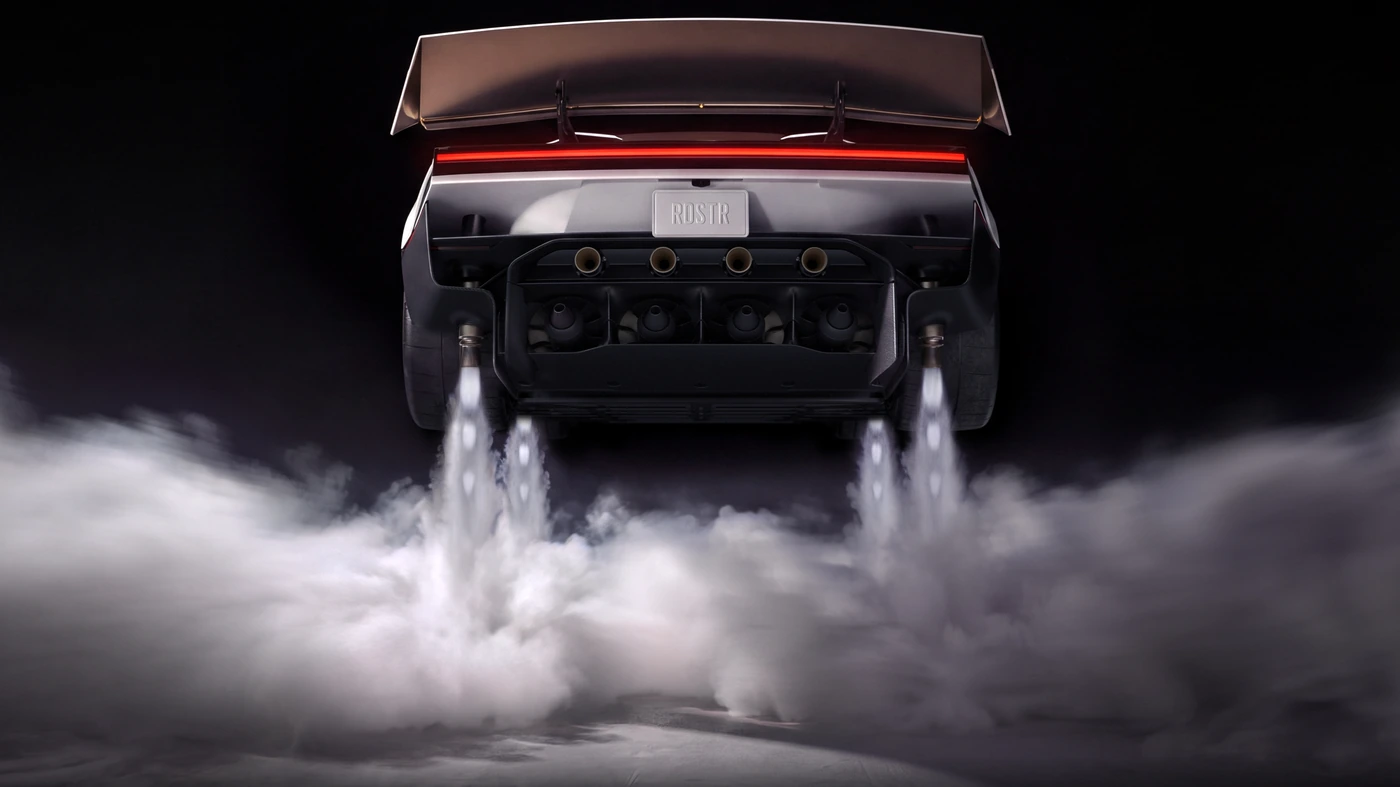
The four rear thrusters move the 0-60 time. A Tesla speaker said on stage that they produce over 80 kilonewtons of thrust (the auto-captions garble the unit), and Car and Driver reported the same figure. Tesla’s post on X says the thruster system “generates 4–5x the force the tires can.”
Work through Tesla’s own stage numbers and the air runs out fast. Even with a perfect nozzle, 250 kg of air pushing at 80 kilonewtons lasts about 2.2 seconds. Real nozzles do worse. The four rear thrusters get about two seconds of full push, at most.
That limit is for full power, so it doesn’t rule out the three-second flip. Eighty kilonewtons would hold up about eight tonnes, and a sports car weighs a fraction of that, so a gentler burn lasts longer. Without the car’s weight, I can’t say how much longer.
How I got these two numbers
The 6,500 psi and the two seconds are my calculations from Tesla’s stage figures, not numbers Tesla published. Pressure: 250 kg of air in 600 litres at 25 °C, using a real-gas model for air; 230 to 270 kg and 15 to 35 °C give 5,400 to 7,800 psi. Time: total push equals the mass of air times the speed it leaves at, and air expanding from that pressure to sea level can’t leave faster than about 700 metres per second. More than 80 kilonewtons of thrust means fewer seconds, not more.
How does the Roadster hang upside down?
Tesla’s page answers in one sentence: “Our multi-mode fan and ground sealing system acts as a downforce generator, pulling air out from beneath the vehicle.” Fans pull air out of a sealed space under the floor, and air pressure on the rest of the car pushes it onto whatever surface it’s on. Pull hard enough and that surface can be upside down.
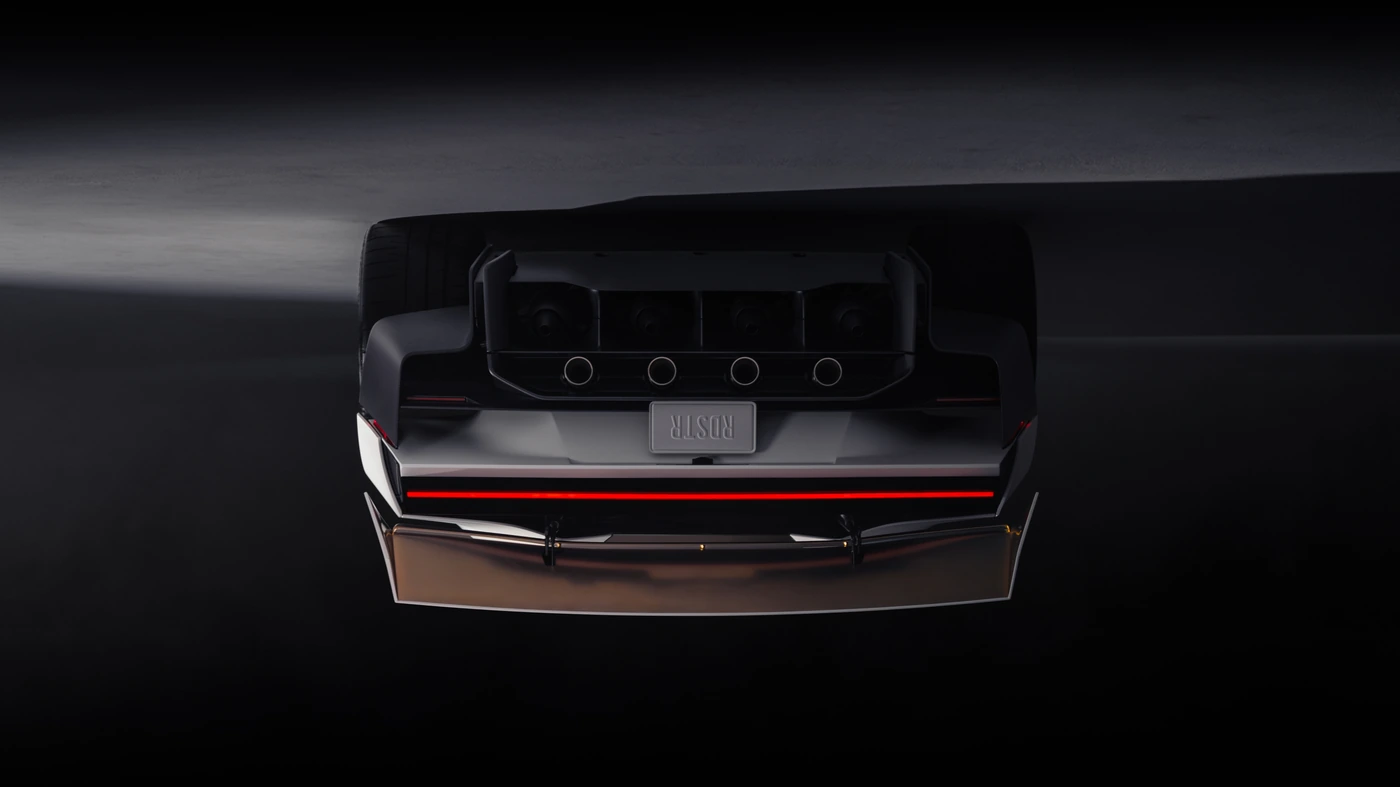
On stage Moravy said the fan system “can pull up to 2 G’s,” enough to hold twice the car’s own weight. Another speaker set it against the tires: the fans let the car “corner at greater than 2gs,” while tire grip “is typically 1.26 gs.” The car has a high-downforce mode and a low-drag mode for the track, and Tesla’s page says the powered fans reach “massive downforce at zero speed.” The rear wing borrows from Tesla’s robot program: a Tesla post on X says its “wing actuation” is “driven by the @Tesla_Optimus actuator system.” On the US page, though, the upside-down hold carries footnote 1. Rocket only.
The idea has a paper trail at Tesla. Patent US 12,377,920 B1, “Adaptive vehicle aerodynamics for downforce,” granted to Tesla on August 5, 2025, claims fans plus skirts that “selectively operatively couple with a ground surface” to seal the space under the car. Patent US 12,746,987 B1, “Electric Fan Car,” published September 29, 2026, claims electric ducted fans that draw air through an inlet on the underbody and push it out the back. Neither patent mentions thrusters or names the Roadster.
Tesla didn’t invent the fan car, and it isn’t the first to drive one upside down. Jim Hall’s Chaparral 2J used fans to suck itself to the track in 1970 and was banned after that season. Brabham’s BT46B won the 1978 Swedish Grand Prix in its only race and was withdrawn. In April 2025 the McMurtry Spéirling drove a few feet upside down on a rotating rig in England, held up by its own fans. Tesla’s run was bigger. It wasn’t first.
Is the Tesla Roadster street legal?
Tesla hasn’t said that any Roadster version is approved for public roads, and its page says Rocket isn’t. I read the Roadster page, the reservation page and the reservation agreement in full. None of them mentions the federal road-safety regulator NHTSA, a federal safety standard, an exemption or any approval. Musk’s own answer on stage was a hedge: “I’m not sure it’s necessarily legal in all jurisdictions.” He followed it with “there will be such a car that … someone can own.” Minutes earlier he had called it “not necessarily a safety-optimized car,” in Wired’s rendering of the line. A safety regulator would read that sentence twice.
Musk told the crowd he isn’t sure the Roadster is legal in all jurisdictions.
Who decides whether the Roadster can use US roads?
In the US, no agency signs off on a new car’s safety in advance. Federal law defines a “motor vehicle” as “a vehicle driven or drawn by mechanical power and manufactured primarily for use on public streets, roads, and highways” (49 U.S.C. 30102). A maker may sell one only if the vehicle meets every applicable Federal Motor Vehicle Safety Standard and the maker certifies that it does (49 U.S.C. 30112). The manufacturer self-certifies, and NHTSA enforces the standards afterward. NHTSA restated that rule the day after the reveal, in a statement to CBS News: “While the vehicle may appear to defy the laws of physics, the manufacturer must ensure that it does not defy applicable Federal Motor Vehicle Safety Standards and drivers must obey all local traffic laws.”
So for the Performance version, road legality is Tesla’s claim to make. Tesla hasn’t made it. “Road ready” is a label on a web page, and a certification would be a separate document that Tesla hasn’t named.
A car that misses a standard can still be sold through an NHTSA exemption, with a hard cap. Under 49 CFR 555.6, three of the four routes allow “not more than 2,500 exempted vehicles” in any 12-month period. The fourth, economic hardship, is open only to makers that built no more than 10,000 vehicles in their latest year. Tesla builds far more than that.
Tesla has been down this road before, with its first Roadster. In January 2008 NHTSA granted Tesla Motors a three-year exemption from the advanced air bag requirements on economic-hardship grounds. In September 2011 it renewed that exemption and added a short one from the electronic stability control standard, on the low-emission-vehicle basis. Tesla was a small carmaker then. The hardship door is closed to it now.
Is the Thrust version a track-only car?
Tesla’s page doesn’t say. It calls Thrust “Race ready,” and that’s all. NHTSA has explained for decades what makes something a car. A 1981 interpretation letter says “a professional race car or show car that was built and is used solely for off-road purposes is not considered to be a motor vehicle.” A 1987 letter adds the catch: if a vehicle is “readily usable on the public roads” and “in fact used on the public roads by a substantial number of the vehicle’s owners,” it’s a motor vehicle, whatever the maker says it’s for.
A “Race ready” label settles nothing. How Tesla sells Thrust, and how owners use it, would. The makers of the best-known track-only cars state the road status in plain words. McLaren’s page for the Senna GTR says the car “was liberated from road and motorsports regulations,” and “Just 75 were built.” Aston Martin launched the Valkyrie AMR Pro in 2021 as a car “unconstrained by racing regulations or registration for road use.” Ferrari calls its XX programme cars “not homologated for the road.” Tesla’s word for Thrust is “Race ready,” which says how the car should feel and nothing about where you may drive it. Until Tesla puts a road status in writing, I’d plan on a trailer to get a Thrust to the track.
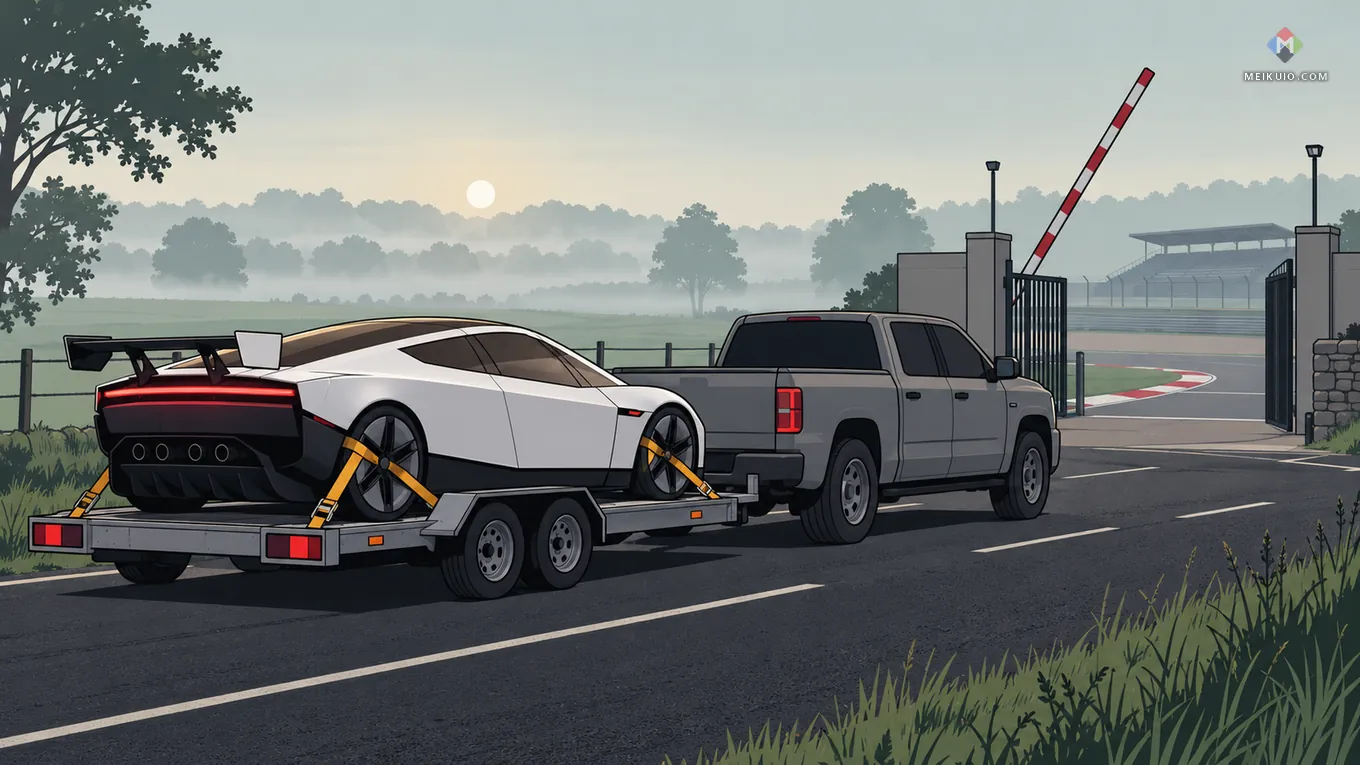
Before the reveal, the tech news site The Information reported that a limited-edition model “reportedly won’t be street legal,” as InsideEVs relayed it. That’s a report, not a document, and the relay doesn’t name the version. Thrust is the one Tesla labels “Limited Release.” Business Insider also quoted Musk saying “Depends on your street” in answer to a street-legal question. In Tesla’s own video that exchange starts with someone asking about top speed, and no legality question is audible, so I don’t treat the line as his answer.
Does the FAA treat the flying Roadster as an aircraft?
Not the car Tesla showed on October 15, the FAA says. The day after the reveal the agency told CBS News, “The Tesla vehicle does not meet the FAA definition of an aircraft,” and gave POLITICO a near-identical statement. It didn’t explain why, and POLITICO reported that the FAA didn’t answer a follow-up question about its jurisdiction over the airspace.
I can’t square that answer with the FAA’s own rule book, and the agency hasn’t said what it rests on. The FAA defines an aircraft as “a device that is used or intended to be used for flight in the air” (14 CFR 1.1), and Tesla’s page says Rocket “can fly.” The one category that needs no pilot certificate, no airworthiness certificate and no registration is the ultralight under Part 103 (14 CFR 103.7), the rule behind the eVTOLs you can buy without FAA certification, small electric aircraft that take off and land vertically. Part 103 allows one occupant, recreation or sport only, and for a powered machine an empty weight under 254 pounds, about 115 kg. No Tesla document gives Rocket’s weight, and I can’t see a car with a battery good for over 300 miles, motors and 600 litres of carbon tanks coming in under 115 kg, even before the air goes in.
If the FAA ever does treat Rocket as an aircraft, it falls outside Part 103 and those waivers fall away. The pilot needs a pilot certificate (14 CFR 61.3), and the aircraft needs an airworthiness certificate, the FAA’s sign-off that it’s fit to fly, and a registration certificate on board before anyone flies it (14 CFR 91.203). The demo car flew itself with nobody inside, and Tesla hasn’t said how an owner’s Rocket would be flown. Even beginner drones live under FAA rules, and people who fly to space go up under an FAA license for crewed launches. Tesla hasn’t shown any FAA paperwork for Rocket. The aviation experts Wired interviewed on reveal night, before the FAA spoke, read the rules the other way. Scott Miller, an airline pilot who lectures in San José State University’s aviation program, said the FAA “has jurisdiction over any machine that leaves the surface of the earth,” and that launching from a road would also run into state and local rules. Michael McCormick, a former FAA official who now runs Embry-Riddle’s air traffic management program, said certifying such a vehicle could take “at least a year.” Who oversees the flying part is still open: a senior Transportation Department official told CBS News there’s no clear answer. The FAA did put a temporary flight restriction, a no-fly zone for other aircraft, over the McGregor site during Tesla’s tests, MotorTrend reported: 1.5 nautical miles around, up to 10,000 feet, from September 18 to October 2.
Note
This section quotes US federal rules and Tesla’s own documents. It’s a reading of public text, not legal advice, and it doesn’t cover state registration rules or other countries.
How much is the Tesla Roadster?
Tesla hasn’t published a price for any Roadster version. It publishes a reservation: $5,000 today plus $45,000 within 10 days for Performance, $5,000 plus $245,000 for Thrust, and no amount at all for Rocket, which is “Invite Only.” Neither the page nor the agreement says who gets an invitation or how. The Thrust reservation is “restricted to one order per customer.”
The agreement says the price comes last. Clause 2 reads: “The estimated Purchase Price of the vehicle, if provided, is only an estimate. We are still working on what options, features and hardware the vehicle will have.” Clause 3 says that “As production nears,” Tesla will invite you to configure the car, and a final Purchase Agreement will set “your final vehicle configuration and Purchase Price.” If you go ahead, your reservation money counts toward that price.
The $200,000 you’ll see everywhere is a 2017 number. Tesla’s 2017 page listed “Base Price $200,000” and “Founders Series Price $250,000.” Tesla took both prices off its page between November 13 and December 12, 2021, TeslaNorth reported, citing Electrek’s check of archived copies. On October 16 the top Google result for “tesla roadster price” still showed $200,000 to $250,000. That figure has had no Tesla page behind it for almost five years.
Analysts had a number of their own. Before the reveal, a Yahoo Finance piece cited Visible Alpha, a service that compiles analysts’ forecasts: their consensus put average revenue per Roadster in 2027 at about $180,000. That’s a forecast, not a quote from Tesla. So the honest Tesla Roadster price today is unknown, with a $50,000 entry ticket.
Tesla’s filings don’t fill the gap. Its Q2 2026 update, filed in July, listed the Roadster under Nevada as “Design development.” Its latest quarterly report shows $1.936 billion of customer deposits at June 30, 2026, across every product Tesla sells, with no Roadster line. Tesla took Roadster reservations again in September, after that quarter had closed.
Tesla’s prices also move after launch. Full Self-Driving is now a $99-a-month subscription that Tesla no longer sells outright, and Neuralink, another Musk company, hasn’t published a price for its implant either. A reservation buys a place in line. It doesn’t buy a number.
Is the Tesla Roadster deposit refundable?
Yes, all of it, up to the moment you finish configuring the car, which you can do only after Tesla invites you. That’s clause 5 of the agreement Tesla links from the checkout: “Until you complete your configuration of your vehicle after we invite you to do so, your Reservation may be cancelled at any time through your Tesla Account and for any reason, by either you or us, in which case you will receive a full refund of your Reservation Payment.” The refund goes back to the original form of payment.
The checkout labels only the first payment. “Due Today $5,000” carries the words “Fully refundable,” and the $45,000 or $245,000 “Due within 10 days” carries no label. The agreement covers both: clause 1 says the reservation takes effect only when Tesla receives “your full Reservation Payment, which includes the payment due within 10 days.” Miss the second payment and the checkout says the reservation is “subject to cancellation.” The page and the agreement leave one more checkout line, “Refunds for modifications will not be issued,” unexplained.
The agreement also has a new version, dated reveal day. The one Tesla links today is “Roadster Reservation Agreement (US v.20261015),” a version number that matches reveal day, though its file was created on October 11, 2026. An older Roadster agreement, a file created on December 9, 2021, still sits on Tesla’s servers. The refund promise used to run “Until you enter into the Motor Vehicle Purchase Agreement,” and the 2017 original said much the same. Now it runs until you finish configuring. The delivery clause used to say Tesla couldn’t guarantee “when your vehicle will actually be delivered.” Now it adds “or if it will be delivered.”
In the agreement dated reveal day, the refund deadline moved from the purchase agreement to the moment you finish configuring the car.
The rest of the agreement is plain about the money. Clause 6 says Tesla “will not hold your Reservation Payment separately or in an escrow or trust fund or pay any interest,” and you can’t transfer the reservation without Tesla’s written consent. Clause 8 limits your remedy to “reimbursement of your Reservation Payment.” Clause 10 sends disputes to a single arbitrator under the American Arbitration Association instead of a judge or jury, and rules out class actions, unless you opt out by letter within 30 days.
Clause 5 cuts both ways. The reservation may be cancelled “by either you or us,” for any reason, so Tesla can drop yours before configuration too, refund included. The Thrust checkout spells out one reason: Tesla may cancel “duplicate orders, multiple purchases using the same account or phone number, and orders sharing identical payment or address details.” If your original account is closed by refund time, Tesla “will issue the refund via check in the name of the Reservation holder only.” Read that last part if you planned to reserve for someone else.
Your $50,000 stays fully refundable until you finish configuring, and you can’t configure until Tesla invites you. The agreement sets no deadline for that step once the invitation arrives. The money earns nothing while it waits. The day you finish configuring, this agreement’s refund promise ends, and whatever comes next sits in an Order Agreement Tesla hasn’t published.
If Tesla never builds the car, these clauses point to one outcome: your reservation payment back, and nothing more. Clause 4 allows for that case, and clause 8 limits your remedy to the refund. That holds under this agreement; once you configure, the unpublished Order Agreement takes over. While you wait, the money isn’t set aside for you. Without an escrow or trust fund, it sits with the rest of Tesla’s cash.
What does a Roadster reservation cost outside the US?
The same reservation costs a British buyer about $23,000 more than a Japanese one. On October 16 I checked 49 markets outside the US, through 59 country and language versions of Tesla’s site. The Roadster page opened in all of them except mainland China’s, which Tesla runs on a separate site I didn’t check. Counting the US, 44 markets took online reservations at stated amounts, Puerto Rico among them. Australia and New Zealand show the car but send the reservation address back to the Roadster page. Chile, Colombia and Turkey have no reservation page at all.
The euro countries, the UK and Switzerland charge the same digits as the US, 5,000 now and 45,000 later, in their own currency. At European Central Bank reference rates for October 15, £50,000 is about $66,233, CHF 50,000 about $60,226 and €50,000 about $56,040. Japan asks ¥6,820,000, about $43,171, the lowest in dollar terms. India asks ₹50,06,000, about $52,663, with ₹5.01 lakh up front (a lakh is 100,000 rupees). A UK Thrust reservation, £250,000, comes to about $331,167 against $250,000 in the US.
Elsewhere Tesla sets local amounts instead of copying the US digits. A Tesla Roadster reservation in Canada is C$70,000, about $49,272. Mexico asks 964,000 pesos (about $52,046), the UAE AED 210,000 (about $57,182), South Korea ₩70,600,000 (about $52,456) and Singapore S$70,000 (about $54,563). Of the 43 markets I could convert (the ECB publishes no Taiwan dollar rate), 37 land between about $49,000 and $57,500. Japan sits below that band. The UK, Switzerland, Iceland, Norway and Qatar sit above it.
Tesla’s pages for ten markets add a sentence the US page lacks: “Available as a Left-Hand Drive vehicle only.” They’re the UK, Ireland, Australia, New Zealand, India, Japan, Singapore, Malaysia, Thailand and Hong Kong, and all ten drive on the left. Australia and New Zealand carry the line even though neither takes reservations online. Japan’s version reads 「左ハンドル仕様車のみ購入可能です」. No page I read for a right-hand-traffic country carries the line. In a left-driving country, a left-hand-drive car puts the driver at the curb, away from the center line, which makes overtaking on a two-lane road harder to judge.
The units shift too. The UK page keeps “0-60.” Every other English page outside the US says “0-100,” in kilometres per hour, and Japan writes 「0~100」. Since 100 km/h is 62.1 mph, those pages claim a slightly longer sprint in the same time. Japan’s page also drops the US page’s “upside down” wording from the suction paragraph.
Two countries add warnings of their own. South Korea’s page says the images “are staged for advertising and do not show the actual vehicle’s function or performance” (my translation of 「본 이미지는 광고를 위해 연출된 것으로, 실제 차량의 기능 또는 성능을 나타내는 것은 아닙니다」). Taiwan’s page says delivery depends on import rules, regulations and logistics.
Local reports match the pages. Paul Tan listed Malaysia’s amounts as RM21,000 up front, then RM182,000 or RM988,000 within 10 days, the same figures I found. Autocar India reported bookings at Rs 5 lakh. Its “₹1.25 Crore (Expected price)” is the site’s own estimate, not Tesla’s; a crore is 10 million rupees.
The refund terms in this article come from the US agreement. Other countries’ checkouts link their own versions, with files created a day later, on October 12, and I read only the US one clause by clause. If you reserve outside the US, read yours before you pay.
Tesla Roadster specs: what Tesla said, and who reported it
Tesla’s Roadster page prints one performance number: 0-60 “in under 1 second,” for Thrust. Every other figure came from the stage, a Tesla post on X or reporters at the event. The table says which, because the sources sometimes disagree.
Speakers on stage described the cabin: “It’s a two-seater,” the seats “are molded into the chassis,” and the controls are steer-by-wire, including the brake and throttle. Tesla’s X post gave the range, over 300 miles, and the per-version 0-60 times. Musk gave his top-speed hope in Mach numbers, for no version in particular: crack halfway to the speed of sound, Mach 0.5, “maybe a little higher.” At sea level that’s about 380 mph. Tesla’s post actually prints over 230 mph, for Rocket.
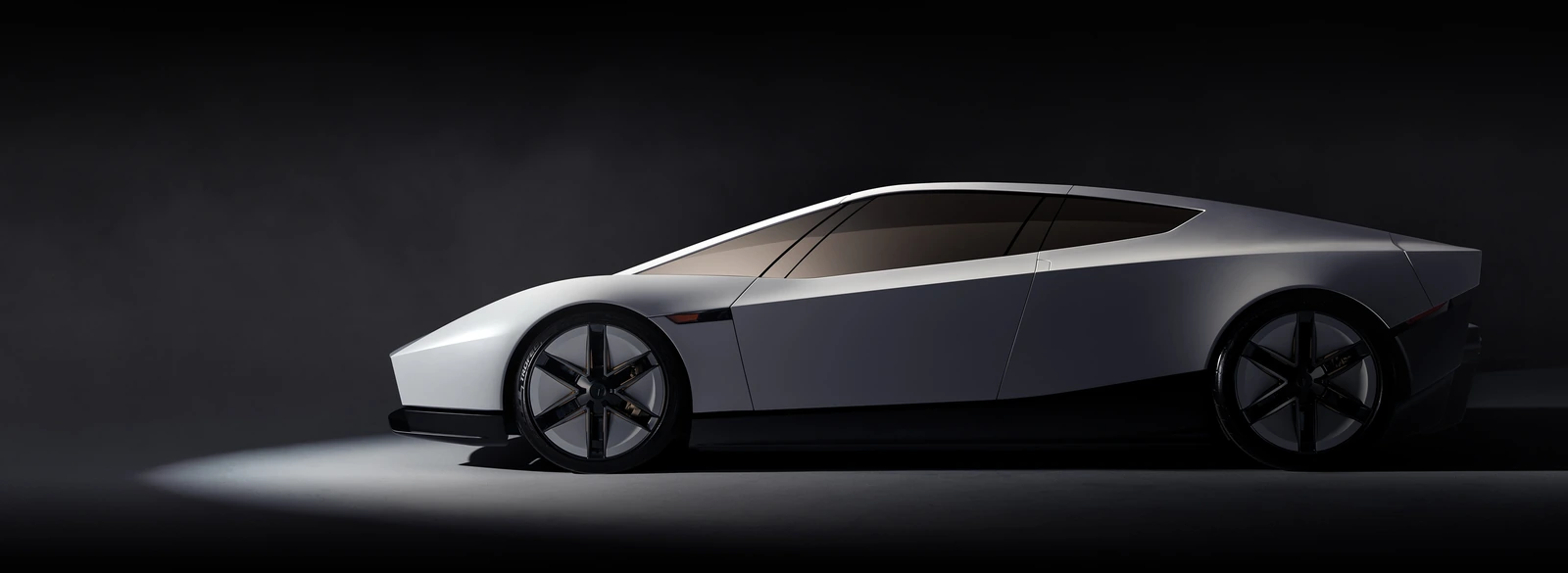
The press didn’t line up behind one number. MotorTrend’s first look reported Musk’s top-speed target at roughly 380 mph, while MotorTrend’s own model page says 330. MotorTrend also reported two rear motors and more than 1,500 hp from displays at the event. Tesla’s page and posts give no weight, no battery size, no flight time and no price.
Set Tesla’s 2017 Roadster page beside the 2026 one and almost every headline number moved. Acceleration got better: the base car’s 0-60 went from 1.9 seconds to under 1.6. Nearly everything else got smaller or later. Seats went from four to two, and to one in Rocket. Promised range went from 620 miles to over 300. The published top speed went from “Over 250 mph” to over 230, for Rocket only, though Musk’s stated hope is higher. Production moved from 2020 to 2028. Half the range. No price.
Old numbers have origins too. The 1.9-second 0-60, 620-mile range and “Over 250 mph” came from Tesla’s own 2017 page. The 1.1-second time “with the SpaceX package” showed up on a sign beside a prototype at the Petersen Museum in Los Angeles in May 2021, and Musk confirmed it in a reply on Twitter. None of those numbers appears on Tesla’s page today. The new thruster times beat the 2021 one: under 0.9 seconds for Thrust and under 0.59 for Rocket.
When is the Tesla Roadster coming out?
Musk said on stage that production starts in 2028. Asked when customers would get it, he answered in words the captions render as “we entered production uh in 2028,” and someone added “Actually … for real.” Clause 4 of the agreement is less sure: Tesla “cannot guarantee when your vehicle will actually be delivered or if it will be delivered.”
Tesla first promised production for 2020, at the November 2017 reveal. Since then the year has moved seven times. In July 2020 Musk told investors that in “the next 12 to 18 months” Tesla would “have Cybertruck, Semi, Roadster, Full Self-Driving.” In January 2021 it slid to 2022, and in September 2021 to 2023. In May 2023 Musk hoped to finish the design by year end and build in 2024. In February 2024 the target became 2025. In November 2025 he set a demo for April 1, 2026, with production 12 to 18 months after it, and Electrek reported he said the April Fools’ date gave him “deniability.” On October 15 it became 2028.
The reveal slipped too. In March 2026 Musk posted “New Roadster unveil hopefully next month,” and in April he told investors, “We may be able to debut that in a month or so.” In September Tesla teased an October 1 event, then moved it to October 15, blaming “severe conditions predicted” around Waco, the closest big city to McGregor. The Tesla Roadster release date Tesla gives now is a production year. There’s still no delivery date.
Tesla’s own filing three months before the reveal still called it “Design development.” Six promised production years, 2020 through 2025, have come and gone. Tesla met none of them. I’d read 2028 the way Tesla’s lawyers wrote clause 4.
What happens to 2017 Roadster reservations?
Tesla’s 2026 agreement and Roadster page say nothing about them. I read both in full. In 2017 a standard reservation was $5,000 up front plus $45,000 within 10 days. A Founders Series reservation was the full $250,000 for one of “1,000 reservations available,” with $5,000 due immediately and $245,000 within 10 days, as TechCrunch reported at the time. Electrek called that money “a $250,000 loan given to Tesla for the last 8 years.”
Some holders took their money back, and the process was rocky. YouTube reviewer Marques Brownlee said the phone number the Tesla app gave him went to voicemail, and Tesla first confirmed only the $45,000; the $5,000 came about a week later, Carscoops reported. Writer Jerry Heasley showed The Wall Street Journal the refund of his $50,000 and now says, “I want it really bad now.” OpenAI’s Sam Altman complained on X in 2025 about cancelling, and Musk posted that the refund had come within 24 hours, Wired recounted.
Others are still waiting. Todd Haushalter, Evolution Gaming’s chief product officer, paid $250,000 for a Founders Series spot in 2017 and has no plan to ask for it back, the Journal reported. Electrek’s Fred Lambert wrote that he holds two Founders Series referral awards and has been waiting since. Musk said in November 2025 that Tesla would invite all Founders Series holders to the demo.
One YouTube reviewer at the event, Out of Spec, said on camera that 2017 deposits carry over to the new car. Tesla’s documents don’t say that. If you hold an old reservation, the terms you signed then still govern it. The 2017 agreement still on Tesla’s servers, a file created on the day of the 2017 reveal, reads: “Until you enter into a Purchase Agreement, your Reservation may be cancelled at any time, in which case you will receive a full refund of your Reservation Payment.” Whether an old reservation keeps the old $200,000 price is open too. A 2017 holder who asked Tesla whether the reservation “locked in the 200K price” posted on the Tesla Motors Club forum in January 2024: “The Tesla agent said they don’t know.” Get Tesla’s answer in writing before you count on a spot or a price.
Should you reserve a Tesla Roadster?
If you want the quickest road car Tesla has promised, Performance is the version most people can actually reserve, and the money is refundable until you finish configuring. You get a place in line, no price, no delivery promise and no interest on $50,000 until production starts in 2028 at the earliest. Carscoops worked out that Brownlee’s 2017 deposit, put into Tesla stock instead, would have been worth over $1 million by October 2025. That’s what waiting in this line can cost.
Not everyone who loved the show wants the flying part. John Carmack, Meta’s former virtual-reality CTO, posted that he’s “only going for the baseline model. At this point in my life, rocket bunny hops are out of my comfort zone.” Gene Munster of Deepwater Asset Management called the show “an engineering flex with no commercial value beyond embarrassing traditional car makers,” Reuters reported.
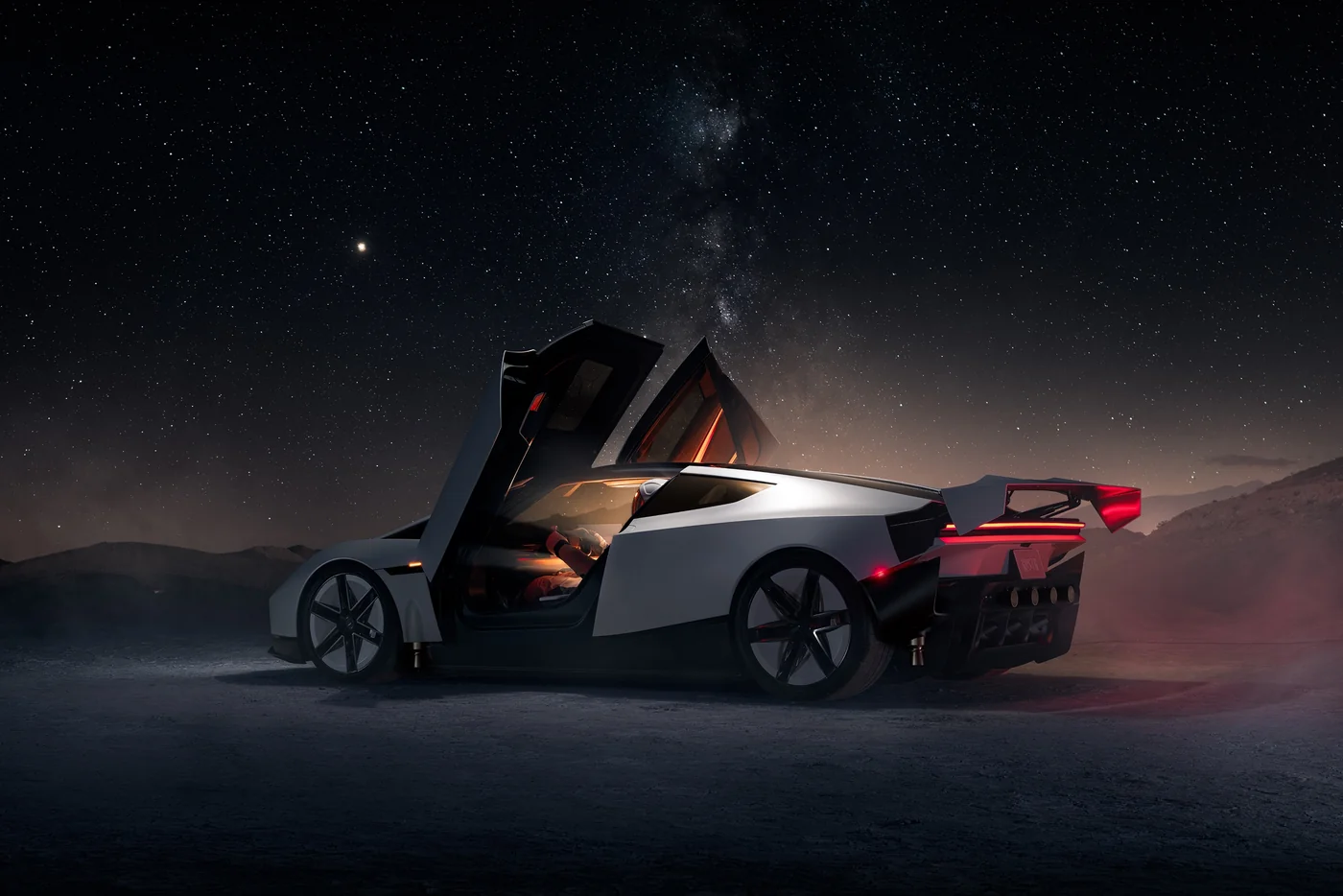
Thrust is a $250,000 reservation, one per customer, for a car whose road status Tesla hasn’t stated. Rocket you can’t reserve at all without an invitation. If you want to fly over traffic, you can book an air taxi today, on aircraft that already hold the paperwork Rocket lacks. And if you live in one of the ten left-driving markets, the only Tesla Roadster your local page describes puts the wheel on the curb side of your roads.
Keep the rest of Tesla’s queue in view, too. The same company is building the Cybercab for its robotaxi service and the Optimus line of humanoid robots. Reserve only money you can leave untouched until at least 2028. Watch for one email, the invitation to configure. Decide before you finish configuring. Finishing ends the full refund.
Field notes
- The agreement: Roadster Reservation Agreement US v.20261015, file created October 11, 2026; full refund until you complete configuration (the 2021 and 2017 versions said until the purchase agreement); delivery “or if it will be delivered” added; no escrow, no interest.
- The versions: Performance “Road ready,” Thrust “Race ready,” Rocket “Air ready”; only Rocket “can fly”; “Note: Not approved for public road use” sits under Rocket; the upside-down hold is footnoted Rocket only.
- The money: $5,000 plus $45,000 for Performance; $5,000 plus $245,000 for Thrust, one per customer; Rocket invite only, no amount; no price for any version.
- The physics: two composite tanks, 600 litres, about 250 kg of air, 10 nozzles, over 80 kilonewtons from the rear four (Tesla on stage); my calculations: about 6,500 psi and about two seconds of full rear thrust at most.
- The law: no approval, exemption or FAA document named in Tesla’s page or agreement; the FAA told CBS News “The Tesla vehicle does not meet the FAA definition of an aircraft”; most NHTSA exemptions capped at 2,500 vehicles a year; a race car used only off-road isn’t a motor vehicle under NHTSA’s 1981 reading.
- The countries: 44 markets, the US among them, take online reservations; left-hand drive only on the pages for ten left-driving markets; £50,000 is about $66,233 and ¥6,820,000 about $43,171 at October 15 rates.
- Sources: Tesla Roadster and reservation pages in the US and 59 other country and language versions (read October 16, 2026); Roadster Reservation Agreement, 2026, 2021 and 2017 versions; Tesla’s October 15 event video and posts on X; Tesla Q2 2026 update and 10-Q; 49 U.S.C. 30102 and 30112; 49 CFR 555.6; 14 CFR 1.1, 61.3, 103.1, 103.7 and 91.203; NHTSA interpretation letters of 1981 and 1987; Federal Register notices of 2008 and 2011; FAA and NHTSA statements to CBS News, October 16, 2026; US patents 12,377,920 and 12,746,987.
Frequently Asked Questions
Can the new Tesla Roadster actually fly?
Only the invite-only Rocket version, and only for seconds. At the October 15 demo it lifted, flipped and landed with nobody inside. Tesla says Rocket “can fly” but has published no flight time or height, and its page says Rocket isn’t approved for public roads.
How much does the new Tesla Roadster cost?
Tesla hasn’t set a price. You can reserve Performance for $50,000 or Thrust for $250,000, and Rocket is invite only. The agreement calls any price an estimate and says the final price comes in a purchase agreement as production nears.
Is the Tesla Roadster reservation deposit fully refundable?
Yes, the whole reservation payment, including the second payment due within 10 days, until you complete your configuration after Tesla invites you. That’s the cutoff in the agreement Tesla links today, dated reveal day; the 2021 and 2017 versions ran until the purchase agreement. Tesla pays no interest and holds no escrow.
Is the Tesla Roadster street legal in the US?
Tesla hasn’t said any version is. Its page says Rocket is “Not approved for public road use,” and Musk said he isn’t sure the car is legal in all jurisdictions. US carmakers self-certify, and Tesla’s documents name no certification, exemption or FAA status. The FAA told CBS News the car doesn’t meet its definition of an aircraft.
When will the Tesla Roadster be released to buyers?
Musk said on stage that production starts in 2028. The reservation agreement says Tesla can’t guarantee when the car will be delivered “or if it will be delivered.” Tesla first promised production for 2020 and has moved the date seven times.
How fast is the Tesla Roadster from 0 to 60?
Tesla’s post on X lists under 1.6 seconds for Performance, under 0.9 for Thrust and under 0.59 for Rocket. Its page prints only “under 1 second” for Thrust. At the October 15 demo the timer read 0.81 seconds, which Tesla later restated as 0.67 with rollout subtracted.
What is the Tesla Roadster’s range and top speed?
Tesla’s post gives a range of over 300 miles and “Top speed up to >230mph (Rocket).” Tesla gives no top speed for Performance or Thrust. The 2017 promise was 620 miles and over 250 mph, figures Tesla no longer shows.
What happened to 2017 Tesla Roadster reservations?
Tesla’s 2026 page and agreement don’t mention them. Some holders, including Marques Brownlee, got refunds after slow back-and-forth. Others, like Founders Series holder Todd Haushalter, are still waiting. Musk said Tesla would invite Founders holders to the demo.
Can you reserve a Tesla Roadster outside the US?
Yes, in 44 markets including the US and Puerto Rico, as of October 16. Tesla’s pages for ten left-driving markets, among them the UK, Japan and India, say it’s left-hand drive only. Two of those ten, Australia and New Zealand, show the car without an online reservation.
My Take
The Roadster that flew on October 15 was a stunt car with a dummy in the seat, and Tesla’s own paperwork says as much in smaller type. The flying version is invite-only and not approved for roads. The road version has no price, no delivery promise and, since reveal day, a shorter refund window. Tesla’s documents are more honest than the show.
If I had $50,000 parked in a Performance reservation, I’d leave it there only while it’s fully refundable, and I’d decide whether to stay before I finish configuring, because finishing is what ends the full refund. I wouldn’t send $245,000 for Thrust until Tesla puts a price and a road status in writing. And if you want a flying car, I wouldn’t reserve anything yet.