





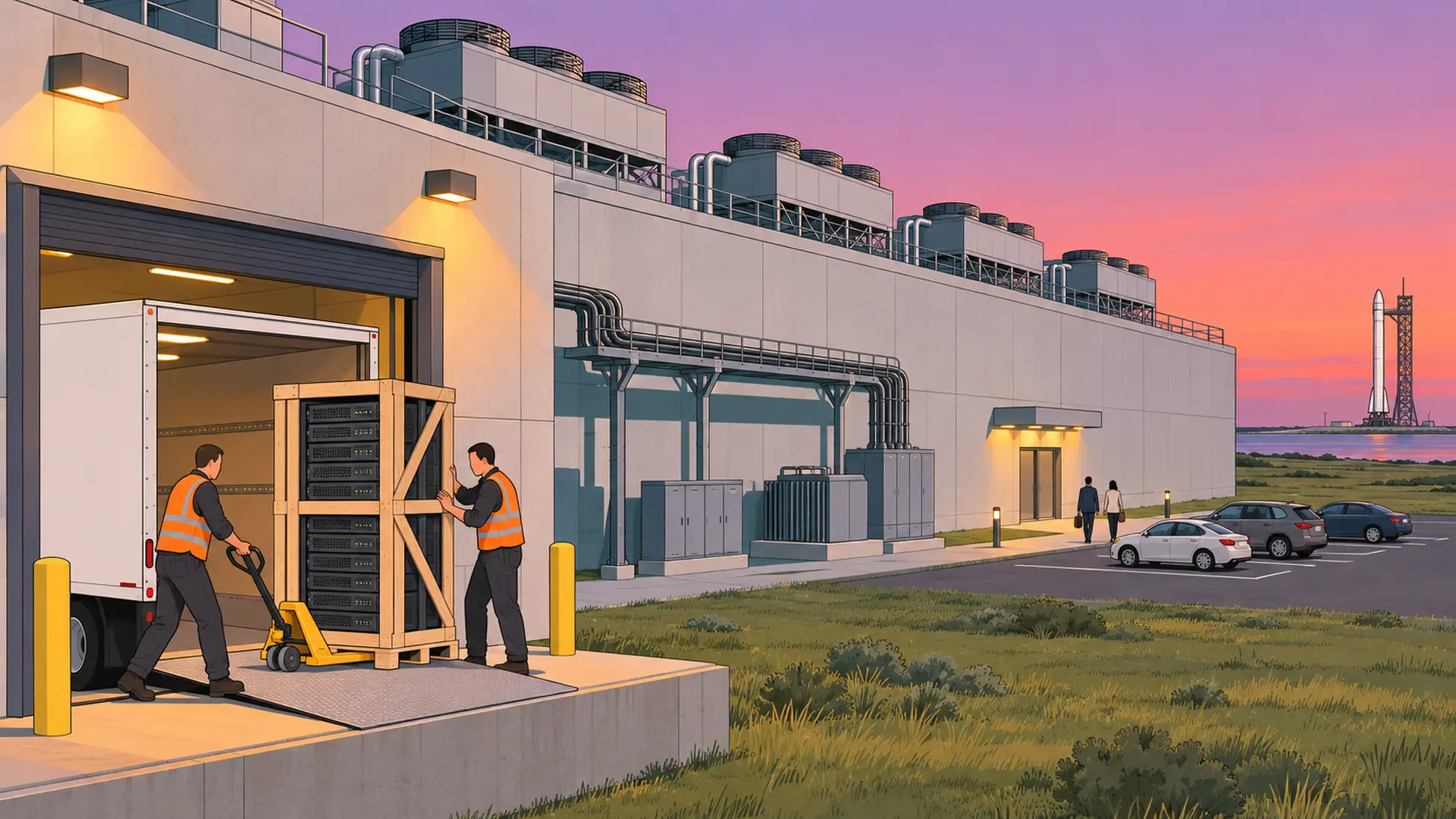
- Musk wrote on X on November 28 that Google "has expressed interest in renting more compute" from SpaceX, without giving a size, date or price.
- SpaceX's SEC filing shows Google pays $920 million a month for about 110,000 NVIDIA GPUs through June 2029, and either side can exit on 90 days' notice after December 31, 2026.
- In SpaceX's third-quarter 10-Q, one unnamed AI-segment customer paid 34.5% of $14.58 billion in revenue; Barron's and others report it's likely Anthropic.
On November 28, Elon Musk wrote on X that Google wants to rent more computing power from SpaceX. Google already pays SpaceX $920 million a month, and SpaceX’s own filing lets either side leave on 90 days’ notice once 2026 ends.
I read the filings behind that post. Musk’s reply is one sentence long. It gives no size, no date and no price, and Google and SpaceX didn’t answer Reuters when it asked. Here’s what the documents actually pin down, and why people who pay for Claude have a stake in this fight.
What did Musk say?
An X user guessed that Google could end up a bigger SpaceX customer than Anthropic. Musk answered: “Not sure who will buy more, but Google has expressed interest in renting more compute from us.”
About ten minutes later he added a line on prices. Large blocks of chips set up for training AI models are getting more expensive, “sometimes very significantly,” he wrote, while small rentals below about 5,000 GPUs are getting cheaper. “Overall, the average rental price per GPU for SpaceX compute is rising.”
Then came the jab at the big cloud companies, which the industry calls hyperscalers. “People have no idea what happens when a super capable hardware company enters an arena of slowpokes,” he wrote. “Hyposcalers would be a more accurate description.” He named no one.
What’s actually in the SpaceX contracts?
SpaceX rents out GPU capacity under two big deals. The Google one is spelled out in a document SpaceX filed with the SEC before its IPO. It covers about 110,000 NVIDIA GPUs at $920 million a month from October 2026 through June 2029. That’s 33 monthly payments, roughly $30 billion if neither side leaves.
More Read

The same filing has the line that matters most for Google’s “interest”: “After December 31, 2026, the agreement may be terminated by either party upon 90 days’ notice.” So a notice sent on January 1 could end the deal around April 1, 2027. Google could be out by spring.
The Anthropic deal came first, on May 6. SpaceX’s AI unit announced that Anthropic would get access to Colossus 1, its Memphis supercomputer with more than 220,000 NVIDIA GPUs. Anthropic’s monthly bill isn’t in the SEC text I read. The New York Times and others report about $3.1 billion a month once all the capacity is delivered.
What’s confirmed and what isn’t?
Confirmed by documents: the Google price, the GPU count, the exit clause and the Anthropic deal itself. Musk did write the three posts quoted above.
Only Musk says Google wants more, and only Musk says the average price per GPU is rising. He gave no numbers for either. No new filing or contract change has appeared.
Reported but unconfirmed: a SemiAnalysis note for institutional clients, as Benzinga and Wccftech described it, says Anthropic may not renew a cluster of about 50,000 H200 GPUs. The note says SpaceX cut spot prices for small Blackwell clusters from about $15 to $15.50 per GPU-hour to $10 to $12. Anthropic reportedly told analysts its SpaceX deal wouldn’t be extended past mid-2027. Musk’s price post reads like a direct reply: yes, small rentals got cheaper, but big training blocks cost more.
Why does SpaceX care so much?
Because its AI segment is now SpaceX’s biggest source of revenue. The 10-Q for the third quarter shows the line that holds cloud rentals, Grok and Cursor at $7.02 billion, up from $359 million a year earlier. Total revenue was $14.58 billion. One customer the filing doesn’t name, “Customer B,” paid 34.5% of it, about $5 billion by my math.
Customer B didn’t reach 10% of revenue in 2025. SpaceX also reports 1.7 gigawatts of installed GPU power, up from 0.6 a year before. That’s a lot of hardware to keep rented when Google, and reportedly Anthropic, can leave on 90 days’ notice next year. If you follow the chip side of this, our list of AI chip stocks sorts out which chipmakers actually belong in that trade. Small hardware makers feel the other end of the same build-out in the memory chip shortage.
What does this mean if you pay for Claude or Gemini?
Nothing changed on November 28. Neither Anthropic nor Google announced a new price, plan or usage limit.
Claude subscribers should still watch this one. SpaceX’s May 6 announcement said Anthropic would use Colossus 1 “to directly improve capacity for Claude Pro and Claude Max subscribers.” If part of that capacity goes away in 2027, the first sign would be in Anthropic’s usage-limit notes, not in a Musk post. Limits can tighten without any price change, as happened when ChatGPT’s limits started running out faster on GPT-6.2.
Three dates are worth a calendar note: January 1, 2027, when Google’s exit clause opens; around April 1, 2027, the earliest a notice could take effect; and mid-2027, the reported end of Anthropic’s deal. If you’re choosing between the two assistants meanwhile, my Claude vs Gemini test ran both through the same jobs, and our breakdown of who owns Anthropic shows who else has money riding on its compute.
My Take
“Expressed interest” costs nothing to post and binds no one. The contract that does bind Google has a 90-day exit starting in January, and that’s the clause I’d watch. Until Google or SpaceX files something new, treat Musk’s post as a sales pitch.