




- Waymo's November 19 recall 26E086 covers 4,488 driverless systems after 11 entries into closed freeway lanes since October 1, and its final remedy is still in development.
- California's DMV barred Waymo's driverless cars from state freeways from November 11, and Waymo paused freeway rides in all its US markets.
- The second recall, 26E087, follows a May 8 crash at an officer-controlled intersection; Waymo's software fix reached the fleet by November 6, before it filed.
Waymo’s November 19 recall filing for 4,488 robotaxis has one line that matters most: “Waymo is developing the final remedy for this recall.” There’s no fix yet. For now, the remedy is keeping the cars off freeways.
What happened
Waymo submitted two safety recall reports to the National Highway Traffic Safety Administration on November 19, and NHTSA released them on November 24. Both cover the same 4,488 fifth- and sixth-generation driving systems, which is every Waymo vehicle built to drive with nobody behind the wheel. Waymo owns all of them. So nobody gets a recall letter.
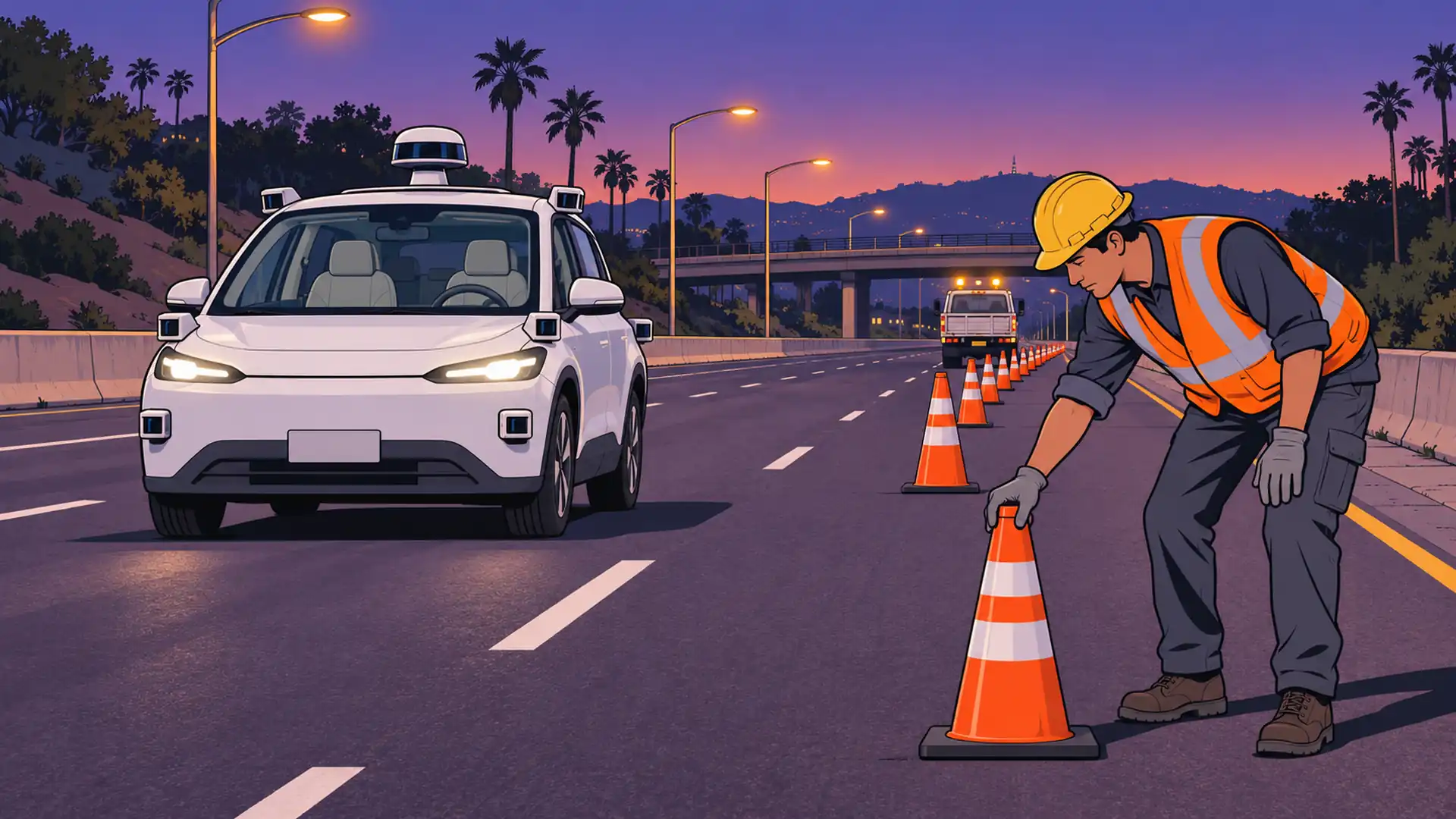
The first report, recall 26E086, says a Waymo “may enter and continue driving in a closed freeway lane.” Between October 1 and November 6, eight of its cars drove into freeway lanes closed by cones, highway patrol traffic breaks or construction vehicles. On November 6, Waymo narrowed where its cars were allowed to drive. Three days later, three more drove into a lane coned off for construction. The filing says none of these events caused a collision or an injury. Luck counts too.
The second report, recall 26E087, goes back to May 8. Officers were directing traffic at an intersection, one of them signaled a Waymo to stop, and it stopped at the line. Then cross-traffic hid the officer from the car. The car decided the intersection looked clear, pulled out, and collided with a vehicle that came out from behind a large obstruction. Waymo calls it the only known collision tied to this flaw.
The regulators moved before the paperwork did. California’s DMV barred Waymo’s driverless cars from state freeways from November 11, citing an “imminent hazard to public safety,” as the BBC reported. Waymo then paused freeway rides in every US market. That’s a dent in the lead we measured when we compared Waymo’s fleet with Tesla’s robotaxi effort.
What’s confirmed and what isn’t
The filings confirm the counts, the dates and the defect wording. Read the remedy section of 26E086 and the headlines start to look generous. It describes an “interim remedy” made of trip routing changes, dynamic map changes and “temporarily restricting planned commercial freeway trips.” So for now the recall works by keeping the cars away from the place where they fail. The software that misread the cones hasn’t been replaced.
More Read

The intersection recall runs the other way. Waymo built that update between May and July and pushed it to its driverless fleet between September 17 and November 6. The report reached NHTSA on November 19, which by our count is 195 days after the crash and 63 days after the fix started rolling out. That recall documents a defect already patched.
Nobody has confirmed a return date. Waymo says it’s working with state officials “diligently and responsibly to resume freeway operations.” The DMV order stands until Waymo “demonstrates to the department that it has taken effective corrective actions,” per the BBC. One more line of fine print: the DMV’s public page on Waymo’s approved operations, last updated October 22, still lists “All Speeds” and says nothing about the order.
Is this the first freeway recall this year?
No. In June, Waymo filed recall 26E035 for 3,871 fifth-generation systems. Its chronology lists one event on April 11 and five on April 19 in Phoenix, where cars drove past ramp-closure signs into planned freeway construction zones, and seven cars entering active construction lanes in the Bay Area on May 18. The remedy then was “software improvements to avoid entering a construction zone.” Freeway rides came back from late July, The Verge reported. The November filing names 26E035 as its related recall.
Add up every event in the June and November filings and you get 24 Waymo entries into closed or construction freeway lanes this year. Most reports quote 11, the November count. Over the same months, the number of systems covered grew from 3,871 to 4,488, which is 617 more cars, about 16%. The June fix was supposed to end this. It didn’t.
Who is affected
Riders, mostly. Waymo runs driverless rides in 15 US cities, the BBC says, and offered freeway trips in only a handful of them, including San Francisco, Los Angeles and Miami. Those trips now stay on surface streets, and city service keeps running. A Waymo spokesperson put it at “over half a million trips each week,” The Verge reported.
Owners aren’t affected, because there aren’t any. Every recalled system sits in a car Waymo owns, so there’s no notice to watch for and no dealer visit. If you drive a freeway in a Waymo city, the change is simpler: there shouldn’t be a driverless Waymo in the lane next to you until the pause ends.
The timing is awkward for the rest of the industry. Other operators are taking the human out, too. Motional’s robotaxis on Uber in Las Vegas are set to lose their safety driver, and every one of those launches will now be read against Waymo’s freeway record. For scale, this one recall covers 4,488 driverless systems, while by our count only about 200 humanoid robots hold real jobs, mostly behind warehouse walls.
What should riders do now?
If you used Waymo for trips that ran on a freeway, plan for a longer route on city streets. No restart date has been announced, so don’t book anything tight around one. Longer cross-town trips are where you’ll notice it.
If you see a robotaxi do something dangerous, write down the time, place and direction of travel, and report it to NHTSA’s vehicle safety complaint service.
And if you drive with Tesla’s Full Self-Driving on the freeway, remember what the FSD subscription actually rents you: a supervised system, where you’re the one who has to spot the cones.
Why it matters
The recall system was built for cars a dealer can fix. Aviation works the other way round: an air taxi operator needs an FAA Part 135 certificate before it carries a paying passenger. Here the manufacturer owns every unit, writes the software and decides, through its own Safety Board, when a problem becomes a recall. On one day it filed two reports: one for a defect it had already patched, and one for a defect it still can’t patch. The number to watch is the follow-up filing with the final remedy for 26E086. Until it shows up, the freeway fix is a map.