

- Seekom found unauthorised access to its iBex booking platform on November 20 and began notifying affected guests on November 26.
- Some booking notes held passport or licence numbers and current card details. Seekom says it kept no images of ID documents.
- Fake WhatsApp messages quote real bookings. Call the property using its official website or your original confirmation.
Seekom has begun notifying guests whose details were taken from iBex, its booking system for holiday parks and motels, after a breach found November 20. It hasn’t said how many. Asked to pay for a stay? Call the property yourself.
What happened at Seekom?
Seekom’s update dated November 26 runs to four short paragraphs. The line that matters says the company has “now begun contacting individuals whose personal information was affected,” and that it’s working with online travel providers to reach them. There’s no count. No list of properties either.
Seekom is a Wellington company, and iBex is the software behind the booking pages of many New Zealand campgrounds, motels and holiday parks. Its November 25 update says an unknown party got in by “exploiting a security vulnerability in a legacy part of the application.” Seekom says it closed the hole and has seen no unauthorised activity since November 21. That’s the company’s account. The forensic work isn’t finished.
The scale is still a guess. Stuff reported, citing Seekom, that more than 1 million bookings went through its system between October 2025 and September 2026. That’s volume, not victims. Top 10 Holiday Parks chief executive David Ovendale told the NZ Herald that 15 of the group’s 52 parks use the affected system.
What guest information was taken?
Seekom’s list depends on the booking. The bulk of it is contact details, dates of birth and masked card numbers. The booking notes are the problem. For a small share of guests, a passport number, a driver licence number or a full card number ended up in a free-text field, and Seekom says that text may have been accessed too.
| Information | How many guests, per Seekom |
|---|---|
| Name | Depending on the booking |
| Home address | Depending on the booking |
| Email address | Depending on the booking |
| Phone number | Depending on the booking |
| Date of birth | Depending on the booking |
| Masked payment details | Depending on the booking |
| Passport or licence number typed in booking notes | A small proportion of guests. Seekom says on November 26 it stores no images of passports or driver licences. The numbers themselves are on the November 25 list. |
| Current card details typed in booking notes | A small proportion of guests |
| Stay-related requests in booking notes | A small proportion of guests |
Now read the November 26 update next to the November 25 one. The later notice says Seekom “does not store images of passports or driver licences,” so no digital copies of those documents were taken. Accurate, and narrow. The day before, Seekom put passport and licence numbers on the list of data that may sit in booking notes. No images. Possibly the numbers.
More Read

Exposure also differs by property. Kaipara District Council, which runs the Kai Iwi Lakes campground, says its guests’ records may include, in some cases, vehicle registration numbers. It doesn’t take card payments through Seekom, so it says no card data from its bookings was involved. The council pulled the booking platform from its website.
What do the fake WhatsApp booking messages say?
Stuff described the messages on November 23. They tell guests to confirm the booking within 24 hours or lose the room. They promise no charge will be taken and that any temporary authorisation will be released at once. Bland Bay Campground told the NZ Herald that guests were contacted from a number in Chile. Its spokesperson added the detail that gives the scam away: the campground doesn’t take payment until guests arrive.
Seekom’s FAQ says it “can’t know for sure” the messages come from this breach. It also says they appear to contain booking information managed through its platform, such as where the guest is staying. That’s the trap. The message knows your name, your dates and your campground. It still proves nothing about who sent it.
How do you check an unexpected payment request?
Seekom’s own guidance is blunt. Your accommodation provider or booking site won’t ask you on WhatsApp to pay or to hand over card details. Work from that line.
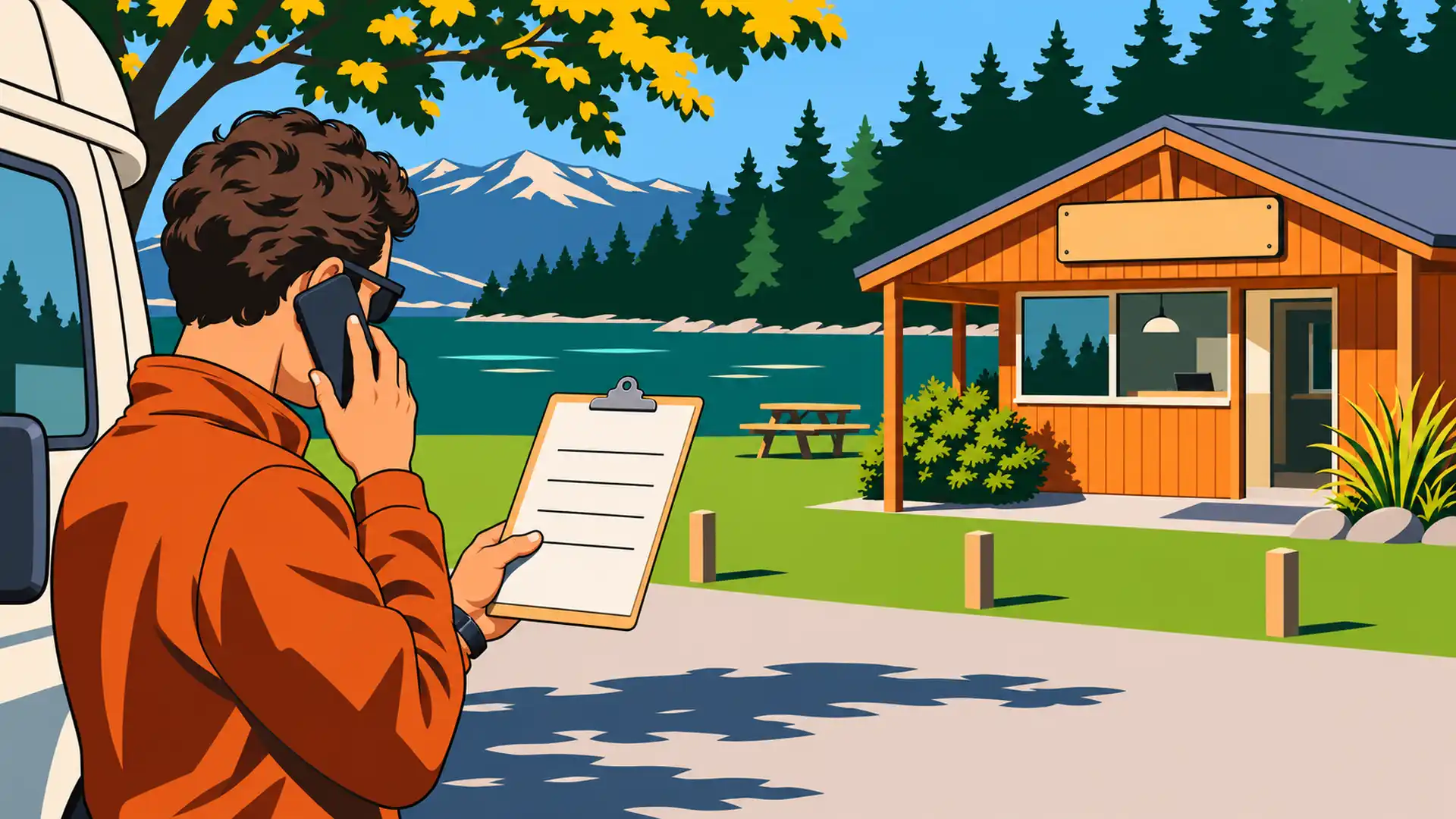
- Leave the link alone. Don’t pay, reply with card details or pass on a verification code, even when the message uses your real name and booking.
- Find the number yourself. Use the phone number on the property’s official website or on your original booking confirmation, never one supplied in the message. It’s the same call-back rule that stops a voice-cloning scam.
- Ask one question: is anything due on my booking? If you booked through a travel site, report the message to that site through its official support channel as well.
- Keep the evidence. Screenshot the message and the sender’s number, then report and block the account in WhatsApp. In New Zealand, report it to Netsafe. In Australia, use Scamwatch.
- Already typed in a card number or paid? Call your bank or card issuer now, on the number printed on your card. Then check your statements for charges you don’t recognise. A credit monitoring service watches for new accounts, not for card charges, so your statement is the first place to look.
- Gave a passport or licence number when you booked? IDCARE offers free help deciding whether to replace the document: 1800 595 160 in Australia, 0800 121 068 in New Zealand. Before paying for anything on top, read whether identity theft protection is worth it.
Why does one booking system reach so many guests?
Nobody books a holiday with Seekom. They book a lakeside campground or a motel, and the software underneath stays invisible until it leaks. Seekom also says a guest can show up in records held by more than one property, because many bookings arrive through online travel agents. Same shape as the TSI Holdings breach, where one customer-data platform exposed shoppers from five storefronts.
Keep separate stories separate. Flight Centre told the Australian Securities Exchange on November 26 that a third-party accommodation booking system it uses had been breached. Neither Flight Centre nor Seekom has linked the two, and Flight Centre hasn’t named its supplier. Seekom has notified New Zealand’s Office of the Privacy Commissioner and is working with the National Cyber Security Centre and NZ Police.
Your email address from this booking may already sit in older leaks too. A breach lookup service shows what’s in its records, though Seekom hasn’t offered guests a way to look up their own entry. Seekom’s incident FAQ is where new answers land first. Until your property tells you otherwise, treat any message about your booking that asks for money as a scam.