




- Counterpoint Research says US smartphone shipments fell 9% year over year in Q3 2026 while Apple's share rose from 50% to 57%.
- Apple was the only major phone maker whose US shipments did not fall; Motorola's share dropped from 12% to 8%.
- Counterpoint expects memory costs to stay elevated and US carriers to be more selective with holiday promotions.
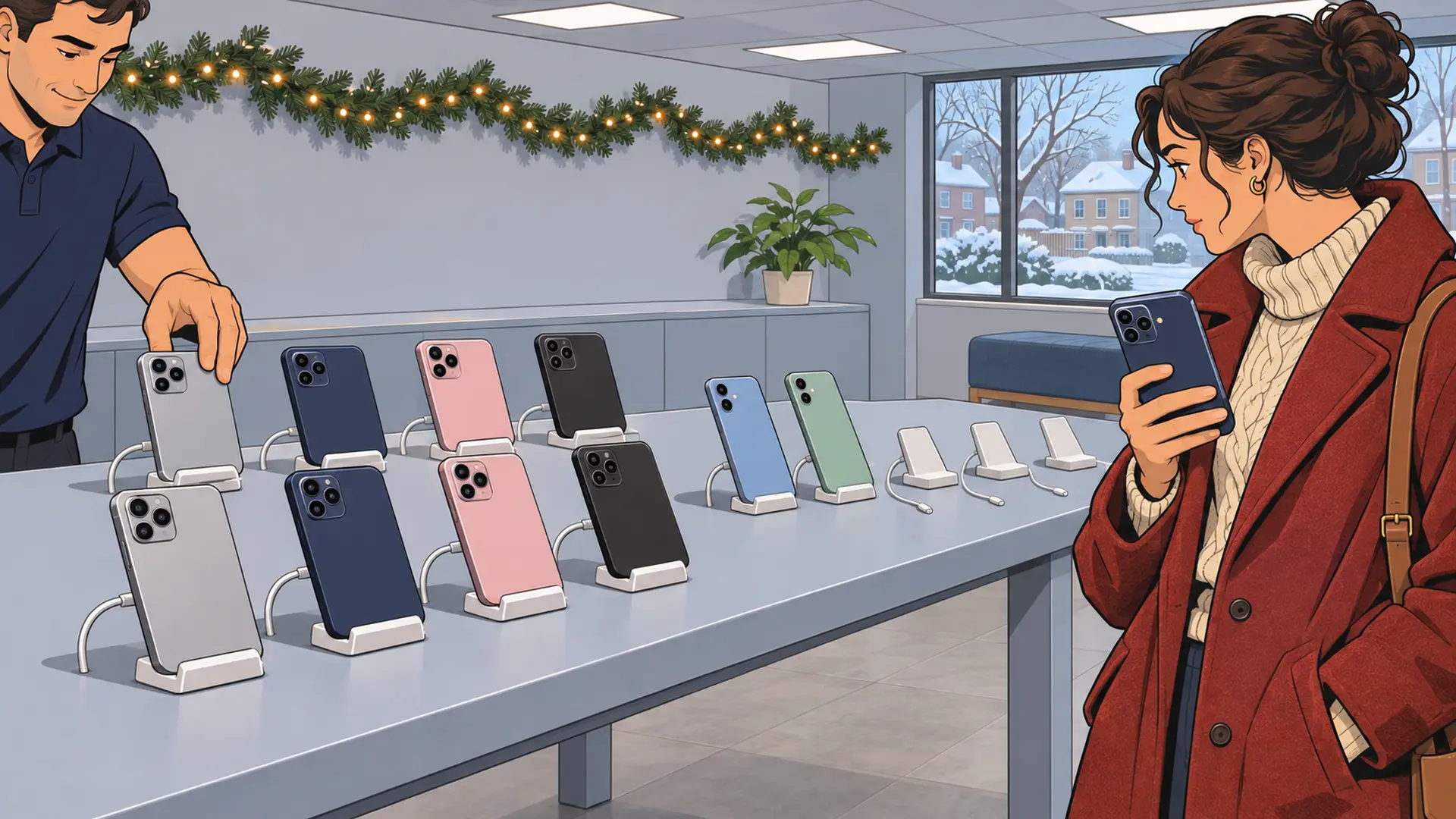
Counterpoint Research’s November 26 report puts Apple at 57% of US smartphone shipments in the third quarter, up from 50% a year earlier. The whole market shrank 9%. Apple was the only major phone maker whose shipments didn’t fall.
What happened
Counterpoint published the numbers from its US Market Monitor data in a November 26 release, a week after it updated its quarterly US share table with the same figures. Samsung held 25%, one point up on a year ago. Motorola fell four points to 8%. Google slipped from 7% to 6%, and Counterpoint says the Pixel 11 launch “was not strong enough to prevent a slight YoY decline in share.”
The cause it names is memory. Senior analyst Emily Herbert wrote that “Higher memory prices hit the low end of the Android market hardest,” because makers of cheap phones “have little room to absorb a higher bill of materials without raising prices or cutting volume.” Carriers felt it too. Smartphone sales at the Big Three US carriers fell 4% in the quarter, according to Counterpoint’s channel tracker. We’ve already seen how tight memory has become further down the supply chain, down to Purism buying chips as few as five at a time.
Counterpoint publishes shares, not unit counts. A bigger slice of a smaller market can still mean fewer phones. So I multiplied each share by a market that is 9% smaller. That arithmetic is ours, not Counterpoint’s, and rounding every share to a whole point widens the range for the small brands.
By our estimate, Apple’s shipments grew by roughly 4%. Samsung gained a point of share and still shipped about 5% fewer phones. Motorola lost something like two in every five. That last number is the story Counterpoint’s headline skips.
What’s confirmed and what isn’t
Counterpoint’s release confirms the 9% drop, every share in the table and the 4% carrier decline. Apple hasn’t commented. The unit changes in the last column are our estimate, not a published figure.
More Read

Shipments are phones sent into stores and carrier warehouses, not phones people walked out with. Counterpoint’s own weekly sales tracker, published October 27, found that iPhone 18 Pro series sales in the US were down year over year in the first three weeks after launch, and that US buyers “largely do not perceive meaningful improvements over the previous models in either features or design.” So the 57% says more about rivals shipping less than about Americans lining up for new iPhones.
The second caveat sits in Counterpoint’s note on the quarter before. US shipments grew 6% in the second quarter as “global memory constraints are pushing shipment volumes higher ahead of further RAM/NAND price increases,” and Samsung was “heavily shipping A17 5G units to get ahead of memory price increases.” Phones pushed into the channel in spring don’t need shipping again in summer. Counterpoint doesn’t connect the two quarters. I would. Part of the third-quarter drop is probably the spring stockpile being sold down.
How unusual is 57% for a third quarter?
Apple’s share follows its launch calendar. It peaks in the holiday quarter, hitting 67% in the fourth quarter of 2025, which Counterpoint called an all-time high, and it sags over the summer. Comparing third quarters takes most of that swing out. In every Counterpoint US table going back to 2022, Apple’s third-quarter share sat between 50% and 53%.
This year’s 57% is four points above the best of those quarters. It came in a falling market. Rivals shrank faster than Apple grew.
Who is affected
Buyers of cheap Android phones, first. Counterpoint describes Motorola’s lineup as low-end heavy and says memory costs squeezed it after the brand had grown shipments in the second quarter. Motorola still sells at the other end of the range: its second-generation Signature 27 lists at $1,599.99 unlocked with 512GB of storage in the US, as we noted when the first-generation Signature reached Japan. The squeeze is at the bottom of the catalog. That’s where the prepaid shopper lives.
Samsung came through better because, in Counterpoint’s words, its portfolio spans “flagships and the low-end Galaxy A-series.” Google lost share despite a new Pixel. Carriers lost sales. Apple was the only major brand in this report that didn’t ship fewer phones.
What to do now if you’re buying a phone
Read Counterpoint’s forecast the way you’d read the fine print on a contract. Senior analyst Maurice Klaehne wrote that “memory costs are expected to stay elevated, and MSRP increases across Android and iOS are here to stay,” and that US carriers “will likely be more selective with promotions this holiday season.” Don’t hold out for a January price cut. Nothing in this report predicts one.
Before you take a carrier deal, find out how many months the bill credits run and what happens to them if you leave early. Add up what you’ll pay over that whole term. Then compare it with the unlocked price of the same phone. If the pitch for an upgrade is mostly AI features, check what an “AI phone” actually gets you before you pay extra for one.
If rising Android prices push you toward an iPhone, move your sign-ins before you wipe the old phone. Our guide to what happens to your passkeys when you change or lose a phone covers what Apple and Google ask for. Once you’re across, watch the subscriptions: some of the AI apps on iPhone quietly bill hundreds of dollars a year.
Why it matters
The fourth quarter is normally the strongest of the year for US phone sales. Counterpoint expects it to be weak this time, with buyers “timing their purchases around the best deals more than ever, if they buy at all.” When the cheapest phones cost more and the budget brands ship fewer of them, the shelf below the flagships gets thinner. Fewer cheap phones means fewer ways to say no to an expensive one.